

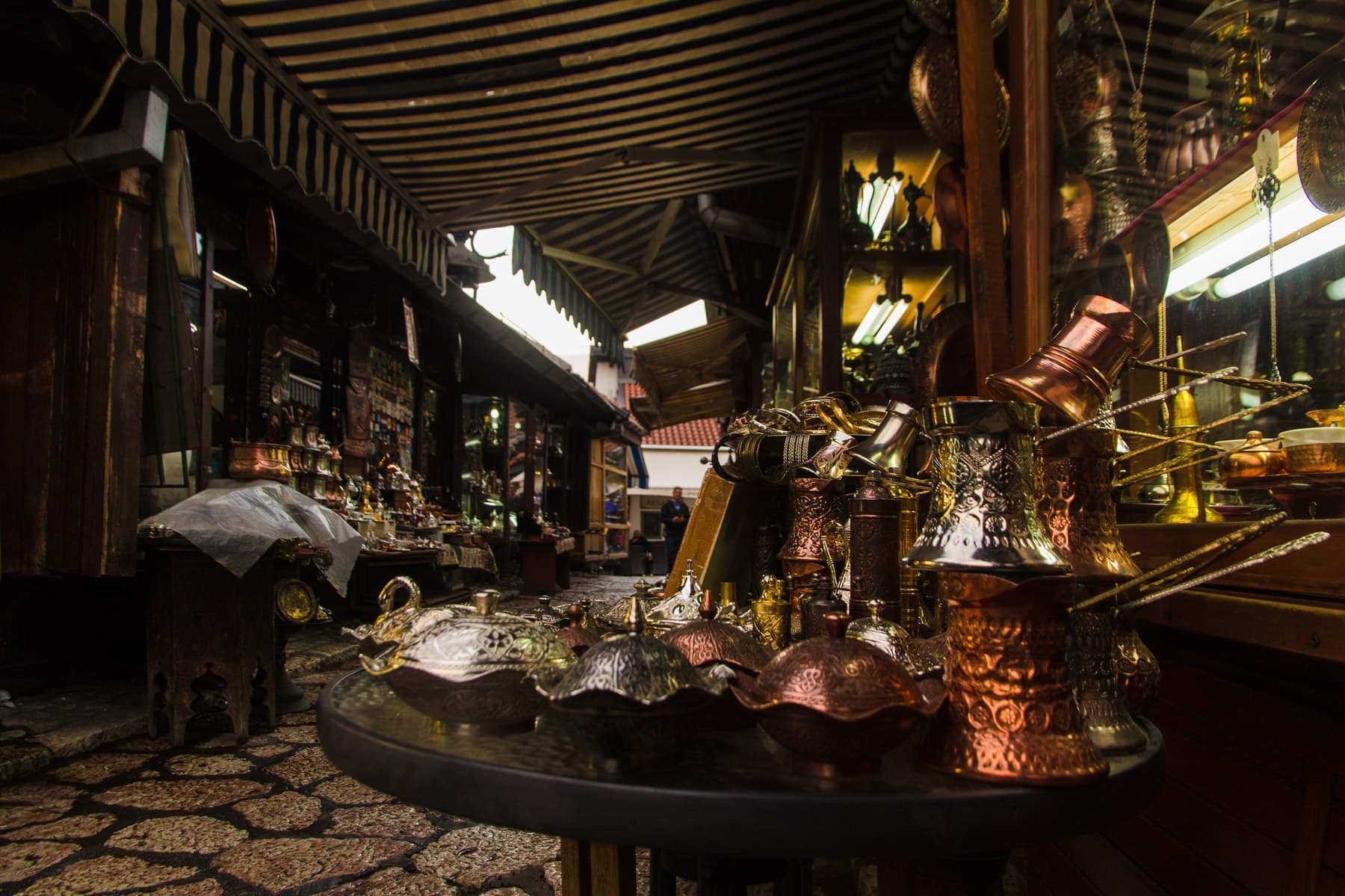
Drink traditional Bosnian coffee served from a copper džezva in Baščaršija
Experience the unhurried morning ritual with foamy coffee in a ceramic fildžan, lokum confectionery, and a glass of spring water.
At a glance
Year-round; sunny outdoor courtyards in spring and summer, cosy smoke-warmed kafanas in winter
Mid-morning around ten or mid-afternoon for the classic slow coffee pause (ćeif)
45 minutes to an hour of unhurried conversation and relaxed contemplation
Living cultural tradition · Artisanal food and beverage ritual
Easy
No booking needed; walk in to any authentic old-town kafana
Why Bosnian coffee in Sarajevo is a sacred lesson in taking one's time
In Bosnia, coffee is never consumed on the run. The concept of 'ćeif'—the pursuit of slow, unadulterated personal pleasure and camaraderie—is distilled into every cup of traditional Bosnian coffee (bosanska kafa). Served on an engraved brass tray called a tabla, the preparation is distinctly different from Turkish coffee: finely powdered roasted beans are bloomed in boiling spring water inside a long-necked copper pot (džezva) until a rich, golden crema (kajmak) rises to the brim.
The server places before you the steaming džezva, a handleless ceramic demitasse cup (fildžan), a cube of rose-scented Turkish delight (lokum), and a glass of fresh cold water. The ritual demands patience: you skim a spoonful of kajmak into your fildžan, slowly pour the dark coffee, and let the fine grounds settle to the bottom.
Sipping coffee in the stone courtyards of Baščaršija or along the bustling Kazandžiluk lane, with the rhythmic tapping of coppersmiths' hammers echoing in the background and the call to prayer echoing from the Gazi Husrev-beg Mosque, is one of Europe's most atmospheric cultural experiences.
The four steps of the authentic Bosnian coffee ritual
Cleansing the palate
Drink a sip of cold spring water to cleanse your palate before sampling the coffee.
Spoon the golden kajmak
Use the small demitasse spoon to transfer a dollop of thick, rich foam into your ceramic fildžan cup.
Pour from the copper džezva
Slowly pour hot coffee from the long-necked copper pot over the foam, taking care not to disturb the settled grounds.
Sip through sugar and taste the lokum
Dip a sugar cube into the brew, place it on your tongue to sweeten each sip, and finish with rose or walnut lokum.
Plan your experience
When to go
Enjoyable throughout all seasons. In spring and summer, outdoor tables in Morića Han offer leafy shade; in autumn and winter, the fragrant steam of coffee indoors creates unforgettable warmth.
Getting there
Baščaršija is the pedestrian historic core of Sarajevo, easily accessible on foot from anywhere in central Sarajevo or via tram line 1, 2, 3, or 5.
Booking & permits
No reservations are taken or necessary. Wander Kazandžiluk or the cobblestone courtyard of Morića Han and choose any cafe filled with locals talking over trays.
What to bring
- Bosnian Convertible Mark (BAM) in small cash coins or banknotes, as traditional tea and coffee houses rarely accept payment cards
- An open morning or afternoon schedule with nowhere urgent to rush off to
Before you go
- Visit master coppersmiths on Kazandžiluk street to purchase an authentic hand-hammered copper džezva with its traditional star-and-crescent stamp
- Follow your coffee with a plate of fresh hot ćevapi with somun flatbread and kajmak cream cheese at a neighbouring ćevabdžinica
- Walk down Ferhadija street to find the 'Sarajevo Meeting of Cultures' line where Ottoman cobblestone gives way to Austro-Hungarian architecture
Official information
Always verify permits, seasonal weather conditions and access directly with public authorities:
Official Sarajevo Canton tourism portal detailing historic quarters, gastronomy trails, and seasonal cultural festivals.
Official foundation managing the historic 1531 mosque, library, Morića Han caravanserai, and Baščaršija heritage properties.
Ways to experience it
Find a table at a classic kafana in Morića Han or Čaršija, order 'jedna bosanska kafa', and watch daily life unfold.
Take a cultural and culinary walking tour with a local historian through the craft alleys and coffee houses of Baščaršija.
Certified providers & operators
Sarajevo Insider Heritage Tours
Guided old town culinary, artisan craft, and historical walking tours
Licensed Sarajevo cultural guides based beside the Latin Bridge.