

Walk among the historic drainage windmills of Kinderdijk
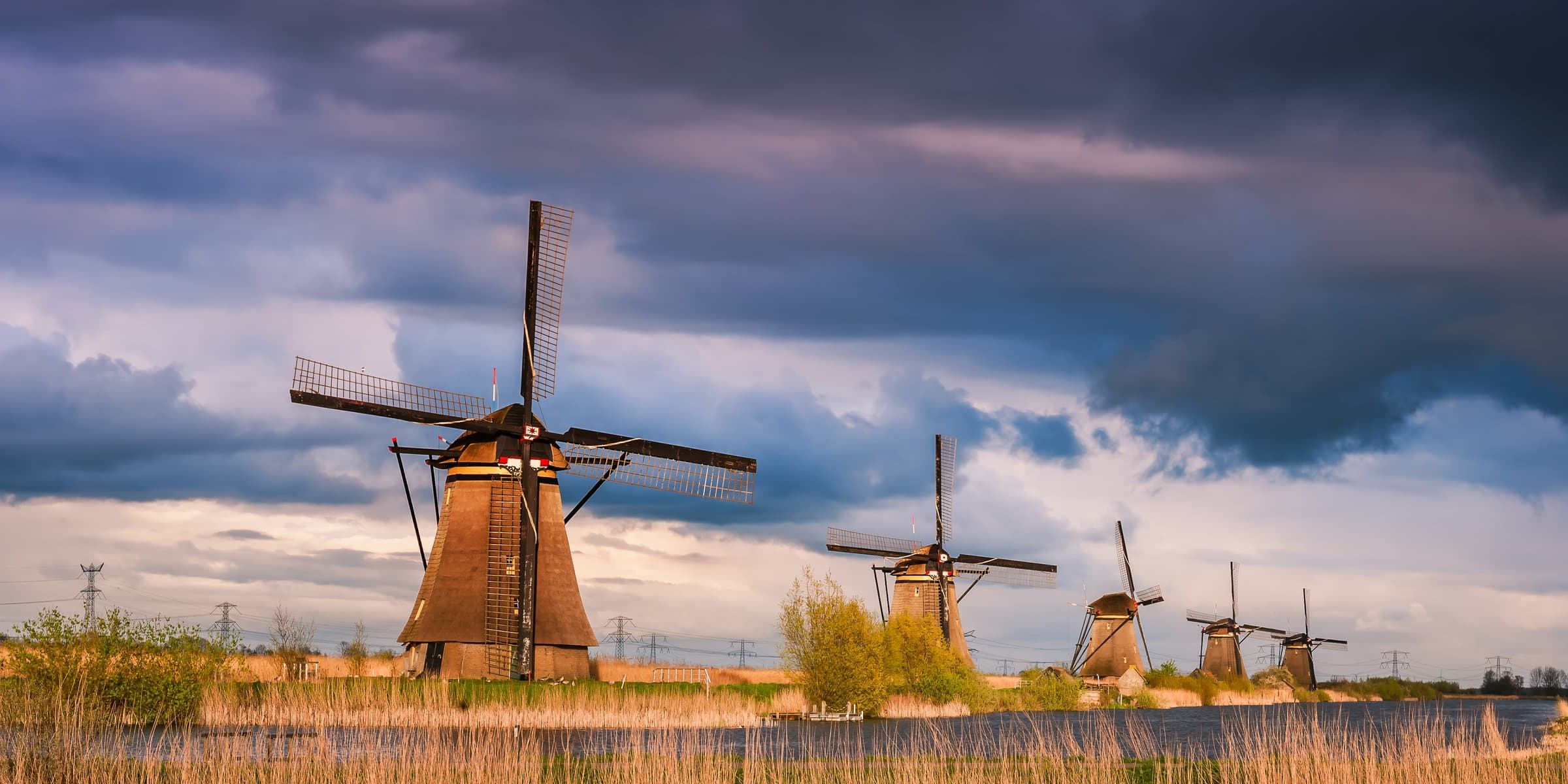
Stroll along reed-lined polder dykes between nineteen rotating 18th-century mills built to master the waters below sea level.
At a glance
April to October for rotating mill sails, open museum mills, and canal boat tours; evocative and quiet year-round
Early morning before day-tripper coaches arrive or late afternoon when low sun lights the water canals
2 to 3 hours for walking the dyke paths, touring a working museum mill, and cruising the canals
Polder dyke walking · Historic windmill exploration & boat cruise
Easy
Advance booking recommended
Why Kinderdijk is the ultimate monument to Dutch water mastery
Situated in the low-lying peat polders of the Alblasserwaard, more than a metre beneath sea level, Kinderdijk is home to the most concentrated and authentic cluster of historic windmills on the planet. Built around 1740 to replace failing drainage systems, these nineteen majestic mills operated collectively for centuries to pump water from low polder basins into the Lek river, keeping the surrounding farmland and villages from sinking beneath the North Sea.
Inscribed on the UNESCO World Heritage list in 1997, Kinderdijk is not an open-air reconstruction or theme park—it is a living, functional hydraulic landscape. Many of the mills are still inhabited by certified miller families who maintain the ancient craft, adjusting giant canvas sails to catch the North Sea winds.
Walking or cycling along the quiet dyke paths lined with swaying reeds, water lilies, and gliding herons as massive canvas sails whoosh rhythmically overhead is the purest expression of the Dutch spirit: an eternal, peaceful triumph of ingenuity over water.
Exploring the dykes, museum mills, and waterways
Arrival by Waterbus or bicycle
Arrive at the modern visitor pavilion on the Molenkade, watching an introductory film explaining the historic flood battles.
Walking the Middle Dyke
Stroll down the pedestrian and cycle path running between the two parallel canals, flanked by the Nederwaard and Overwaard mills.
Climbing inside a working museum mill
Step inside Museum Mill Nederwaard to see the intimate bedrooms, kitchen hearth, and massive wooden gears grinding above.
Canal tour boat cruise
Board an electric hopper boat to glide silently along the drainage basins, capturing symmetry photos of the mills from the water.
Plan your experience
When to go
The site is enchanting year-round. On National Mill Day in May, all nineteen mills turn their sails simultaneously. On crisp winter days, if the canals freeze solid, locals take to the ice on traditional speed skates—one of Holland's most magical spectacles.
Getting there
The most delightful way to arrive is via the Waterbus (line 21) departing directly from Rotterdam Erasmusbrug or Dordrecht to Kinderdijk Molenkade in roughly 30 minutes. Cyclists can bring bikes on board the Waterbus for free.
Booking & permits
While walking along the public dyke is free, accessing the museum mills and canal tour boats requires an admission ticket. Book online at kinderdijk.com to secure your time slot and save time on arrival.
What to bring
- Windbreaker or waterproof jacket (polder winds can be brisk across open water)
- Comfortable walking shoes or rental bicycle for touring the three-kilometre dyke
- Camera with a standard zoom lens for architectural and reflection shots
Before you go
- Rent a bicycle in Rotterdam or at the Kinderdijk entrance to experience the site like a local Dutch resident
- Please respect the privacy of the millers: most mills are private residences; enter only designated museum mills
- Combine your visit with nearby Gouda to taste world-famous cheeses and stroopwafels in the historic market square
Official information
Always verify permits, seasonal weather conditions and access directly with public authorities:
Official foundation managing the UNESCO World Heritage site, museum mills, visitor tickets, and boat tours.
Official public ferry transport service providing fast, scenic water connections from Rotterdam to Kinderdijk.
Ways to experience it
Walk or cycle the public dyke trail at your own rhythm, pausing on wooden footbridges to admire the reflection of turning mill sails.
Book an official Kinderdijk volunteer guide for an immersive tour on centuries-old water management and life inside the mills.
Certified providers & operators
Stichting Werelderfgoed Kinderdijk
Official museum mill tours and canal hopper boat cruises
Non-profit foundation dedicated to preserving and operating the 19 historic windmills.