

Stargaze beneath Teide's night sky at Izaña
Stand 2,390 metres above the Atlantic in an internationally protected Starlight Reserve, where the thermal inversion traps coastal clouds below to reveal the Milky Way in crisp, luminous detail.
At a glance
May to October (warmest nights, highest clarity)
Dusk through midnight (optimal during new moon week)
3 to 4 hours (plus 1 hour driving each way)
High-altitude night observation · Guided or self-guided
Easy
Mandatory advance booking
Why stargaze from Mount Teide?
The Canary Islands sky law (Ley del Cielo) strictly regulates air routes and coastal lighting across Tenerife. Rising high above the sea of clouds that blankets the northern coast, the caldera plateau at Izaña enjoys more than 250 pristine, cloudless nights every year with exceptionally low atmospheric turbulence.
From here, you observe the cosmos through one of the cleanest windows on Earth — on par with Mauna Kea in Hawaii and the Atacama Desert in Chile. In midsummer under a dark moon, the galactic core of the Milky Way arches across the sky, casting faint shadows across volcanic pumice.
What to expect
The drive through the cloud sea
Ascend from warm coastal shores through dense pine mist before bursting out into sunlit volcanic stone above 1,800 metres.
Sunset over La Gomera
Watch twilight turn deep amber and magenta over neighbouring islands while Mount Teide's triangular shadow projects east across the Atlantic.
Constellation tour and telescope viewings
Starlight-certified astronomers use green lasers to navigate constellations and Dobsonian telescopes to reveal Saturn's rings, the Ring Nebula and star clusters.
Plan your experience
When to go
Year-round skies are clear. June to September brings the mildest night temperatures (8°C to 14°C) and the best views of the galactic core. Winter nights frequently dip below -2°C.
Getting there
A rental car is essential as public buses do not operate after dusk. Take the TF-21 from the south or north, or TF-24 along the Esperanza pine ridge. Roads are well paved with clear reflective markers.
Booking & permits
Guided telescope tours and official observatory visits must be reserved 1 to 3 weeks in advance through Volcano Teide or certified Starlight operators. Independent parking at public viewpoints is free.
What to bring
- Thermal base layers, fleece and windproof winter coat
- Beanie and gloves (essential year-round at 2,400 m)
- Red-light torch or headlamp to safeguard night vision
- Warm thermos with tea or coffee and water
Before you go
- Check the lunar phase: new moon provides the deepest dark skies; full moon illuminates the crater walls.
- Check Teide National Park weather and road notices before driving up.
- Remain strictly on designated tracks to safeguard delicate volcanic soils.
Official information
Always verify permits, seasonal weather conditions and access directly with public authorities:
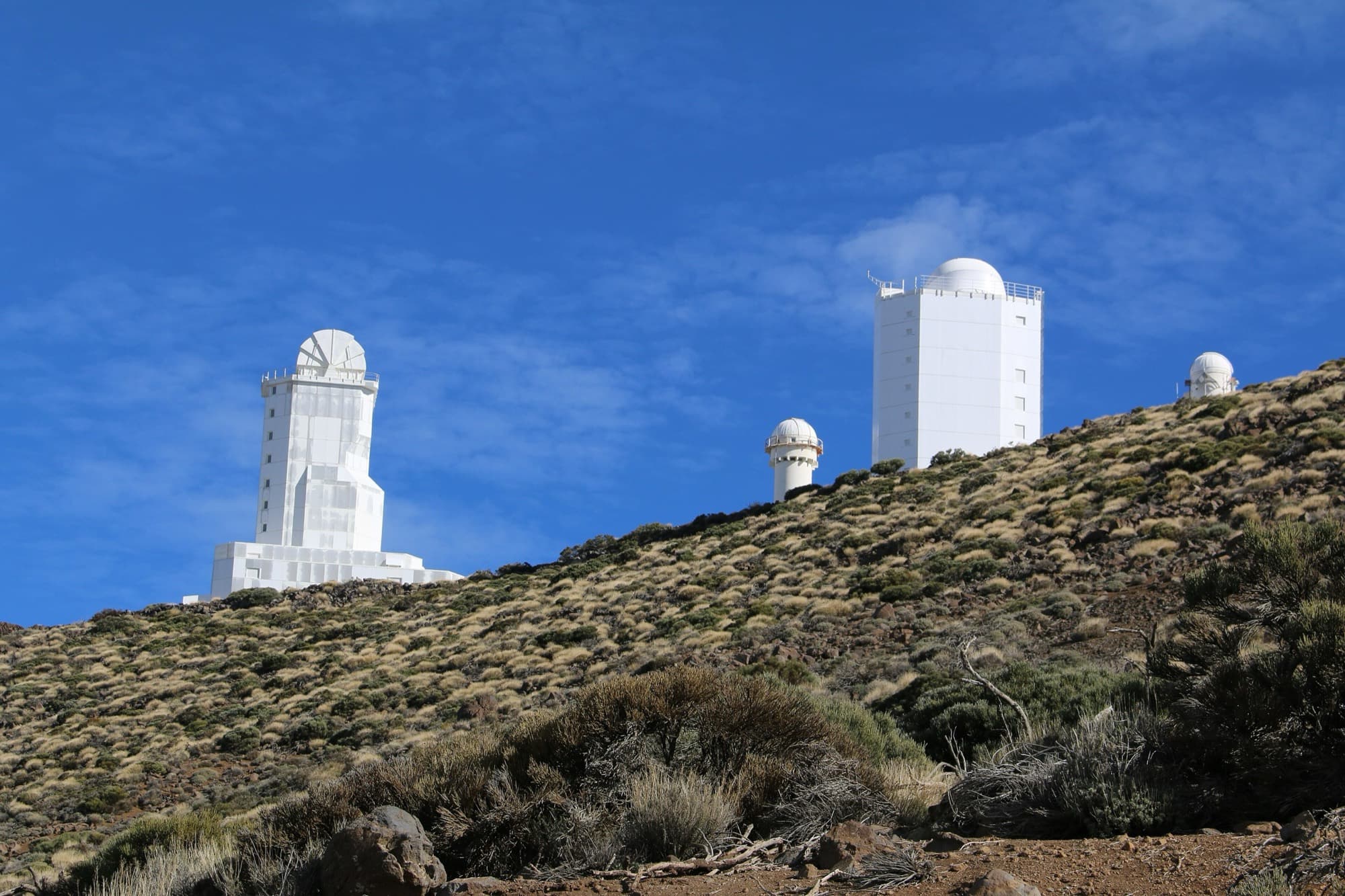
Official scientific institution operating the solar telescopes and research facility
Official island portal for Starlight certification guidelines and astronomical viewpoints
Official park concessionaire for guided night sky and observatory visits
Ways to experience it
Drive independently to Mirador de Chío or Minas de San José with binoculars, a red flashlight and a sky-map app.
Join an authorized Starlight guide who provides high-aperture telescopes (200–400mm) and laser-guided constellation storytelling.
Certified providers & operators
Volcano Teide Experience
Official astronomical observations & IAC Observatory visits
Direct authorized concessionaire for Teide National Park activities