

Sleep in a trullo
Spend the night inside a whitewashed dry-stone trullo beneath a conical limestone dome, waking up to birdsong, centuries-old olive trees, and the timeless rural stillness of Puglia's Valle d'Itria.
At a glance
April to October (mild weather and blooming wild almond blossoms); summer for outdoor courtyard dining
Check-in late afternoon; enjoy peaceful twilight in the quiet residential quarters or countryside
Overnight stay (1 to 2 nights recommended to absorb the unique rural tranquility)
Unique historic accommodation & vernacular architecture · Bed & breakfast / resort
Easy
Advance booking recommended
An extraordinary feat of dry-stone rural ingenuity
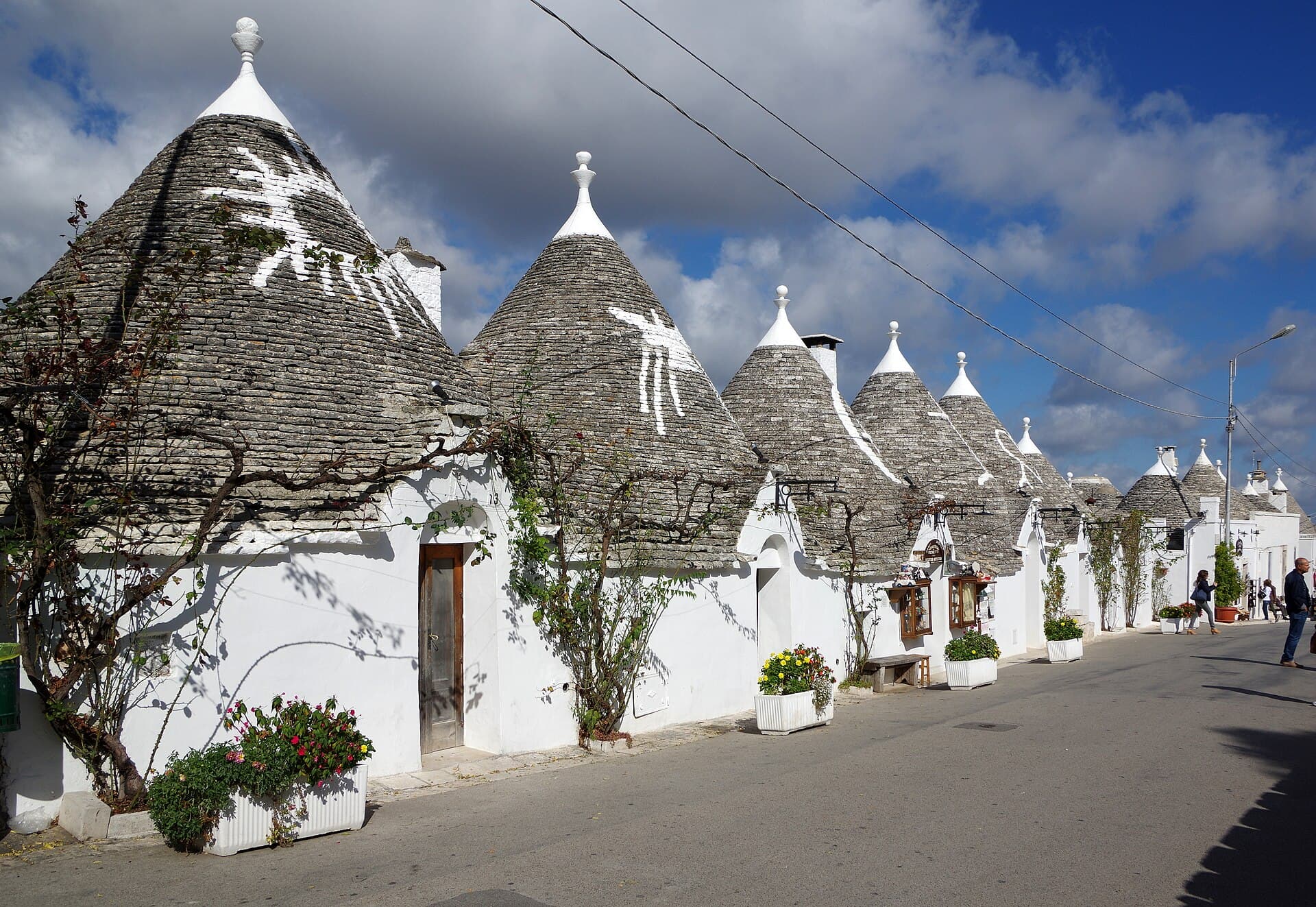
Unique to the Valle d'Itria in central Puglia, the trullo is a prehistoric dry-stone building tradition perfected between the 15th and 18th centuries. Constructed entirely without mortar, local limestone boulders were stacked into circular thick walls and topped with self-supporting conical domes composed of grey limestone slabs called chianche.
According to local lore, building without mortar allowed peasants to swiftly dismantle their homes into a pile of stones whenever the tax collectors of the Kingdom of Naples arrived, thereby evading feudal property levies. Today, sleeping beneath the massive stone vault offers natural acoustic calm and thermal insulation that keeps the interior blissfully cool during the hottest Mediterranean summers.
What to expect when staying in a trullo
Stepping beneath the stone dome
Enter through thick whitewashed stone archways into an interior where original exposed limestone cones, alcoves (alcove), and timber beams are preserved.
Exploring after day-trippers leave
Wander the silent, lantern-lit lanes of Rione Aia Piccola in Alberobello or relax in a rural courtyard surrounded by red earth and olive trees.
Waking up to a Pugliese breakfast
Enjoy morning coffee on a sun-drenched stone terrace with fresh burrata, warm pasticciotto pastries, and locally picked figs.
Plan your experience
When to go
May, June, September, and October offer delightful temperatures, uncrowded villages, and ideal conditions for cycling the rural country lanes (tratturi).
Getting there
Ferrovie del Sud Est (FSE) trains connect Bari Centrale with Alberobello in about 90 minutes. A rental car is ideal for exploring the surrounding towns of Locorotondo, Martina Franca, and Cisternino.
Booking & permits
Historic trullo accommodations—both albergo diffuso units in Alberobello and renovated countryside masserie—book out months in advance for summer weekends.
What to bring
- Comfortable shoes for walking cobblestone streets and gravel country paths
- A light sweater for evenings (the thick stone walls keep interiors naturally cool)
Before you go
- Look for the mysterious painted symbols on the conical roofs: Christian crosses, celestial emblems, and ancient astrological runes intended to ward off evil
- Consider staying in a rural trullo in the countryside between Locorotondo and Cisternino for ultimate peace and a private swimming pool
Official information
Always verify permits, seasonal weather conditions and access directly with public authorities:
Official guides to UNESCO sites, rural masserie, cycling routes, and food trails in Puglia.
Municipal visitor guidelines, historic heritage preservation, and museum information.
Ways to experience it
Book a restored trullo through an 'albergo diffuso' (scattered hotel) in Alberobello to live embedded in the historic stone community.
Take a guided bicycle or e-bike tour through the rural olive groves of Valle d'Itria, visiting artisan cheese makers and trulli stone masons.
Certified providers & operators
Trullidea Albergo Diffuso
Authentic historic trulli accommodations
Pioneer in the preservation of 18th-century trulli dwellings in Rione Monti and Aia Piccola
Tipico Resort
Restored luxury trulli apartments
Elegantly restored stone homes featuring modern comforts within historic architecture