

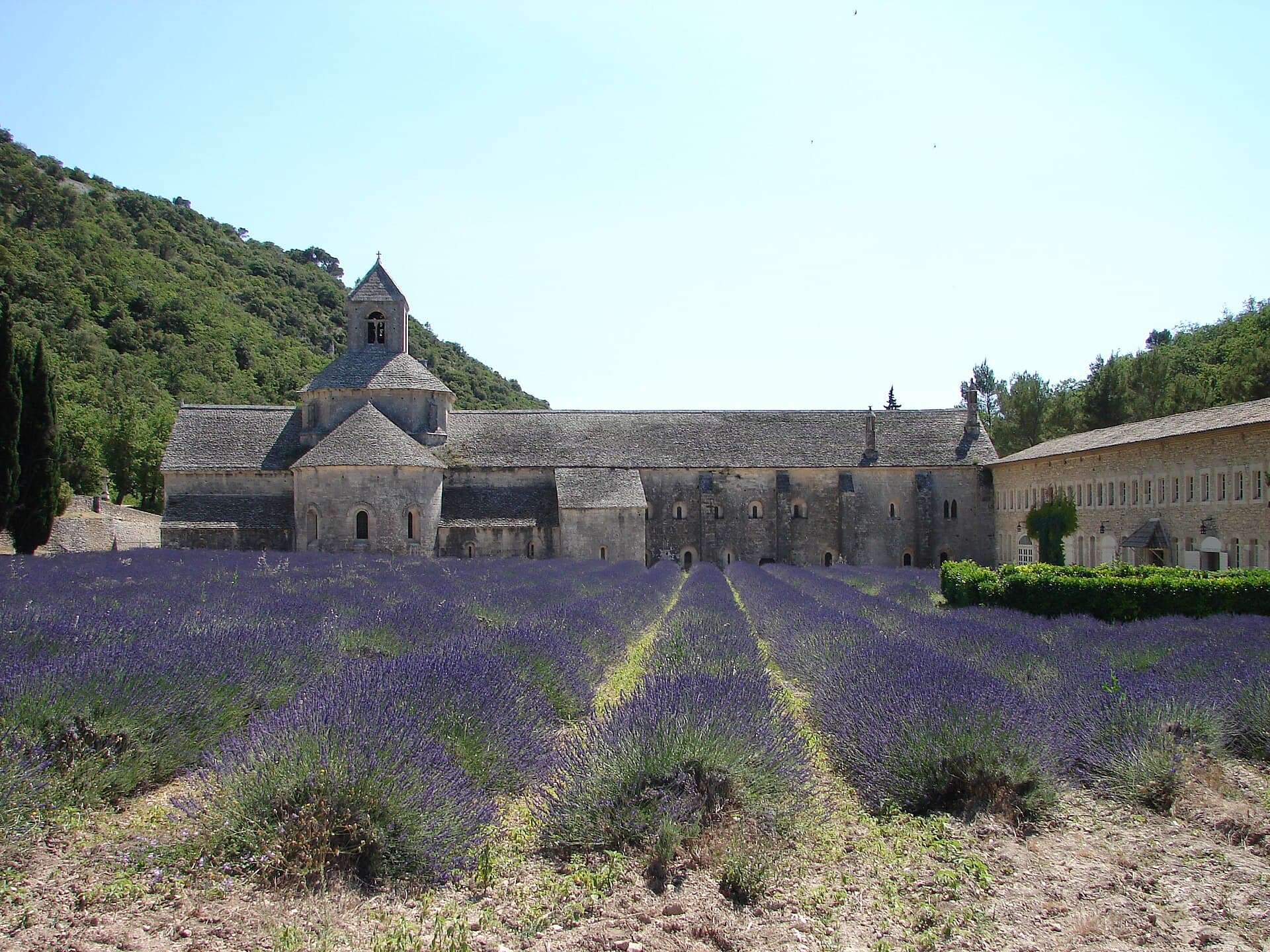
See Sénanque Abbey in lavender
Behold the quintessential vision of Provence, where neat rows of vibrant purple lavender bloom in a tranquil limestone canyon before the austere 12th-century Cistercian Abbey of Notre-Dame de Sénanque.
At a glance
Late June to late July during peak lavender bloom (harvest typically begins in late July or early August)
Early morning before tour groups arrive and before midday heat intensifies
1.5 to 2.5 hours for the grounds, lavender viewing, and historic abbey cloister tour
Botanical landscape viewing, Romanesque architecture & monastic heritage · Guided or self-guided
Easy
Advance booking recommended
The iconic sensory harmony of Provence
Nestled in the narrow, forested valley of the Sénancole near Gordes, the Abbey of Notre-Dame de Sénanque was founded in 1148 by Cistercian monks who sought silence, prayer, and manual labour far from worldly distractions. Its unadorned Romanesque limestone church and cloister represent pure spiritual minimalism.
Every summer, this quiet monastic world comes alive with intoxicating colour and scent. The monks and local farmers cultivate fields of deep violet lavender (lavandin) directly in front of the stone facade. As bees hum beneath the Mediterranean sun and the scent of lavender fills the canyon air, Sénanque offers one of the most sublime visual memories in all of France.
What to expect when visiting Sénanque Abbey
The canyon approach from Gordes
Descend the winding single-lane stone road into the sheltered valley, glimpsing the purple fields and grey tile roofs from above.
Lavender field observation
Admire the immaculate rows of lavender framed by cypress trees and dry stone walls from the visitor paths (walking between the active rows is prohibited to protect the plants).
The Romanesque cloister and church
Tour the silent 12th-century cloister, chapter house, and monks' dormitory equipped with an interactive HistoPad digital tablet explaining medieval monastic life.
Plan your experience
When to go
The lavender blooming window is precise: flowering starts in mid-June and peaks between July 1 and July 20. The crop is cut for essential oil distillation around late July or early August.
Getting there
A car or guided excursion from Avignon or Aix-en-Provence is essential. The access road is narrow with regulated one-way traffic during peak season.
Booking & permits
Abbey interior visits require reserved timed tickets via the official website. The monastery is an active community with silence observed; dress respectfully covering shoulders and knees.
What to bring
- Comfortable shoes for gravel walkways
- Sun hat, sunglasses, and a camera to capture the morning light on the lavender blooms
Before you go
- Combine your visit with morning exploration of the weekly Tuesday market in nearby Gordes
- Support the resident monk community by purchasing their artisanal lavender honey, essential oils, and soaps in the abbey shop
Official information
Always verify permits, seasonal weather conditions and access directly with public authorities:
Official visitor tickets, prayer service schedules, and boutique products.
Lavender bloom status updates, regional cycling routes, and hill village guides.
Ways to experience it
Drive down early in the morning, view the lavender fields from the designated photographic terrace, and tour the abbey with an official digital HistoPad.
Join a small-group Provence lavender tour from Avignon combining Sénanque, Gordes, and Roussillon's red ochre cliffs.
Certified providers & operators
Abbaye de Sénanque Monastic Service
Official HistoPad self-guided & monk-led heritage visits
Interactive 3D reconstruction of the abbey as it stood in the 12th century
Provence Panorama Tours
Guided minibus lavender excursions from Avignon
Small group circuits through Luberon villages and blooming lavender fields