

Vadstena Abbey & the Blue Church
St Birgitta's abbey · 1300s
The abbey church, of blue-grey limestone, holds St Birgitta's relics; the abbey grounds and the old convent buildings lead down to the lake.
KlosterområdetMedievalPilgrimage
In 60 seconds
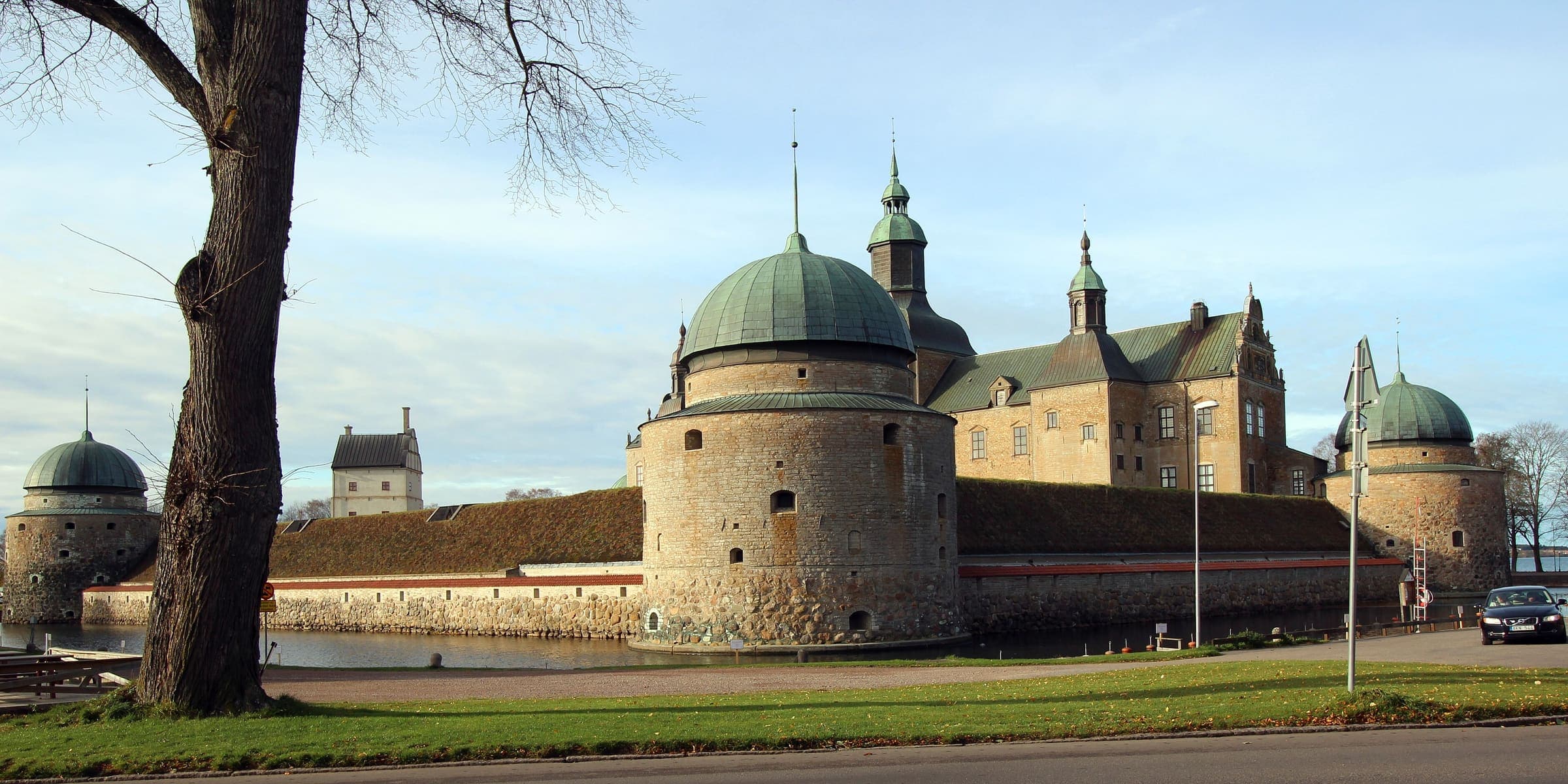
Vadstena is a small town with a great past. Here St Birgitta, Sweden's patron saint, founded her religious order in the 14th century, and the abbey church — the Blue Church, from the colour of its stone — still holds her relics; pilgrims came from across Europe. On the shore stands Vadstena Castle, which Gustav Vasa began in 1545 as a fortress against the Danes, a perfect Renaissance palace with round towers and a moat. Between the two run quiet streets of old houses. The surrounding plain of Östergötland is full of history: the ruined Cistercian abbey at Alvastra under the wooded hill of Omberg, and, half an hour away, the Rök runestone, with the longest runic inscription in the world. Combine it with Gränna across the lake.
Best for
Known for
Skip if
You need things to do into the evening — Vadstena is a quiet town of churches and a castle, best on a slow summer day.
Your match
Choose a few travel interests and we will show how well Vadstena fits them. Choose interests
See
The things that would make the trip incomplete without them.
St Birgitta's abbey · 1300s
The abbey church, of blue-grey limestone, holds St Birgitta's relics; the abbey grounds and the old convent buildings lead down to the lake.
Gustav Vasa's Renaissance castle
A royal fortress of 1545 rebuilt as a palace, its moat open to Vättern; in summer the Vadstena Academy stages opera here.
Eat
A short list, kept short on purpose. Each entry answers one question: when is this the right choice?
Too few picks yet for their own heading, so they share this list.
Dining in the old convent
Seasonal Swedish cooking — Vättern crayfish in season — in the medieval convent buildings by the abbey.
Beyond the obvious
Less obvious, rarely queued for, and usually the part people remember.
The world's longest runic inscription
A 9th-century stone covered on every face with a cryptic poem; it stands by Rök's church, 30 minutes south-east.
Beech-wooded hill and a Cistercian ruin
Walk the old beech woods over the lake on Omberg, then the ruins of Alvastra, Sweden's first Cistercian abbey, founded in 1143.
Orientation
How the city is actually divided, and what each part is for.
Between the abbey and the castle
A short walk along Storgatan joins the two great buildings, past medieval houses and the old town hall.
Stay
Areas rather than hotels — pick the right one and the rest follows.
Hotels in the convent and by the harbour
Sleep in the abbey's old convent buildings for the full effect.
Practical
Plan this trip — useful links
Context
Enough to make what you are looking at legible.
The Rök runestone is raised, carved with the world's longest runic inscription.
King Magnus gives his estate at Vadstena to Birgitta for her new religious order.
Birgitta is canonised; Vadstena becomes the order's mother house and a goal of pilgrims.
Gustav Vasa begins Vadstena Castle as a fortress on the lake.
Further out
Worth a day if you have one to spare.
Peppermint rock and a royal island
Across Vättern's south end — Gränna & Visingsö has its own guide.