

Uppsala Cathedral
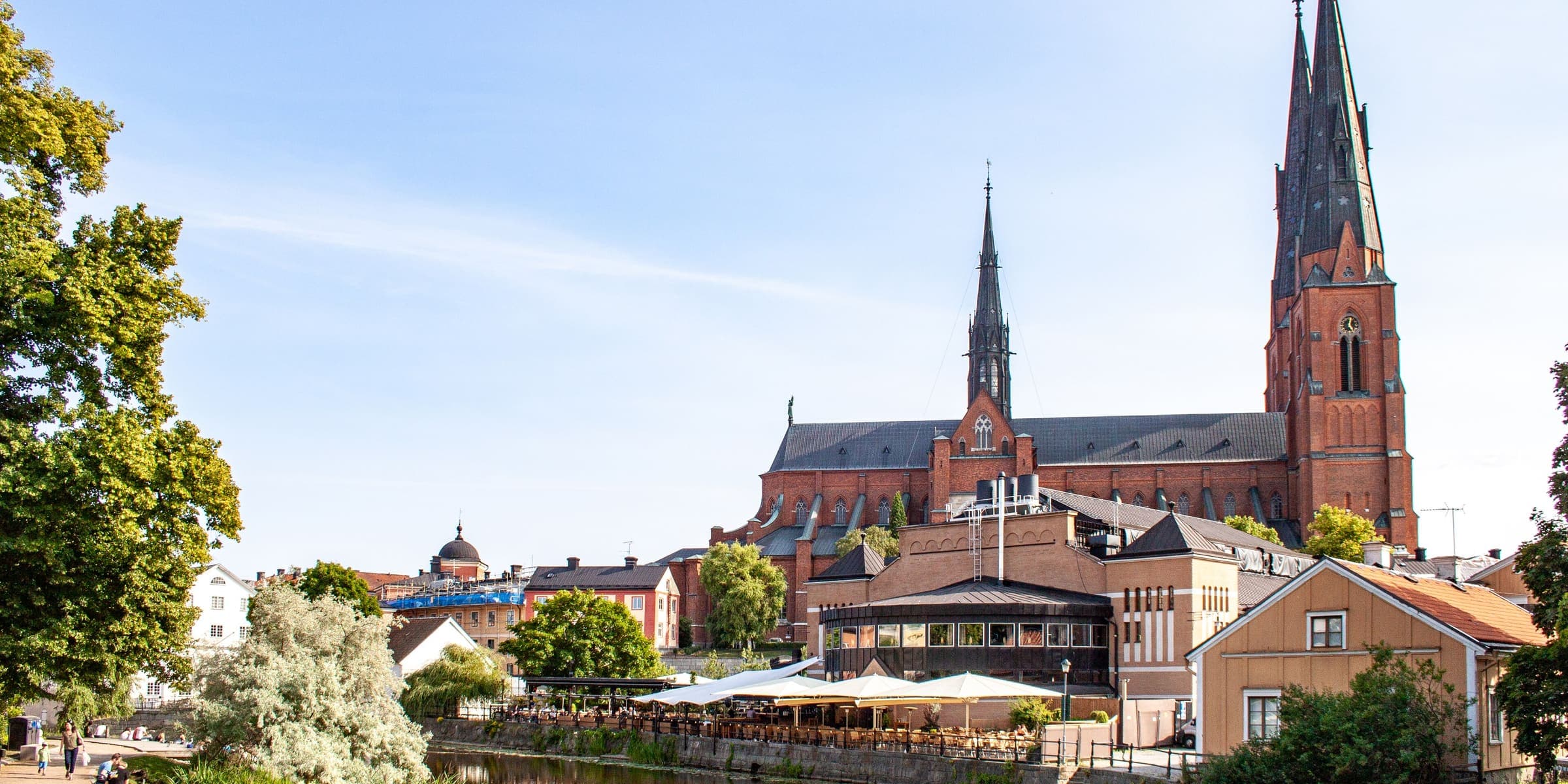
Scandinavia's tallest church
A Gothic brick cathedral 118 metres tall, consecrated in 1435; Gustav Vasa's tomb, Linnaeus's grave and the reliquary of St Erik are inside.
DomkyrkoområdetFreeMust-see
In 60 seconds
Uppsala is where Sweden began and where it learned to think. Three great burial mounds at Gamla Uppsala mark the seat of pagan kings; in the town below rises the tallest church in Scandinavia, where Gustav Vasa and Carl Linnaeus lie buried. The university, founded in 1477, is the oldest in the Nordic countries — climb into the steep wooden anatomical theatre at the Gustavianum, see the 6th-century Silver Bible at the Carolina Rediviva library, and walk Linnaeus's own garden, replanted to his plan. The River Fyris runs through the middle, lined with cafés; on 30 April, Valborg, the whole student city takes to its banks. It is 18 minutes from Stockholm Arlanda by train, so make it your first or last day in Sweden, or stay two.
Best for
Known for
Skip if
You have only a few days in Sweden and no interest in history or science — Stockholm's museums cover much of the same story.
Your match
Choose a few travel interests and we will show how well Uppsala fits them. Choose interests
See
The things that would make the trip incomplete without them.
Scandinavia's tallest church
A Gothic brick cathedral 118 metres tall, consecrated in 1435; Gustav Vasa's tomb, Linnaeus's grave and the reliquary of St Erik are inside.
Royal burial mounds and museum
Three huge 6th-century mounds, a medieval church on the site of the old temple and a museum that tells the story; walk or cycle out along the river.
University museum with a 1660s anatomical theatre
Olof Rudbeck's dome-topped theatre for dissections, the gilded Augsburg Art Cabinet and Viking-age boat-grave finds, all in one building.
University library · The Silver Bible
The Codex Argenteus, a 6th-century Gothic gospel in silver and gold ink on purple parchment, displayed in the exhibition hall.
The botanist's garden and home
Sweden's oldest botanical garden, replanted with the species Linnaeus grew here, beside the house where he lived and taught.
Eat
A short list, kept short on purpose. Each entry answers one question: when is this the right choice?
Where to eat the food this city is actually known for.
Swedish classics in a medieval cellar
Vaulted rooms at the foot of the cathedral steps; game, fish and Swedish classics done properly.
Fishmonger and seafood bistro
A fishmonger since 1982 with a bistro beside the counter: shellfish platters, fish soup and whatever came in that morning.
Mornings, and the slow hour between things.
Konditori · Since 1870
The grand old konditori on the river: cream cakes, open sandwiches and a terrace over the Fyris.
Hovkonditori by the cathedral
A creaky, much-loved konditori where generations of students have eaten semlor and cinnamon buns.
Bakery café opposite the Linnaeus Garden
Big cinnamon buns and a small garden across from Linnaeus's house.
Too few picks yet for their own heading, so they share this list.
Café and restaurant by the royal mounds
Lunch or fika after the mounds, and a horn of their home-made mead from an old family recipe — touristy, and fun.
Beyond the obvious
Less obvious, rarely queued for, and usually the part people remember.
Sunset over the city from Gustav Vasa's castle
Climb to the pink 16th-century castle and the Gunilla bell for the best view of the cathedral, then drop down into the Botanical Garden behind it.
Linnaeus's country house
The farmhouse and gardens where Linnaeus spent his summers, his study walls papered with botanical plates. Open in summer.
After dark
Brewpub in an old steam mill
IPA and lager brewed on the premises and rustic plates to go with them.
Swedish wines by the glass
A rare chance to taste Sweden's own artisanal wines, with food from local producers.
Rooftop bar
Cocktails on top of a hotel with the cathedral spires across the rooftops.
Orientation
How the city is actually divided, and what each part is for.
Cathedral, university and student nations
The hill west of the river: the cathedral, the Gustavianum, the library and the grand houses of the student nations.
Café terraces along the water
The river splits the town in two; walk its banks from the cathedral to the old mill and the Upplandsmuseet.
Stay
Areas rather than hotels — pick the right one and the rest follows.
Hotels a short walk from everything
Trains to Arlanda and Stockholm leave every few minutes, and the cathedral is ten minutes away on foot.
Practical
Plan this trip — useful links
Context
Enough to make what you are looking at legible.
Kings of the Svear are buried under the great mounds at Gamla Uppsala, then the centre of pagan Sweden.
Uppsala becomes the seat of Sweden's archbishop.
The new cathedral in the town is consecrated.
Uppsala University is founded, the first in the Nordic countries.
Carl Linnaeus returns to teach at the university, and his students go out to name the world's plants.
Further out
Worth a day if you have one to spare.
18th-century ironworks village
A complete Walloon iron-making estate — manor, workers' houses, church and gardens — in the forests of northern Uppland.
Sweden's first town, on Lake Mälaren
Church ruins, runestones and a wooden main street; Sigtuna has its own guide.