

Old Bazaar (Stara Čaršija)
Ottoman market quarter of lanes, caravanserais and hammams on the north bank
Go on a weekday morning when the goldsmiths and tinsmiths are working rather than the cafés.
ČairCaravanseraiOttoman Bazaar
In 60 seconds
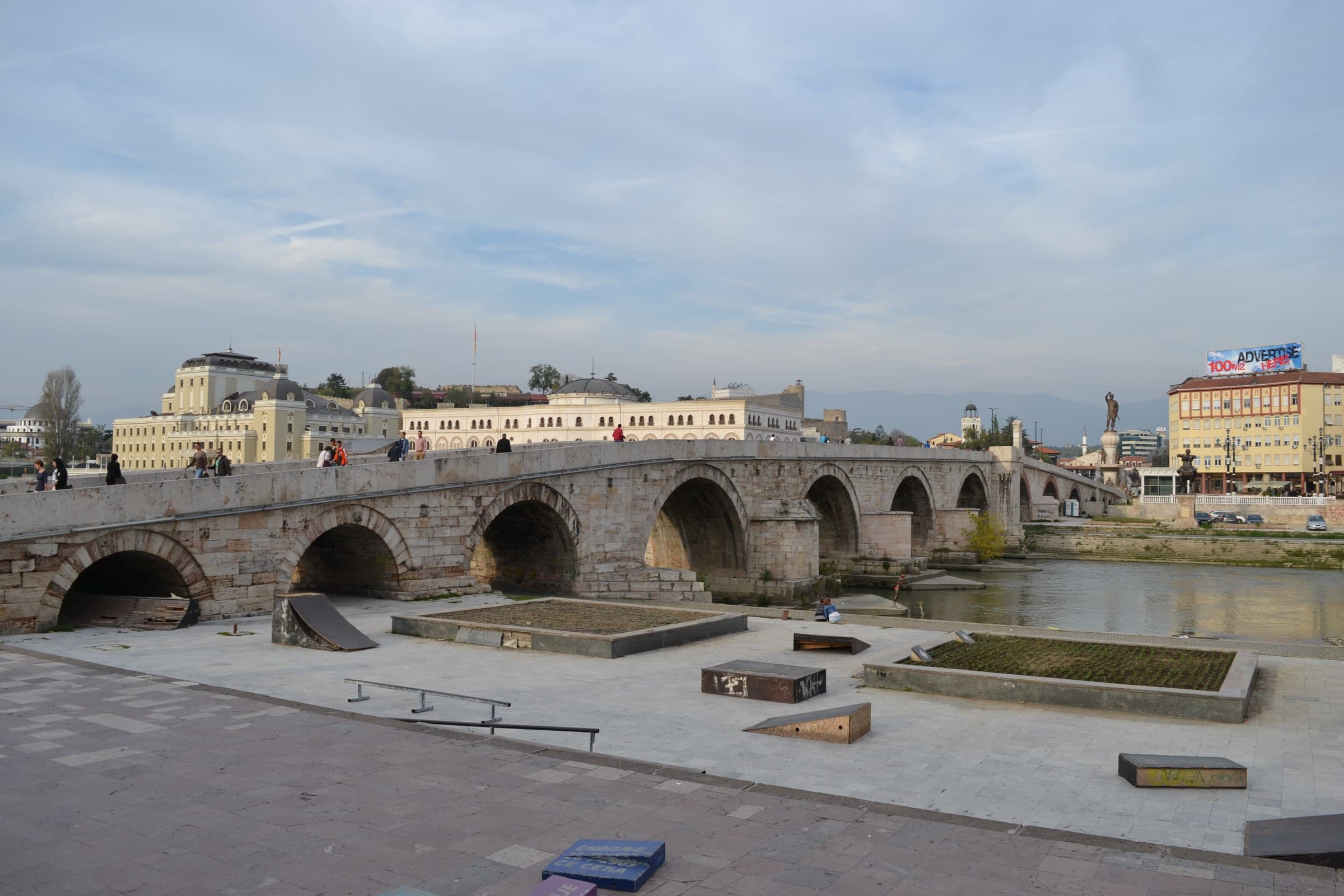
Skopje is two cities facing each other across the Vardar. On the north bank the Old Bazaar is the largest surviving Ottoman market quarter in the Balkans outside Istanbul — caravanserais, hammams, a 1492 mosque and the hill fort above them. On the south bank is the modern capital, flattened by the earthquake of 1963, rebuilt to a modernist plan, and then rebuilt again in the 2010s under a state programme that dressed public buildings in neoclassical facades and filled the squares with bronze. The result is a capital with no single period and a great deal of argument about itself, which is precisely what makes walking across the Stone Bridge interesting.
Best for
Known for
Skip if
You want an obviously handsome old city; Skopje's interest is in its collisions, not its coherence.
Your match
Choose a few travel interests and we will show how well Skopje fits them. Choose interests
See
The things that would make the trip incomplete without them.
Ottoman market quarter of lanes, caravanserais and hammams on the north bank
Go on a weekday morning when the goldsmiths and tinsmiths are working rather than the cafés.
Ottoman arched bridge over the Vardar linking the bazaar with the main square
Cross it on foot in both directions; the two halves of Skopje only make sense in contrast.
Single-domed mosque of 1492 with a rose garden on the terrace below the fortress
The terrace gives the best free view over the bazaar roofs; enter respectfully, outside prayer times.
Walled hill fort above the Vardar, with excavated layers from the Neolithic onward
Walk the ramparts at the end of the day; the walls, not the museum, are the reason to come up.
Mountain above the city with a cable car to a hilltop cross and long views over the basin
Take the cable car up and walk down through the woods; the descent is better than the ride.
City museum in the ruin of the old railway station, kept as the 1963 earthquake left it
The broken facade with its stopped clock says more than anything inside; stand in front of it first.
Eat
A short list, kept short on purpose. Each entry answers one question: when is this the right choice?
Too few picks yet for their own heading, so they share this list.
Bazaar kitchens turning out kebapi, tavče gravče and shopska salad all day
Order kebapi by the ten with a side of ajvar; this is the city's default lunch and rightly so.
Garden restaurants in the low-rise quarter west of the centre, busy every warm evening
Where Skopje actually eats out: book a garden table and order a spread of mezze rather than a main.
Old-quarter coffee rooms serving Turkish coffee in copper pots, and tulumba next door
Sit where the backgammon boards are; the coffee comes with as much time as you want.
Beyond the obvious
Less obvious, rarely queued for, and usually the part people remember.
Half-sunken church below the fortress with a carved walnut iconostasis of the 1820s
Built down into the ground to stay below the minarets; the carved screen is the finest in the country.
Ottoman double bath house now holding part of the National Gallery's collection
Worth it for the building as much as the art: the domed chambers are the exhibit.
Concrete landmarks of the 1960s and 1970s rebuilding, from the post office to the university
Find the circular central post office; it is one of the boldest concrete buildings in the Balkans.
After dark
Bars and wine rooms around the main square and in the streets of Debar Maalo
Ask for Vranec by the glass; the Tikveš reds are the country's best argument for staying out late.
Orientation
How the city is actually divided, and what each part is for.
The north bank: Ottoman lanes, mosques, hammams and the climb to the fortress
The one part of Skopje that has survived every rebuilding; give it a full half-day.
The south bank: Macedonia Square, the monuments of the 2010s and the concrete of the 1960s
Read it as a record of two very different ideas of what a capital should look like.
Leafy interwar quarter of low houses, gardens and the city's densest run of restaurants
Stay or eat here if you want the Skopje that neither rebuilding programme touched.
Stay
Areas rather than hotels — pick the right one and the rest follows.
Hotels around Macedonia Square, a few minutes' walk from the Stone Bridge and the bazaar
The practical base: everything in the city is within twenty minutes on foot.
Small hotels and guesthouses in and around the Old Bazaar, some in restored Ottoman houses
Better character and quieter at night, once the bazaar cafés shut.
Practical
Plan this trip — useful links
Context
Enough to make what you are looking at legible.
Scupi, a Roman colony on the Vardar, stood north-west of the present centre until an earthquake destroyed it in 518.
Under Ottoman rule the city grew around its bazaar, bridge, mosques and hammams, most of which still stand.
Anjezë Gonxhe Bojaxhiu, later known as Mother Teresa, was born in Skopje and spent her first eighteen years here.
An earthquake destroyed much of the city. International aid rebuilt it to a modernist plan, leaving the railway station as a ruin.
Skopje became the capital of an independent state, which was renamed North Macedonia in 2019.
A state building programme added neoclassical facades and many monuments to the centre, a contested transformation still debated.
Further out
Worth a day if you have one to spare.
Dammed gorge of the Treska with boats, caves and a medieval church on the water
The closest real escape from the capital, and reachable before breakfast is over.
Small town of medieval stone towers and arched bridges, built inside an extinct volcanic crater
An easy day out, and the most unexpected townscape in the country.