

Novo Brdo fortress
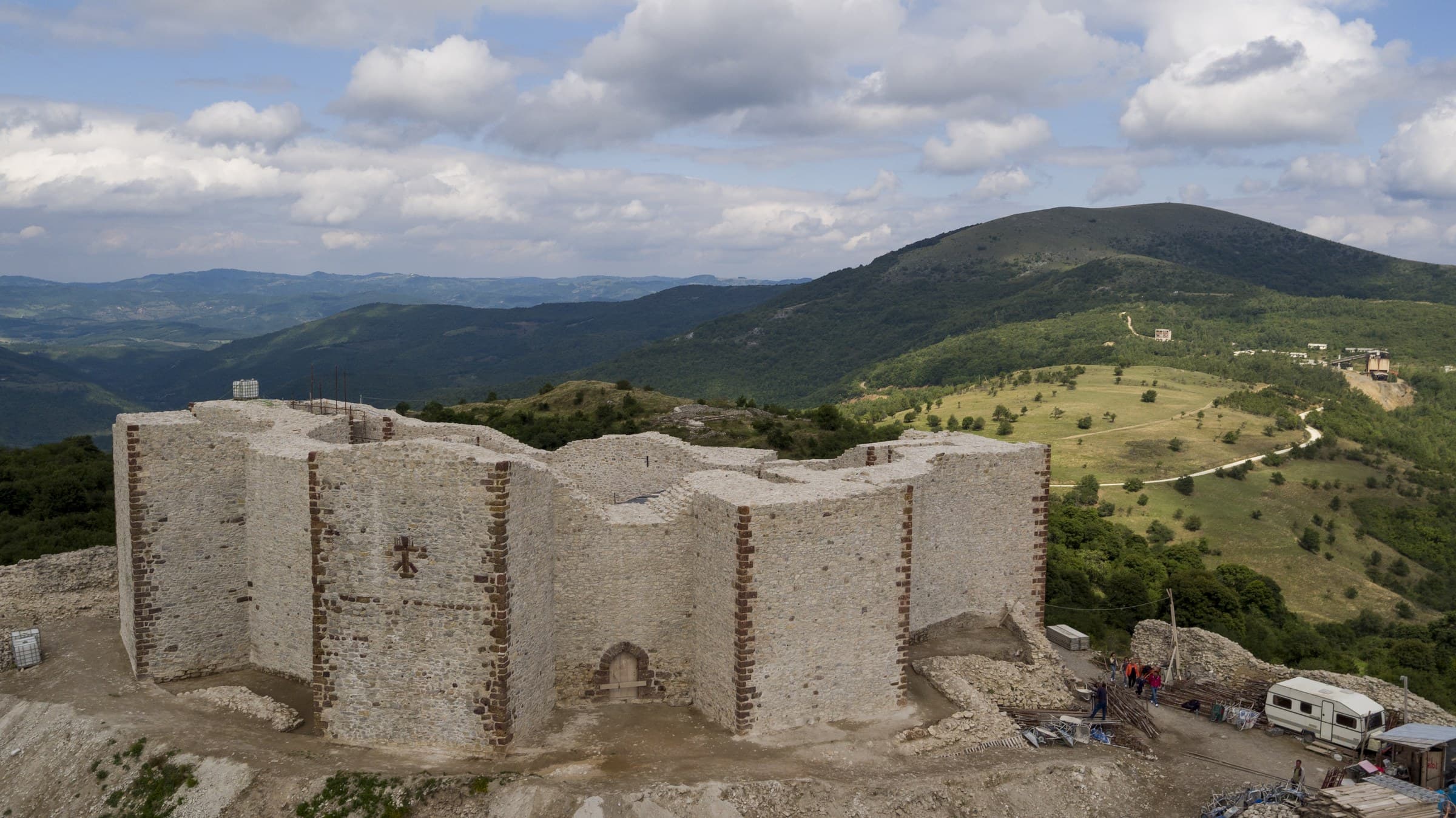
Ruined medieval fortress with a rectangular keep and six towers on a volcanic hilltop
Unfenced and unsupervised: walk the full circuit of the walls and watch your footing on the keep.
Novo BrdoFortress RuinHilltop
In 60 seconds
In the fifteenth century Novo Brdo was one of the wealthiest towns in the Balkans. Silver and argentiferous lead from the hills around it were mined by Saxon miners, minted on the spot and traded out through Ragusan merchant houses, and the town supported its own law, its own coinage and a mixed population of Serbs, Saxons, Ragusans and Albanians. It fell to the Ottomans in 1455, and the mining moved on. What is left is a hill with the broken keep and curtain walls of the fortress on top of it, a scatter of villages below, and almost nobody — which makes it one of the most atmospheric places in Kosovo and one of the least visited.
Best for
Known for
Skip if
You want anything provided; there is no ticket office, no café and no shade on the hill.
Your match
Choose a few travel interests and we will show how well Novo Brdo fits them. Choose interests
See
The things that would make the trip incomplete without them.
Ruined medieval fortress with a rectangular keep and six towers on a volcanic hilltop
Unfenced and unsupervised: walk the full circuit of the walls and watch your footing on the keep.
Spoil heaps, adits and slag from centuries of silver and lead extraction around the hill
Look for the grey slag in the fields; once you can recognise it, the scale of the trade is obvious.
Wide prospect from the walls over the Kosovo plain and the hills to the east
Go late in the day; the low light across the plain is the single best thing about the site.
Eat
A short list, kept short on purpose. Each entry answers one question: when is this the right choice?
Too few picks yet for their own heading, so they share this list.
A very small number of grills in the villages on the road up from Pristina
Do not count on finding anything open; bring food if you intend to spend the afternoon here.
Beyond the obvious
Less obvious, rarely queued for, and usually the part people remember.
Small medieval and later churches in the villages scattered below the fortress hill
Mostly locked, and worth finding anyway: they mark where the mining town's quarters actually stood.
Track climbing to the fortress through grazing land and thorn scrub
Twenty minutes on foot rather than driving to the top; the approach is how the site reveals itself.
Orientation
How the city is actually divided, and what each part is for.
The bare volcanic hill with the ruin on top and grazing land around it
A site rather than a settlement, and the emptiness is exactly the appeal.
Stay
Areas rather than hotels — pick the right one and the rest follows.
The capital, forty-five minutes west, which is where anyone visiting Novo Brdo sleeps
There is no accommodation at the site; this is a half-day out of Pristina.
Practical
Plan this trip — useful links
Context
Enough to make what you are looking at legible.
Silver and argentiferous lead workings drew Saxon miners and Ragusan merchants, and a town grew below the fortress.
Novo Brdo minted its own coin and became one of the wealthiest towns in the Balkans, with a mixed population and its own law.
The town fell to Ottoman forces after a siege, and much of its population was dispersed.
Mining declined and the town shrank to the villages that remain, leaving the fortress to collapse.
Excavation and consolidation work has stabilised parts of the walls and keep, which stand open to visitors.
Further out
Worth a day if you have one to spare.
Five-domed monastery church of about 1321, part of a UNESCO World Heritage property
The natural pairing, and the two sit at opposite ends of the same medieval story.
Europe's youngest capital, with a 1461 mosque, a famously strange library and good coffee
Close enough that the hill works as an afternoon escape from the capital.