
Traveleriences
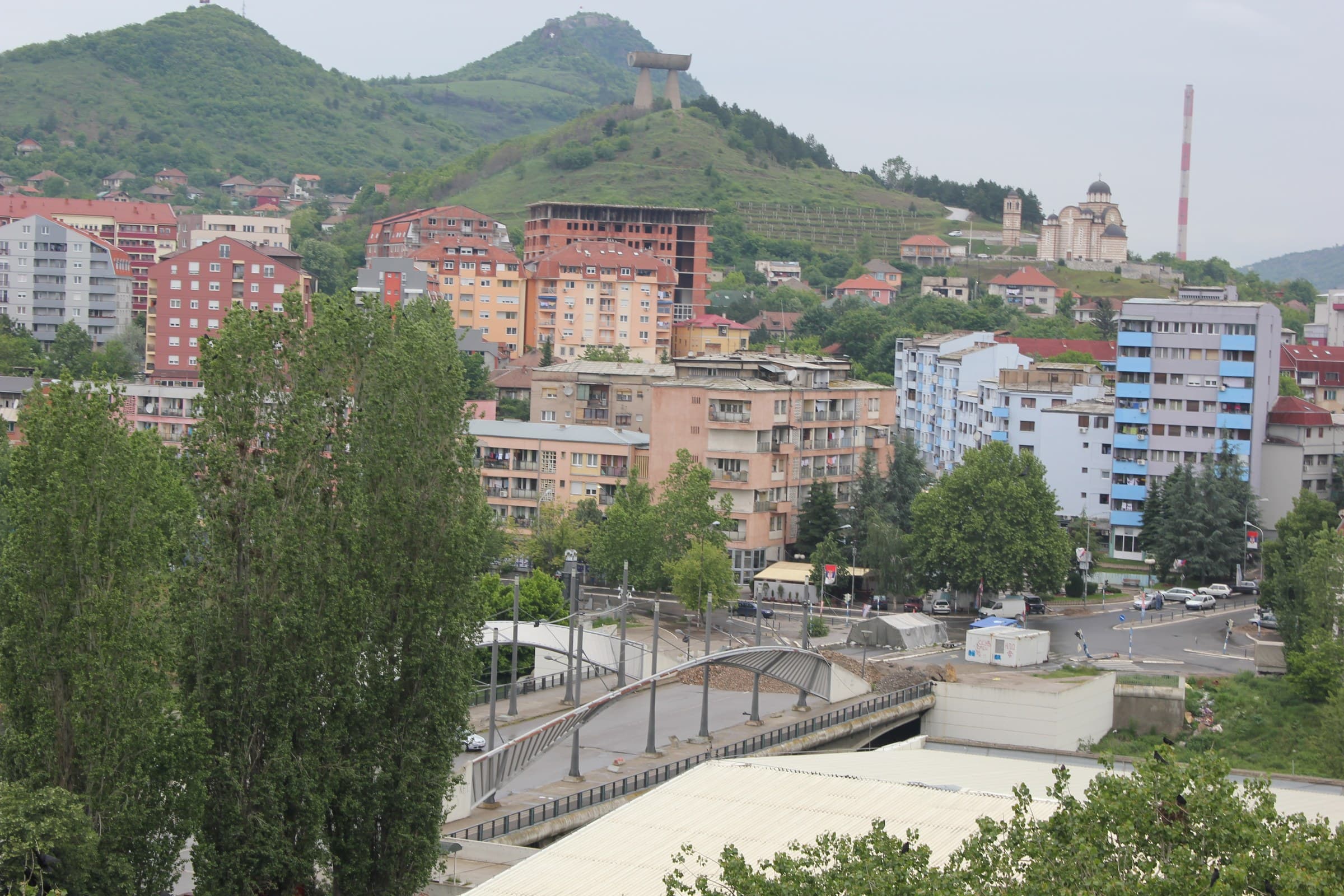
The bridge over the Ibar river between the two halves of Mitrovica

Mitrovica, Kosovo

Ideal: 1 dayBest: Apr–Jun, Sep–OctPrice: Inexpensive

In 60 seconds

Mitrovica in 60 seconds

Mitrovica grew on lead, zinc and silver. The Trepča complex in the hills around it was among the largest mining operations in Europe, and the city was built by and for it. Since 1999 it has been divided along the Ibar: the districts north of the river are predominantly Serb and those south of it predominantly Albanian, and since 2013 the two have been administered as separate municipalities. The bridge between them is the most photographed object in Kosovo and the most freighted. Above the southern side stands the Miners' Monument, raised in 1973 to Bogdan Bogdanović's design — two concrete pylons carrying a mine cart, and one of the finest works of Yugoslav memorial architecture anywhere.

Divided CityYugoslav ModernismMining HeritageIbar RiverMemorial Architecture

Best for

    Known for

    • The Miners' Monument of 1973 by Bogdan Bogdanović, two pylons carrying a mine cart above the city
    • The bridge over the Ibar, which has stood at the centre of the city's division since 1999
    • The Trepča mining complex, once among the largest producers of lead and zinc in Europe
    • Zvečan fortress on its volcanic crag north of the city, held since the Middle Ages
    • A city that can be read from both banks, and reads differently from each

    Skip if

    You want an untroubled day out; Mitrovica's division is the first thing you will notice and the last.

    Your match

    Choose a few travel interests and we will show how well Mitrovica fits them. Choose interests

    See

    Must experience

    The things that would make the trip incomplete without them.

    Miners' Monument

    Memorial of 1973 by Bogdan Bogdanović: two concrete pylons supporting a mine cart on a hill

    Walk up rather than drive, and stand underneath it; the scale only registers from directly below.

    Miners' HillMemorial ArchitectureMining Heritage

    The Ibar bridge

    Pedestrian bridge between the northern and southern districts, the city's defining landmark

    Crossing on foot is ordinary and quick; look at both approaches, because each side has arranged it differently.

    CentreBridgeDivided City

    The Trepča complex

    Mining and smelting works in the hills around the city, with workings dating back centuries

    Not open as a visitor site; seen from the roads around it, the scale of the operation is the point.

    TrepčaHillsIndustry

    Zvečan fortress

    Medieval fortress on a volcanic crag a few kilometres north of the city

    A short steep climb for a long view down the Ibar valley and over the mine workings.

    ZvečanFortress RuinMedieval

    Eat

    Where to eat

    A short list, kept short on purpose. Each entry answers one question: when is this the right choice?

    More places to eat

    Too few picks yet for their own heading, so they share this list.

    Southern district kitchens

    Inexpensive

    Grills and family restaurants in the southern districts, serving qebapa and baked dishes

    Straightforward and very cheap; the main street has most of the choice.

    South MitrovicaFamily runGrill House

    Northern district kitchens

    Inexpensive

    Kafane and grills north of the river, cooking the dishes of central Serbia

    A ten-minute walk and a different menu; the contrast across one bridge is instructive.

    North MitrovicaGrill HouseKafana

    Cafés on both banks

    Inexpensive

    Café streets a few minutes from each end of the bridge, busy on both sides

    Have a coffee on each side; nothing else explains the city as economically.

    CentreCafé CultureCoffee

    Beyond the obvious

    Hidden gems

    Less obvious, rarely queued for, and usually the part people remember.

    Isa Beg Hammam

    Ottoman bath house in the southern districts, restored and used as a cultural space

    Easily missed, and the oldest thing standing in the city; check what is on when you pass.

    CentreCultural SpaceOttoman Bath

    The miners' housing

    Interwar and socialist-era housing built for the mine's workforce across both banks

    Walk a few of these streets to understand that this was a company city before it was a divided one.

    Around MitrovicaMining HeritageModernism

    Orientation

    Neighbourhoods

    How the city is actually divided, and what each part is for.

    South Mitrovica

    Districts south of the Ibar, predominantly Albanian, with the hammam and Miners' Hill above

    Where the monument, the hammam and most of the restaurants are.

    Divided CityMain Street

    North Mitrovica

    Districts north of the Ibar, predominantly Serb, with the road on towards Zvečan

    A short walk over the bridge, and the easiest way to see that this is one city twice over.

    Divided CityIbar River

    Stay

    Where to stay

    Areas rather than hotels — pick the right one and the rest follows.

    Mitrovica

    A small number of hotels on both banks, mostly used by people working in the city

    Functional rather than appealing; many visitors come for a day from Pristina instead.

    Divided CityHotels

    Practical

    Know before you go

    Getting There
    Mitrovica is about 45 min north-west of Pristina by road, with frequent coaches to the southern districts.
    Getting Around
    Both halves of the centre are walkable and the bridge is crossed on foot. Taxis generally work one side only.
    Currency
    Euro (EUR) is used throughout; in the northern districts the Serbian Dinar is also in circulation.
    The Division
    Crossing the bridge on foot is routine, but conditions in the city occasionally change; check locally before visiting.
    Onward Travel
    Buses north towards Serbia leave from the northern districts and those south from the southern ones.

    Context

    History in 5 minutes

    Enough to make what you are looking at legible.

    1. Middle Ages

      Zvečan fortress guarded the Ibar valley, and lead and silver were worked in the hills that became Trepča.

    2. 1920s–1930s

      The Trepča mines were developed on an industrial scale under British concession, and the city grew around them.

    3. 1945–1990

      Trepča became one of Europe's largest lead and zinc producers, and the city was built out as a company town.

    4. 1973

      The Miners' Monument was raised on the hill above the city to the design of Bogdan Bogdanović.

    5. 1998–1999

      The Kosovo War and the NATO intervention of 1999 ended with the city divided along the Ibar, and large-scale displacement on both sides.

    6. 2013

      The northern and southern districts were established as separate municipalities under the agreement reached that year.

    Further out

    Nearby escapes

    Worth a day if you have one to spare.

    Pristina

    Europe's youngest capital, with a 1461 mosque, a famously strange library and good coffee

    The usual base, and close enough that Mitrovica is comfortably a half-day.

    45 min drive south-eastBrutalismCafé Culture

    Peja / Peć & Rugova Canyon

    Gorge road into the Accursed Mountains, with the four-church Patriarchate at its mouth

    The onward move west, and a complete change from industry to high limestone.

    1 hr 15 min drive south-westAccursed MountainsKarst Canyon