

The Clock Tower
The tallest of Kratovo's medieval stone towers, later given a clock and a bell stage
Look for the absence of stairs at ground level; these towers were built to be hard to get into.
Old TownClock TowerMedieval Mining
In 60 seconds
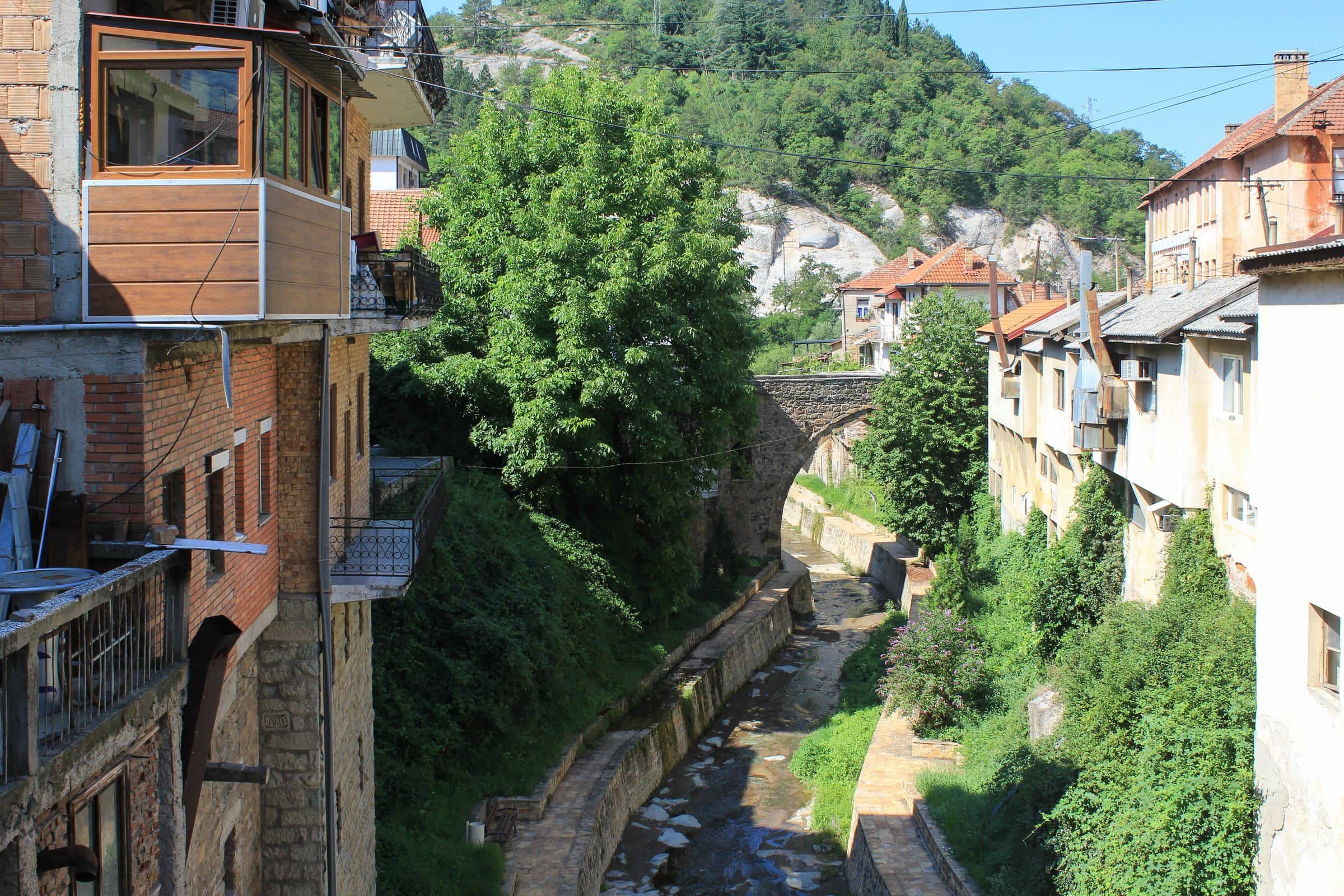
Kratovo sits in the bowl of an extinct volcano, and the town has grown down the sides of it and across the ravines at the bottom. Mediaeval mining money paid for a set of tall stone towers — more than any other town in the country, of which six still stand, the best known now carrying a clock — and for the carved stone bridges that stitch the quarters together above the stream. Nothing here is on a large scale and very little has been tidied up, which is why Kratovo is the most unexpected townscape in North Macedonia. The volcanic country around it holds the eroded earth pillars of Kuklica and the rock-cut site of Cocev Kamen.
Best for
Known for
Skip if
You need museums, restaurants or anything organised; Kratovo is a half-day of walking and looking.
Your match
Choose a few travel interests and we will show how well Kratovo fits them. Choose interests
See
The things that would make the trip incomplete without them.
The tallest of Kratovo's medieval stone towers, later given a clock and a bell stage
Look for the absence of stairs at ground level; these towers were built to be hard to get into.
Six stone towers standing among the houses on both banks of the ravine
Walk between them rather than to them; the point is how casually they sit among ordinary houses.
Carved stone arches over the Kratovska stream, the best known called Rada's Bridge
Cross Rada's Bridge and then look back up at it from the streambed; that is the view worth having.
Field of eroded volcanic earth pillars capped with harder rock, a short drive from town
Go in low light, when the pillars throw shadows and look as much like figures as the name promises.
Eat
A short list, kept short on purpose. Each entry answers one question: when is this the right choice?
Too few picks yet for their own heading, so they share this list.
A few small restaurants near the centre serving grills and regional home cooking
Choice is limited and prices are low; ask what is cooked that day rather than reading a menu.
Cafés on the small central square below the towers
Where everyone in Kratovo ends up; sit outside and the whole town walks past within an hour.
Beyond the obvious
Less obvious, rarely queued for, and usually the part people remember.
Volcanic rock outcrop with cut chambers, steps and basins, used from prehistory onward
Unsigned, unfenced and genuinely odd; the cut steps and seats are what make the visit.
Traces of the medieval gold and silver workings that paid for the towers
Ask locally before going near any of them; the point is understanding where the towers' money came from.
Orientation
How the city is actually divided, and what each part is for.
The crater floor and its sides: towers, bridges, stepped lanes and the central square
The whole town is the sight, and it takes about two hours to walk properly.
Stay
Areas rather than hotels — pick the right one and the rest follows.
A small number of guesthouses in the old town, some in restored stone houses
Very limited, and most people come for the day from Skopje; book ahead if you do want to stay.
Practical
Plan this trip — useful links
Context
Enough to make what you are looking at legible.
A settlement called Kratiskara is recorded in the volcanic basin, on the route between the Vardar and the Morava.
Gold, silver and lead mining made the town wealthy, and its merchant families built the stone towers.
The towers were kept, some used to store ore, and the stone bridges were built and rebuilt over the ravines.
Mining declined and the town shrank, leaving the towers and bridges standing among ordinary houses.
Further out
Worth a day if you have one to spare.
The capital, with its Ottoman bazaar, hill fortress and monumental centre
Kratovo is almost always visited from Skopje, and a day trip is the right length.
Pine-forested highland in the far east, with a lake, monasteries and long ridge walks
A long drive, and the natural pairing if you are working your way through the eastern half of the country.