

Kalmar Castle
ModerateMedieval fortress, Renaissance palace
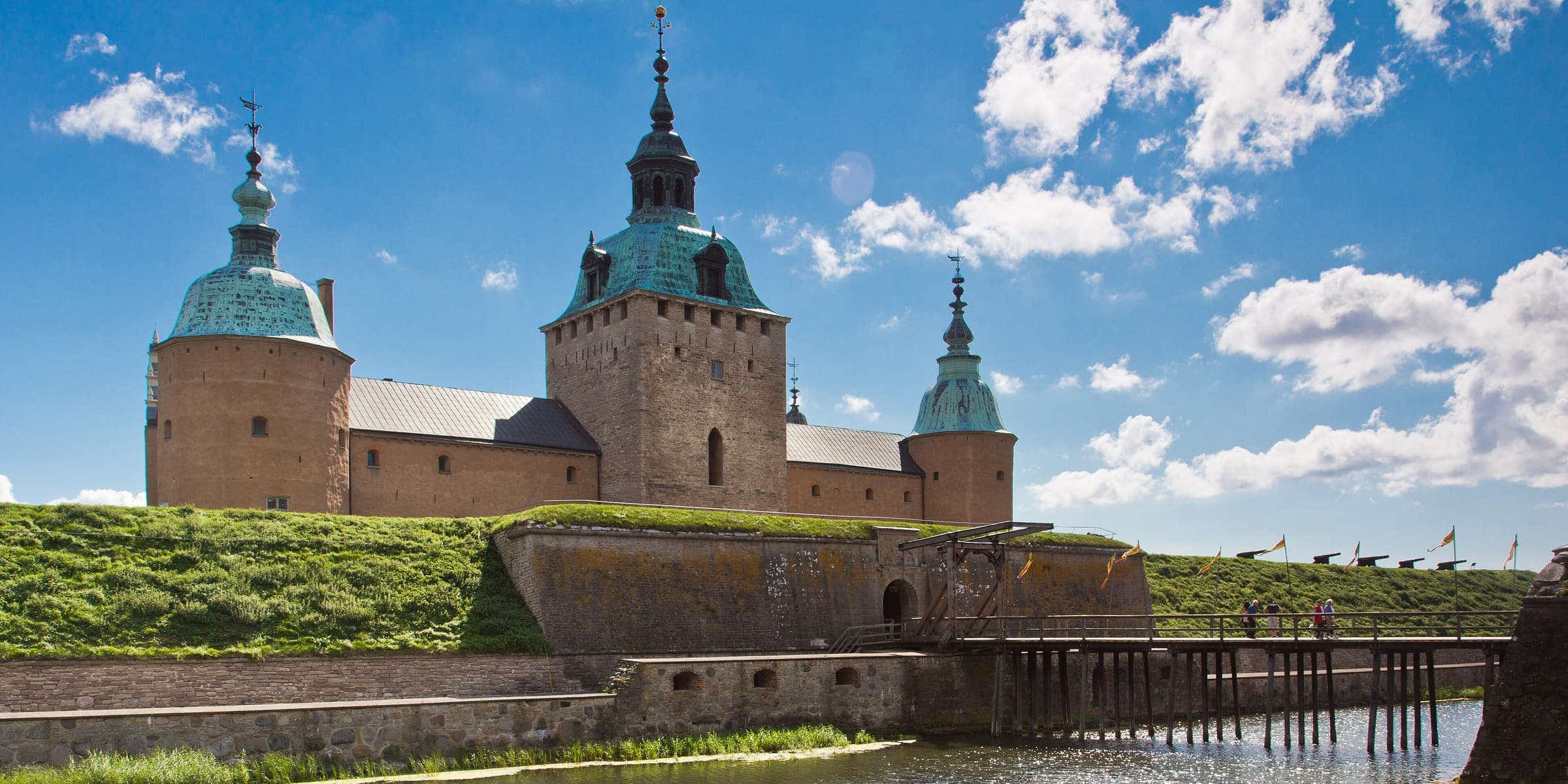
Walk the moats and ramparts, then the state rooms Gustav Vasa's sons decorated — inlaid panelling, painted ceilings and a chapel still in use.
SlottetHistoryMust-see
In 60 seconds
Kalmar was once the key to Sweden: in 1397 its castle hosted the signing of the Kalmar Union, which joined the three Nordic crowns, and through 22 sieges it was never taken. Gustav Vasa and his sons turned the fortress into a Renaissance palace, and its moats, ramparts and painted state rooms are the finest in the country. In the 1600s the town moved to the island of Kvarnholmen, laid out on a baroque grid around Tessin's great cathedral; the old town by the castle kept its wooden houses and gardens. The county museum displays the finds from the warship Kronan, which exploded and sank off Öland in 1676. Kalmar is a good-looking, easy small city, and the bridge to Öland starts here. Give it a day, or make it your base for the island.
Best for
Known for
Skip if
You have seen plenty of castles and want wild nature — Kalmar is a handsome small city, and Öland across the bridge has the landscapes.
Your match
Choose a few travel interests and we will show how well Kalmar fits them. Choose interests
See
The things that would make the trip incomplete without them.
Medieval fortress, Renaissance palace
Walk the moats and ramparts, then the state rooms Gustav Vasa's sons decorated — inlaid panelling, painted ceilings and a chapel still in use.
Baroque cathedral by Tessin the Elder
A cool, light baroque interior on the main square, begun in 1660 and finished in 1703.
The finds from the warship Kronan
Gold coins, instruments and the sailors' belongings recovered from the Kronan, which blew up and sank off Öland in 1676.
Eat
A short list, kept short on purpose. Each entry answers one question: when is this the right choice?
Too few picks yet for their own heading, so they share this list.
Modern restaurant on the strait
A modern room on the old shipyard island with a view across Kalmarsund to Öland.
Museum restaurant on the top floor
Lunch at the top of the county museum, with views over the strait and the Öland Bridge.
Upstairs café in an 18th-century house
Creaking floors, tiled stoves and homemade pies and cakes in rooms furnished as in the 1800s.
Beyond the obvious
Less obvious, rarely queued for, and usually the part people remember.
Old town garden and house
A 19th-century town garden by the old town, with a summer café serving drinks from its own fruit and berries.
The old town by the castle
The town left behind when Kalmar moved to Kvarnholmen: quiet lanes of wooden houses and an old cemetery near the castle park.
Orientation
How the city is actually divided, and what each part is for.
The baroque island town
The cathedral square, the shopping streets and the ramparts, on a grid laid out in the 1600s.
Stay
Areas rather than hotels — pick the right one and the rest follows.
Hotels near the station and harbour
Walk to the castle and the restaurants, and catch the bus over the bridge to Öland.
Practical
Plan this trip — useful links
Context
Enough to make what you are looking at legible.
The Kalmar Union is sealed at the castle, joining Denmark, Norway and Sweden under one monarch.
Gustav Vasa and his sons begin rebuilding the fortress as a Renaissance palace.
The move of the town to the island of Kvarnholmen is largely complete.
The warship Kronan explodes and sinks in battle off Öland; her wreck is found in 1980.
Further out
Worth a day if you have one to spare.
The limestone island across the bridge
Windmills, ring forts and the UNESCO-listed Alvaret — Öland has its own guide.
The Kingdom of Crystal's glassworks
Glassblowing in the Småland forest — Glasriket has its own guide.