

Gränna's polkagris shops
Peppermint rock pulled by hand
Several sweet makers along the main street boil and twist the striped rock in front of the counter; buy it fresh and still soft.
BrahegatanFreeSweets
In 60 seconds
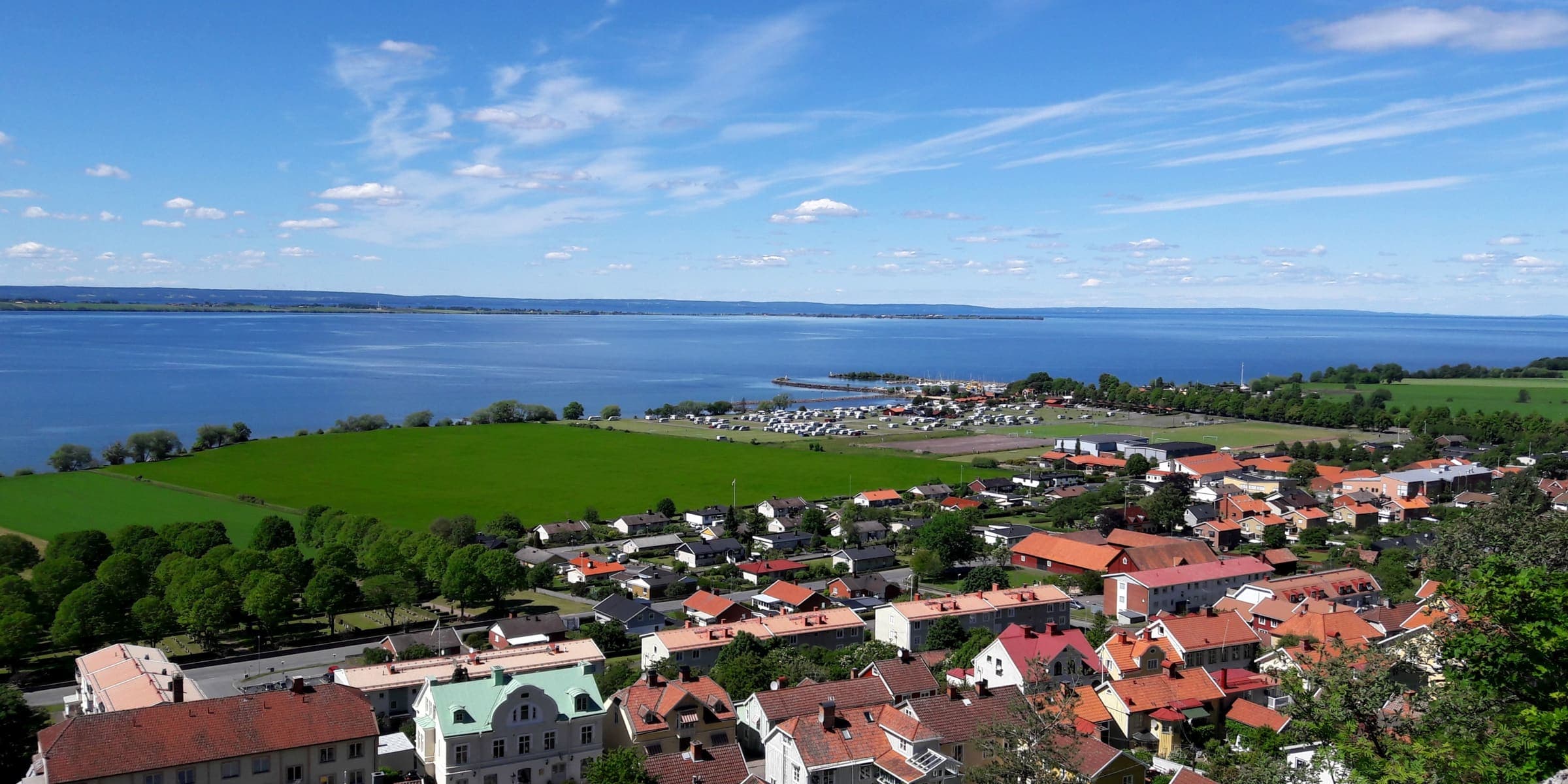
Gränna is a 17th-century town on the steep east shore of Vättern, Sweden's second-largest lake, and it smells of peppermint: in 1859 a young widow, Amalia Eriksson, began pulling red-and-white polkagris here, and its sweet shops still make it by hand. It is also the home town of S. A. Andrée, whose balloon set off for the North Pole in 1897 and vanished; the story, and the photographs found with the bodies 33 years later, fill the Grenna Museum. From the harbour a ferry crosses in under half an hour to Visingsö, a long, flat island of farms, the ruins of two castles where medieval kings lived and died, and an oak forest planted for warships that were never built. Hire a bike or ride a horse-drawn carriage. A day is enough; stay the night for the sunset over the lake.
Best for
Known for
Skip if
You dislike tourist towns in high summer — on a July afternoon Gränna's main street is a queue for sweets.
Your match
Choose a few travel interests and we will show how well Gränna & Visingsö fits them. Choose interests
See
The things that would make the trip incomplete without them.
Peppermint rock pulled by hand
Several sweet makers along the main street boil and twist the striped rock in front of the counter; buy it fresh and still soft.
The balloon flight to the North Pole
The 1897 flight of the balloon Örnen, the three men's diaries and the film recovered from the ice in 1930, developed after 33 years.
Island of farms, ruins and oaks
Fourteen kilometres long and gloriously flat: cycle to the ruined castles, the painted medieval church at Kumlaby and the oak forest.
Castle ruin on the ridge above the lake
Per Brahe's 17th-century hilltop house, burned in 1708; climb the ruin for the classic view of Vättern and Visingsö.
Eat
A short list, kept short on purpose. Each entry answers one question: when is this the right choice?
Too few picks yet for their own heading, so they share this list.
Lake-view dining room above Gränna
Vättern char and Småland's isterband sausage in chandelier-lit rooms with a view across to Visingsö.
Sweet shop and candy kitchen
Polkagris made the way it was in Amalia Eriksson's day, and the chance to book a session pulling your own.
Beyond the obvious
Less obvious, rarely queued for, and usually the part people remember.
Royal castle on Visingsö's southern tip
Only foundations remain of the 12th-century castle where four Swedish kings died, Magnus Ladulås among them; a quiet, windswept spot.
The navy's forest that was never felled
Planted from 1831 to build warships; by the time the oaks were grown, ships were made of steel. Walk the paths under them.
Hillside trails above the town
Steep paths straight up from the town to a lookout over the rooftops, the harbour and the whole lake.
Orientation
How the city is actually divided, and what each part is for.
Wooden houses on a grid laid out in 1652
One main street of sweet shops and old wooden houses, running down to the harbour and the ferry.
Stay
Areas rather than hotels — pick the right one and the rest follows.
Hotels and B&Bs above the lake
Stay in town for the evening light over Vättern and an early ferry before the day visitors.
Farm stays and a hostel on the island
When the last ferry leaves, the island is yours.
Practical
Plan this trip — useful links
Context
Enough to make what you are looking at legible.
Kings of the House of Sverker build their castle at Näs on Visingsö.
Count Per Brahe the Younger founds Gränna below his house at Brahehus.
Amalia Eriksson is granted permission to bake and sell polkagris.
Gränna-born S. A. Andrée launches his balloon for the North Pole; the crew's last camp is found in 1930.
Further out
Worth a day if you have one to spare.
Lake city at the foot of Vättern
The town that made the safety match famous tells the story in its old factory; a lakeside promenade runs along the water.