

Walk the marble streets of Ephesus and the Library of Celsus
Tread the polished chariot-worn marble of the Curetes Way, marvel at the restored two-storey facade of Celsus Library, and stand inside the colossal Great Theatre.
At a glance
April to May and September to October for mild Aegean temperatures; spring brings blooming red poppies among the ruins
Early morning right at opening (or late afternoon) before midday tour groups arrive from Aegean cruise ports
3 to 4 hours to thoroughly explore the lower and upper city, terrace houses, and archaeological site
UNESCO Greco-Roman archaeological exploration · Ancient city walking
Moderate (walking over slick, sun-baked marble slabs and ancient stone staircases)
Admission tickets available online or at the site gates; separate ticket required for the Terrace Houses
Why Ephesus stands as the grandest surviving classical city in the Mediterranean
Once second only to Rome in imperial stature, Ephesus was the thriving capital of Roman Asia, home to over 200,000 citizens and the legendary Temple of Artemis—one of the Seven Wonders of the Ancient World. What sets Ephesus apart from virtually all other Mediterranean archaeological ruins is the astonishing completeness of its monumental civic architecture.
Walking down the Curetes Way, you do not simply look at isolated columns; you walk down genuine Roman avenues paved with gleaming white marble slabs, still etched with ancient board games, chariot wheel grooves, and civic inscriptions. Elaborate Corinthian porticoes, public fountains, bath complexes, and latrines flank the way.
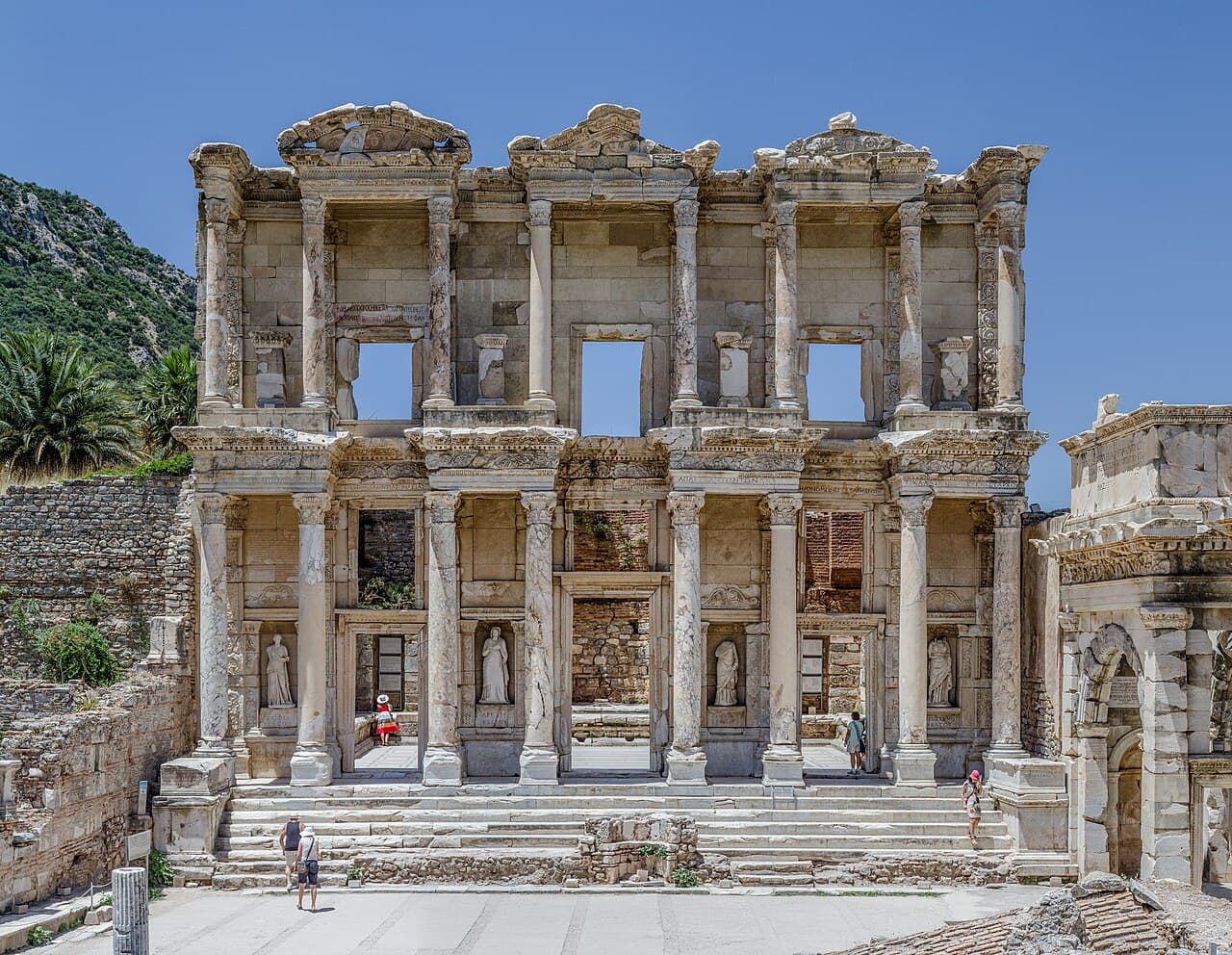
The focal climax is the Library of Celsus, erected in the second century CE as both a mausoleum and repository for twelve thousand scrolls. Reconstructed with meticulous historical accuracy, its soaring double-tiered marble facade with statues representing Wisdom, Virtue, Intelligence, and Knowledge is one of humanity's finest classical visions.
Descending the Curetes Way from the upper gate to the harbour
The Upper Gate and State Agora
Enter near the Odeon and Council Chamber, looking down the hillside over the monumental expanse of the ancient city.
Walking Curetes Way to the Library
Descend the grand marble avenue between Corinthian colonnades, the Temple of Hadrian, and Trajan's Fountain.
The sheltered Terrace Houses
Step inside the climate-controlled walkway over the luxury villas of Roman patricians with heating systems and frescoes.
The Great Theatre and Harbour Way
Sit on the carved stone benches of the 25,000-seat amphitheatre looking down the Arcadian Way to the ancient harbour.
Plan your experience
When to go
Spring (April to June) and autumn (September to November) provide ideal walking conditions. In July and August, temperatures routinely exceed 38°C on the reflective stone, making morning exploration essential.
Getting there
Direct trains run from İzmir Basmane Station and Adnan Menderes Airport to Selçuk in 1 hour and 20 minutes. From Selçuk bus station, dolmuş minibuses depart every 15 minutes to the lower Ephesus gate.
Booking & permits
Purchase the Turkish Museum Pass or advance digital tickets from the official Ministry portal to bypass ticket window lines at peak cruise morning hours.
What to bring
- Shoes with excellent rubber grip (avoid smooth-soled sandals on polished marble paving)
- Wide-brimmed sun hat, sunglasses, and high-SPF sunscreen (the site has minimal shade)
- Ample drinking water in a refillable bottle
Before you go
- Visit the exceptional Ephesus Archaeological Museum in downtown Selçuk to see the original statues of Artemis of Ephesus
- Explore the sixth-century Basilica of Saint John and the hilltop Selçuk Byzantine fortress above town
- Stop at a roadside fruit orchard to taste fresh Aegean figs, pomegranates, and sweet honeydew melons
Official information
Always verify permits, seasonal weather conditions and access directly with public authorities:
Official ticketing portal for Ephesus Archaeological Site, Terrace Houses, and the Selçuk Museum.
Official UNESCO dossier documenting the archaeological integrity and historical significance of Ephesus.
Ways to experience it
Walk down through the site from the Upper Magnesian Gate to the Lower Harbour Gate, allowing gravity to assist your descent.
Hire an authorized licensed Turkish archaeological guide at the entrance gate for detailed historical narrative and deciphered inscriptions.
Certified providers & operators
Selçuk Tour Guides Collective
Official licensed private and small-group walking tours of Ephesus and the Terrace Houses
Certified cultural guides registered with the Turkish Chamber of Tourist Guides (TUREB).