

Climb to the Acropolis above Athens
Ascend the sacred limestone plateau at opening light to stand before the golden Pentelic marble columns of the Parthenon before city heat and crowds arrive.
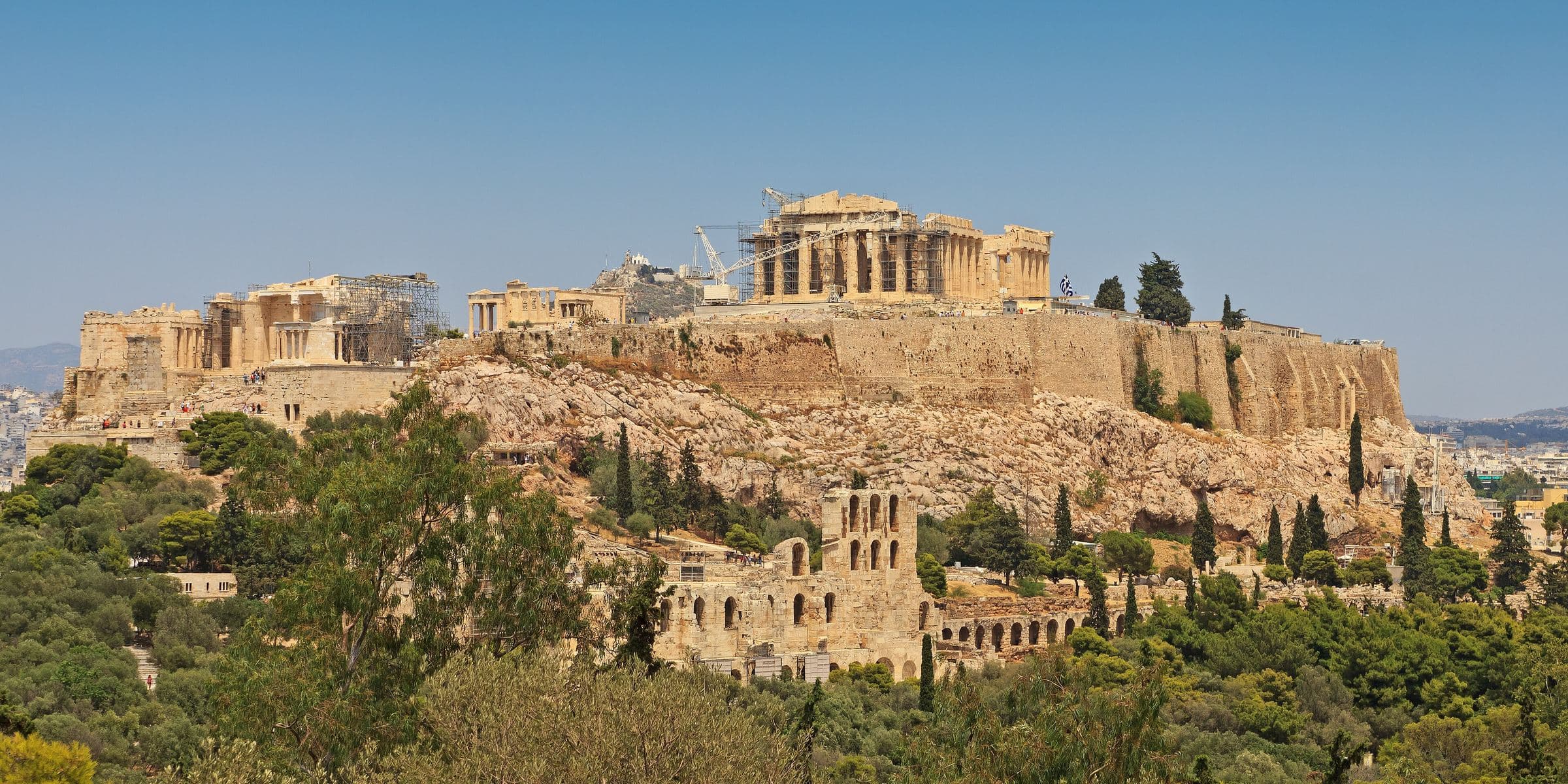
At a glance
April to June and September to November for clear skies, wild poppies, and mild walking temperatures
Early morning at opening to experience the monuments in quiet sunrise splendour before midday heat
2 to 3 hours on the plateau plus time for the south slope theatres and Acropolis Museum
Ancient sanctuary walking ascent · Classical Greek architecture
Moderate
Advance booking recommended
Why the Acropolis remains the foundational beacon of European civilization
Rising 156 metres above the Attica basin on a natural limestone spur, the Acropolis of Athens is the most celebrated citadel of the ancient world. Conceived by statesman Pericles during the Golden Age of Athens in the 5th century BC, its monumental temples were built with honey-toned Pentelic marble to demonstrate the intellectual, political, and artistic ideals of Athenian democracy.
The Parthenon, dedicated to Athena Polias, represents the absolute zenith of architectural sophistication: there are virtually no straight lines in the entire building. The stylobate curves gently upward toward the centre, the columns taper with subtle entasis, and the corner columns incline slightly inward to correct human optical illusions and create an aura of divine organic harmony.
Walking through the towering monumental gateway of the Propylaea at first light, as the morning breeze stirs over olive trees and the sun ignites the marble colonnades against a backdrop of the Saronic Gulf, is a deeply moving pilgrimage to the cradle of Western philosophy, drama, and civic life.
Ascending the sacred rock through two and a half millennia of history
South slope ascent past ancient theatres
Enter via the Dionysiou Areopagitou south gate, ascending past the 17,000-seat Theatre of Dionysus and the grand Odeon of Herodes Atticus.
The marble stairway through the Propylaea
Climb the grand Roman Beulé Gate and monumental marble steps of the Propylaea, catching sight of the delicate Temple of Athena Nike.
First view of the Parthenon
Pass through the central gateway onto the rocky plateau, where the monumental east-west expanse of the Parthenon suddenly fills the horizon.
The Caryatid Porch of the Erechtheion
Walk around to the north edge to inspect the intricate Ionic carvings and the six sculpted maidens supporting the roof of the Erechtheion.
Plan your experience
When to go
The site is accessible year-round. Spring (April and May) brings carpets of bright red poppies growing between ancient stones and mild temperatures. Early autumn (September and October) offers golden afternoon light and calmer winds.
Getting there
Take metro Line 2 (red line) to Acropoli station, walk 100 metres west along the pedestrianized Dionysiou Areopagitou boulevard, and use the South Slope ticket gate to bypass the busier main western bus parking entrance.
Booking & permits
All visitors must reserve an official timed-entry admission slot online in advance through the Hellenic Heritage e-ticketing portal (hhticket.gr). Booking the earliest opening time slot ensures you enter before cruise excursion coaches arrive.
What to bring
- Sturdy walking shoes with reliable non-slip rubber grip (marble steps are polished like glass)
- Wide-brimmed sun hat, sunglasses, and high-SPF sunscreen (the plateau has no shade)
- Refillable water bottle (water fountains are available at the entrance and summit)
- Camera with a wide-angle lens for capturing the monumental scale of the Parthenon
Before you go
- Arrive at your assigned entrance gate 15 minutes prior to your ticketed time slot
- Book a combined ticket if you also plan to explore the Roman Agora, Ancient Agora, and Temple of Olympian Zeus
- Pair your morning monument visit with an afternoon exploration of the glass-floored Acropolis Museum to see the original Parthenon frieze
Official information
Always verify permits, seasonal weather conditions and access directly with public authorities:
Official Ministry of Culture portal for reserving mandatory timed-entry tickets and multi-site passes.
Official Hellenic archaeological authority resource detailing restoration programmes, site history, and conservation rules.
Ways to experience it
Explore independently at your own pace with a downloaded official audio guide, lingering beneath the Caryatid Porch and reading historical markers.
Book a licensed Greek state archaeologist for a small-group morning tour that unpacks classical mythology, architectural engineering, and wartime sieges.
Certified providers & operators
Athens Licensed Guides Association
Official classical archaeological and Acropolis walking tours
Licensed Greek university-trained archaeological specialists.