

Rostov Veliky Kremlin & Assumption Belfry
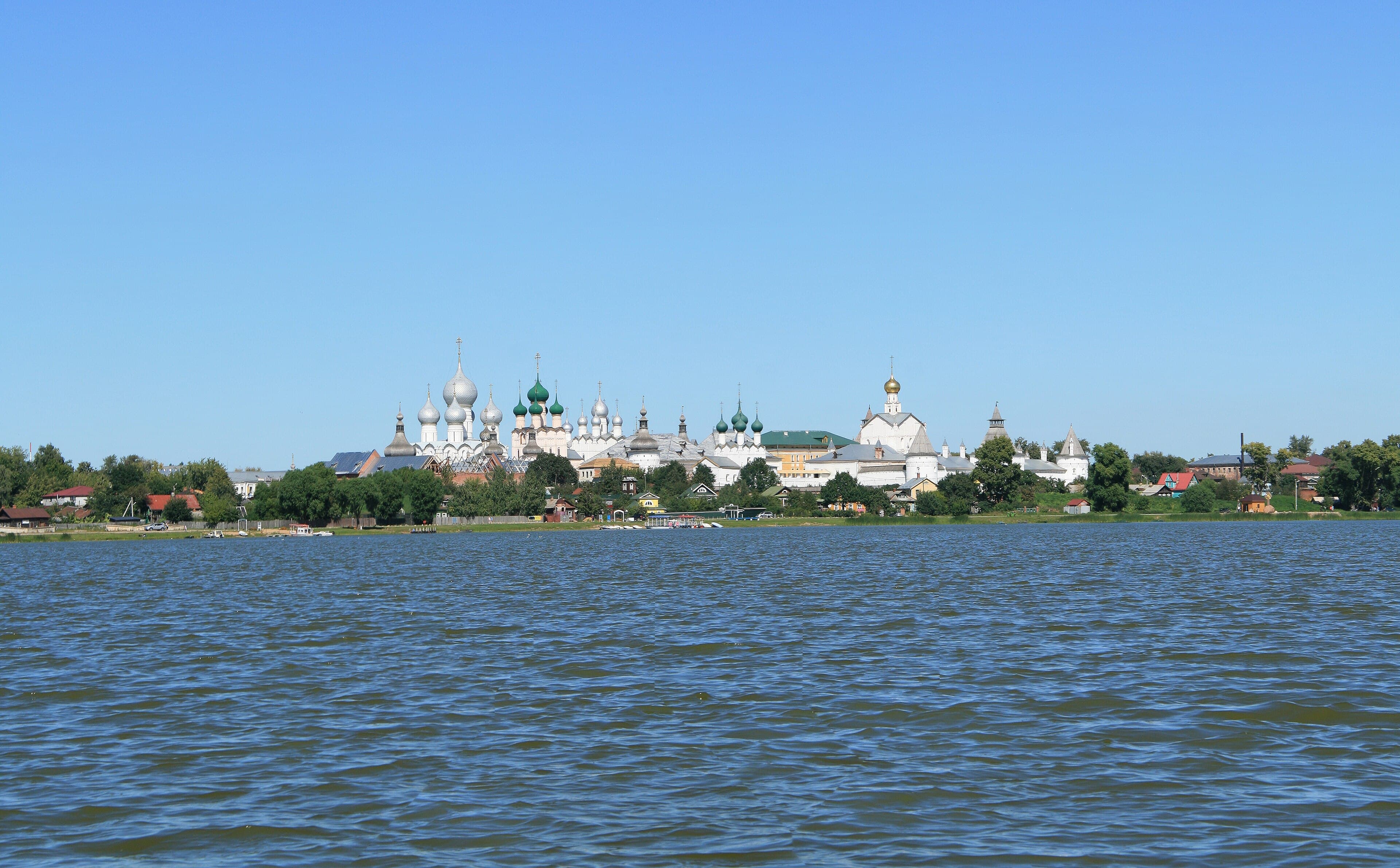
1670–1683 whitewashed episcopal citadel on the shore of Lake Nero
Walk the covered wall galleries linking the Gate Churches and hear the fifteen-bell belfry chime.
In 60 seconds
On the upper Volga northeast of Moscow, Yaroslavl pairs a UNESCO-listed historic centre—famed for seventeenth-century merchant churches clad in green glazed tiles and floor-to-ceiling frescoes—with the nearby lakeside town of Rostov Veliky, where the seventeenth-century Metropolitan's Court (Rostov Kremlin) rises directly beside shallow Lake Nero.
Best for
Known for
Skip if
You visit outside May–October when several unheated seventeenth-century fresco churches close.
Your match
Choose a few travel interests and we will show how well Yaroslavl & Rostov Veliky fits them. Choose interests
See
The things that would make the trip incomplete without them.
1670–1683 whitewashed episcopal citadel on the shore of Lake Nero
Walk the covered wall galleries linking the Gate Churches and hear the fifteen-bell belfry chime.
1647–1650 merchant church on Soviet Square
Preserves a complete 1680 fresco cycle painted by Kostroma masters Gury Nikitin and Sila Savin.
Two-level riverside promenade at the founding confluence of Yaroslavl
Walk from the Volkov Theatre and Governor's House garden down to the river point.
Beyond the obvious
Less obvious, rarely queued for, and usually the part people remember.
1671–1687 fifteen-domed red-brick church with glazed ceramic tile friezes
The most elaborate example of the seventeenth-century Yaroslavl architectural school.
Lakeside monastery combining seventeenth-century walls with a neoclassical cathedral
Stands on the western shore of Lake Nero with views back toward the Rostov Kremlin.