

Melk Abbey (Stift Melk)
ModerateBaroque Benedictine abbey · Masterpiece by Jakob Prandtauer
Perched dramatically above the Danube, featuring ceiling frescoes, gold stuccowork and a world-famous 100,000-volume monastic library.
MelkAbbeyBaroque
In 60 seconds
Carved by the Danube between the monumental Benedictine abbeys of Melk and Göttweig, the Wachau is Austria's most celebrated river landscape and dry white wine heartland. Steep stone terraces support world-class Grüner Veltliner and Riesling vineyards, orchards bloom with aromatic Wachau apricots every spring, and riverside cycle paths wind past medieval castles and sleepy wine villages. One to three days allows time to cycle, cruise and cellar-taste at an unhurried pace.
Best for
Known for
Skip if
You want high-speed alpine adventure; the Wachau is a gentle, epicurean river valley made for cycling, wine tasting and slow boat journeys.
Your match
Choose a few travel interests and we will show how well Wachau Valley fits them. Choose interests
See
The things that would make the trip incomplete without them.
Baroque Benedictine abbey · Masterpiece by Jakob Prandtauer
Perched dramatically above the Danube, featuring ceiling frescoes, gold stuccowork and a world-famous 100,000-volume monastic library.
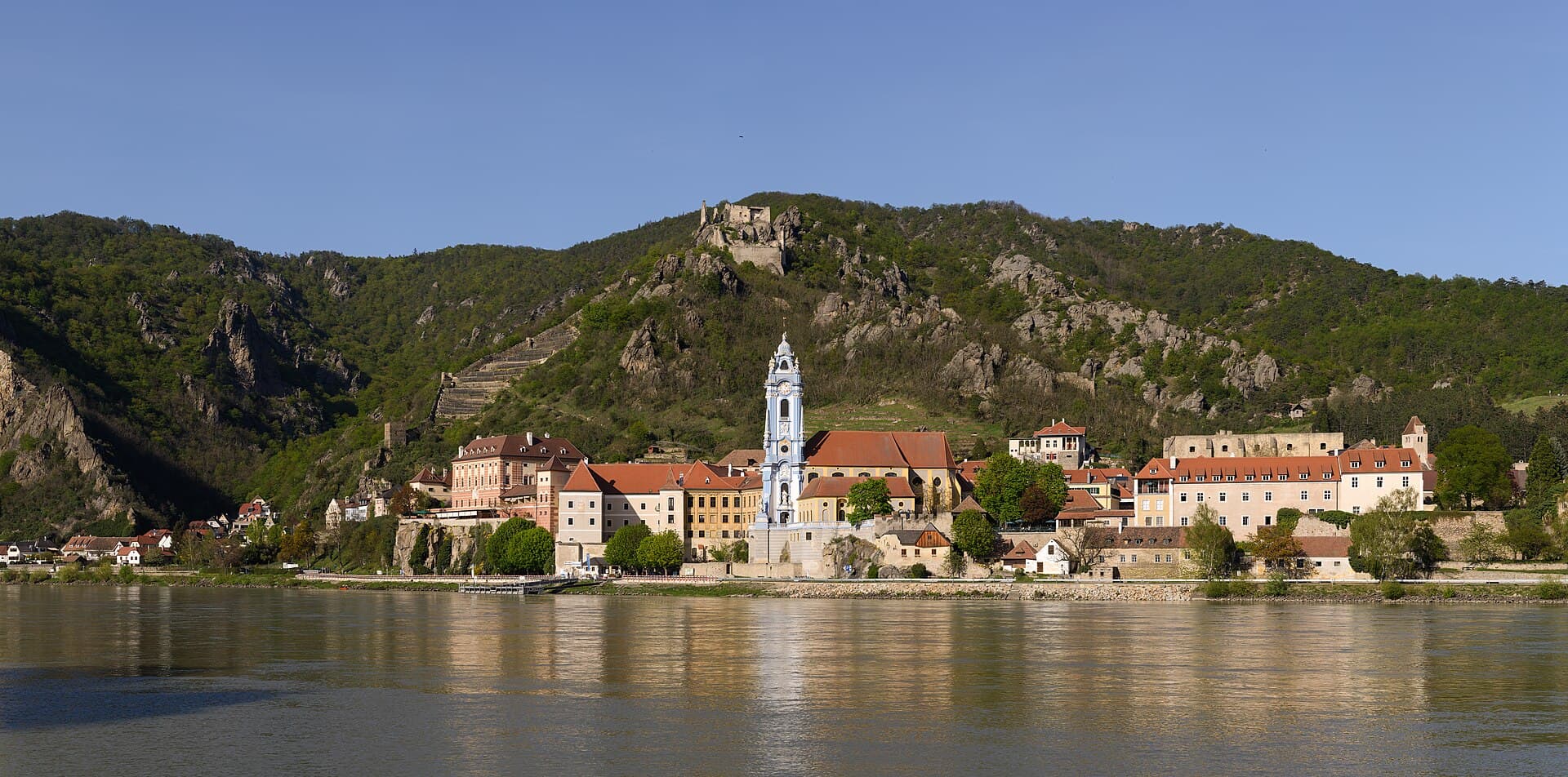
Powder-blue baroque abbey tower · Richard the Lionheart's prison
Hike through rocky vineyard crests to the clifftop ruin where King Richard I of England was imprisoned in 1192.
Car-free riverside cycling between Melk and Krems
Rent an e-bike or touring cycle to ride forty kilometres of flat, asphalted paths flanked by apricot orchards and vine-clad bluffs.
Eat
A short list, kept short on purpose. Each entry answers one question: when is this the right choice?
Where to eat the food this city is actually known for.
Danube-view tavern in Spitz · Seasonal apricot dishes
Serving Danube fish and famous Wachau Marillenknödel (apricot dumplings) on a shaded terrace above the river.
Vintner wine taverns · Cold roast pork & farm cheeses
Rotating family taverns serving house wines and cold platters (Brettljause) inside rustic stone courtyards.
Too few picks yet for their own heading, so they share this list.
Romantic terrace dining set in former monastery garden
Refined Austrian cuisine enjoyed beneath centuries-old trees overlooking the curving currents of the Danube.
Inventors of the Original Wachauer Laberl bread roll in 1905
Pair coffee with freshly baked crusty rye rolls and homemade apricot jam pastries in central Dürnstein.
Beyond the obvious
Less obvious, rarely queued for, and usually the part people remember.
Cooperative vintners · 300-year-old baroque cellars
Taste single-vineyard Smaragd Grüner Veltliners harvested by hand from sheer cliffside parcels like Kellerberg and Achleiten.
Austria's oldest winery · Biodynamic pioneer
Making wine on Roman foundations for two millennia; sip world-renowned Riesling beneath an ancient lime tree in the courtyard.
'Hill of a Thousand Buckets' · Ancient wine village
A traditional wine hamlet where stone Heuriger taverns line the narrow lanes below steep terraced hill slopes.
After dark
Regional wine bar and tasting room in Krems
Explore flights comparing Steinfeder, Federspiel and Smaragd wine quality classifications from across the valley.
Orientation
How the city is actually divided, and what each part is for.
Walled medieval village, cobblestone alleys & abbey wharf
Compact pedestrian enclave enclosed by ramparts, bustling with wine cellars and apricot liqueur shops.
Vintner villages, church towers & quiet wine lanes
The slow-travel heart of the valley, where tractors roll past gothic parish churches and family tasting rooms.
Stay
Areas rather than hotels — pick the right one and the rest follows.
Vineyard-view inns · Romantic village settings
Ideal for walking to historic wineries and quiet evening riverbank strolls after day cruises depart.
Valley gateway city · Train connections & dining variety
A larger historic gateway town with frequent direct trains to Vienna and extensive rental bike facilities.
Practical
Plan this trip — useful links
Context
Enough to make what you are looking at legible.
Margrave Leopold II donates his castle at Melk to Benedictine monks, founding Melk Abbey.
King Richard the Lionheart of England is captured near Vienna and held prisoner in Dürnstein Castle.
The entire Wachau cultural landscape is inscribed as a UNESCO World Heritage Site for its continuous agricultural tradition.
Further out
Worth a day if you have one to spare.
Monumental hilltop Benedictine abbey · Austrian Montecassino
Surveys the eastern entrance of the Wachau from a 422-metre forested hill, boasting colossal baroque staircases.
Scenic passenger boats cruising between Melk and Krems
Admire terraced vineyards, medieval ruins and baroque monasteries from open sundecks gliding downriver.