
Traveleriences
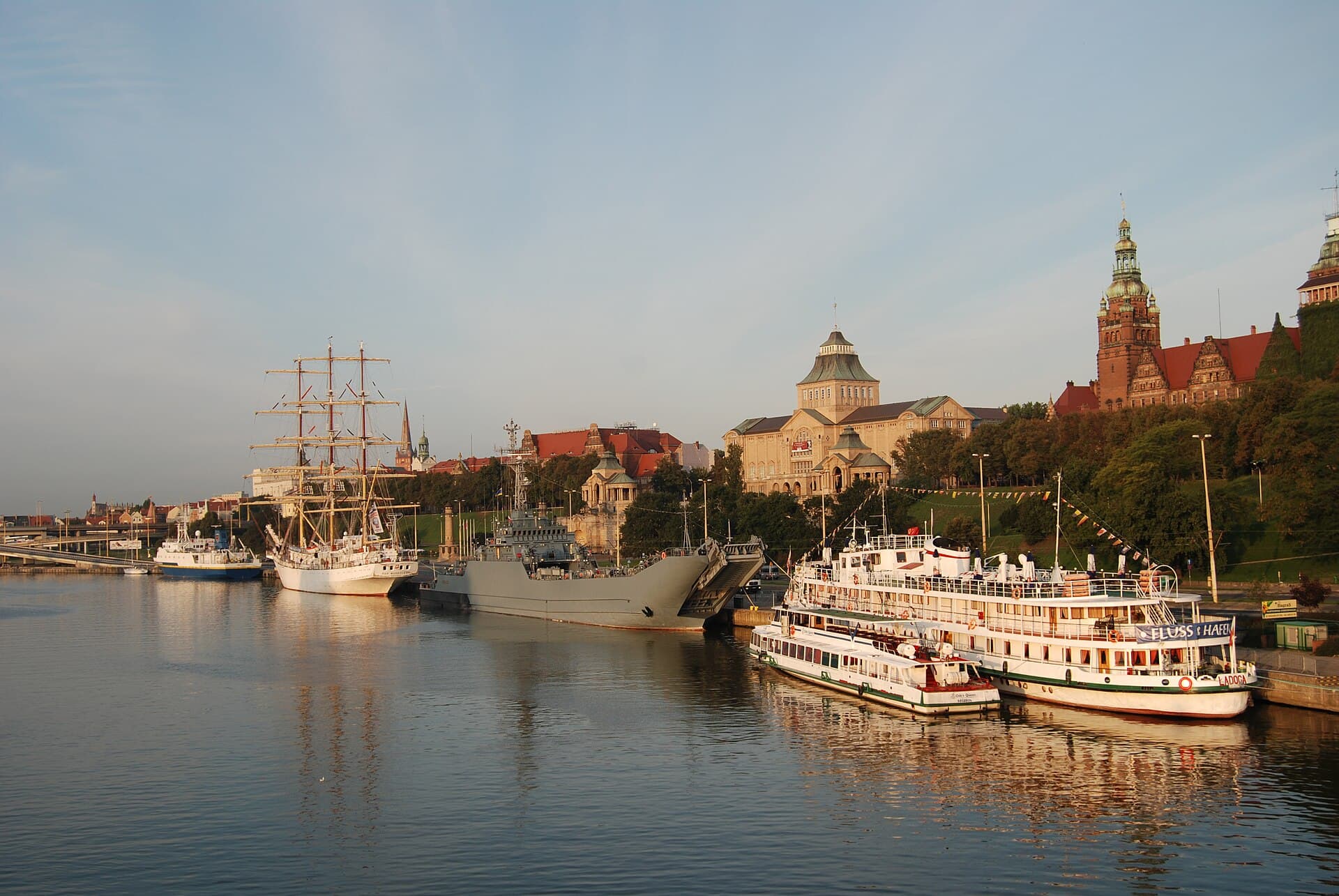
Wały Chrobrego river terraces and the Oder promenade in Szczecin

Szczecin & West Pomerania, Poland

Ideal: 2–3 daysBest: May–SepPrice: Inexpensive

In 60 seconds

Szczecin & West Pomerania in 60 seconds

Perched on the Oder River where freshwater channels merge into Baltic lagoons, Szczecin is Poland's historic northwestern port metropolis. Crowned by the monumental 19th-century Wały Chrobrego river terraces and the Renaissance Pomeranian Dukes' Castle, the city has surged onto Europe's cultural map with the Mies van der Rohe Award-winning Philharmonic Hall and the subterranean Dialogue Centre Upheavals museum. Downriver, ancient beech forests and white-tailed eagle sanctuaries border the Baltic sea cliffs of Wolin National Park.

Rivers

Best for

  • Architecture
  • Maritime
  • Culture
  • Nature
  • Budget

Known for

  • Wały Chrobrego
  • Szczecin Philharmonic
  • Pomeranian Dukes' Castle
  • Wolin National Park
  • Jasne Błonia

Skip if

You are looking for a compact southern Polish medieval market square; Szczecin is a sprawling maritime river city defined by 19th-century boulevards, star plazas, green riverbanks and dramatic modernist landmarks.

Your match

Choose a few travel interests and we will show how well Szczecin & West Pomerania fits them. Choose interests

See

Must experience

The things that would make the trip incomplete without them.

Eat

Where to eat

A short list, kept short on purpose. Each entry answers one question: when is this the right choice?

Local

Where to eat the food this city is actually known for.

Coffee & fika

Mornings, and the slow hour between things.

Bajgle Króla Jana

Inexpensive

Artisanal boiled bagels · Local cheeses & specialty filter brews

Grab freshly baked artisanal bagels filled with regional smoked trout, cream cheeses and cured meats right on the Old Town square near the castle.

Stare MiastoBakeryBreakfast

More places to eat

Too few picks yet for their own heading, so they share this list.

Beyond the obvious

Hidden gems

Less obvious, rarely queued for, and usually the part people remember.

After dark

Bars & nightlife

Chmiel Świat Piwa

Moderate

Craft beer sanctuary · Extensive Polish regional craft drafts

Relax in a friendly neighbourhood taproom pouring an exceptional rotating selection of West Pomeranian and national artisanal craft brews.

CentrumCraft beerLocal

Orientation

Neighbourhoods

How the city is actually divided, and what each part is for.

Centrum & Wały Chrobrego

Monumental river esplanades, grand 19th-century radial boulevards and award-winning cultural venues

The grand architectural heart of the city, connecting the waterfront terraces with the crystalline philharmonic hall.

Stare Miasto (Old Town)

Reconstructed historic quarter clustering around the ducal castle and Rynek Sienny

A charming, intimate quarter of colourful rebuilt facades, artisan bakeries and Gothic vaulted cellars.

Stay

Where to stay

Areas rather than hotels — pick the right one and the rest follows.

Wały Chrobrego & Waterfront

Moderate

Hotels overlooking the Oder River and maritime promenades

Ideal for scenic views of evening riverboats and immediate walking access to the concert hall and castle.

CentralRiver Views

Śródmieście & Plac Grunwaldzki

Moderate

Apartments along Paris-inspired star boulevards

Convenient for lively dining, easy tram access to the main station and leafy strolls down Jasne Błonia.

BoulevardsDining

Practical

Know before you go

Getting in
Szczecin-Goleniów Airport (SZZ) is 45 km northeast with train and bus connections to the centre. Szczecin Główny offers direct rail connections to Berlin (2 hours) and Gdańsk.
Star Plazas
Szczecin's 19th-century urban core was designed on a radial system modelled after Haussmann's Paris, with Plac Grunwaldzki forming the geometric hub.
Baltic Excursions
Frequent regional trains run from Szczecin Główny north to Międzyzdroje and Świnoujście, providing seamless day trips to the Baltic shoreline.

Context

History in 5 minutes

Enough to make what you are looking at legible.

  1. 1124

    Bishop Otto of Bamberg arrives on mission to Christianise the Pomeranian Slavic tribes.

  2. 1278

    Szczecin joins the Hanseatic League, developing into a powerful Baltic trading port.

  3. 1630–1720

    The city falls under Swedish sovereignty as the capital of Swedish Pomerania before passing to Prussia.

  4. 1945

    Following World War II border agreements, Szczecin becomes part of Poland and is rebuilt as a major maritime hub.

Further out

Nearby escapes

Worth a day if you have one to spare.