

Solovetsky Monastery & Boulder Fortress
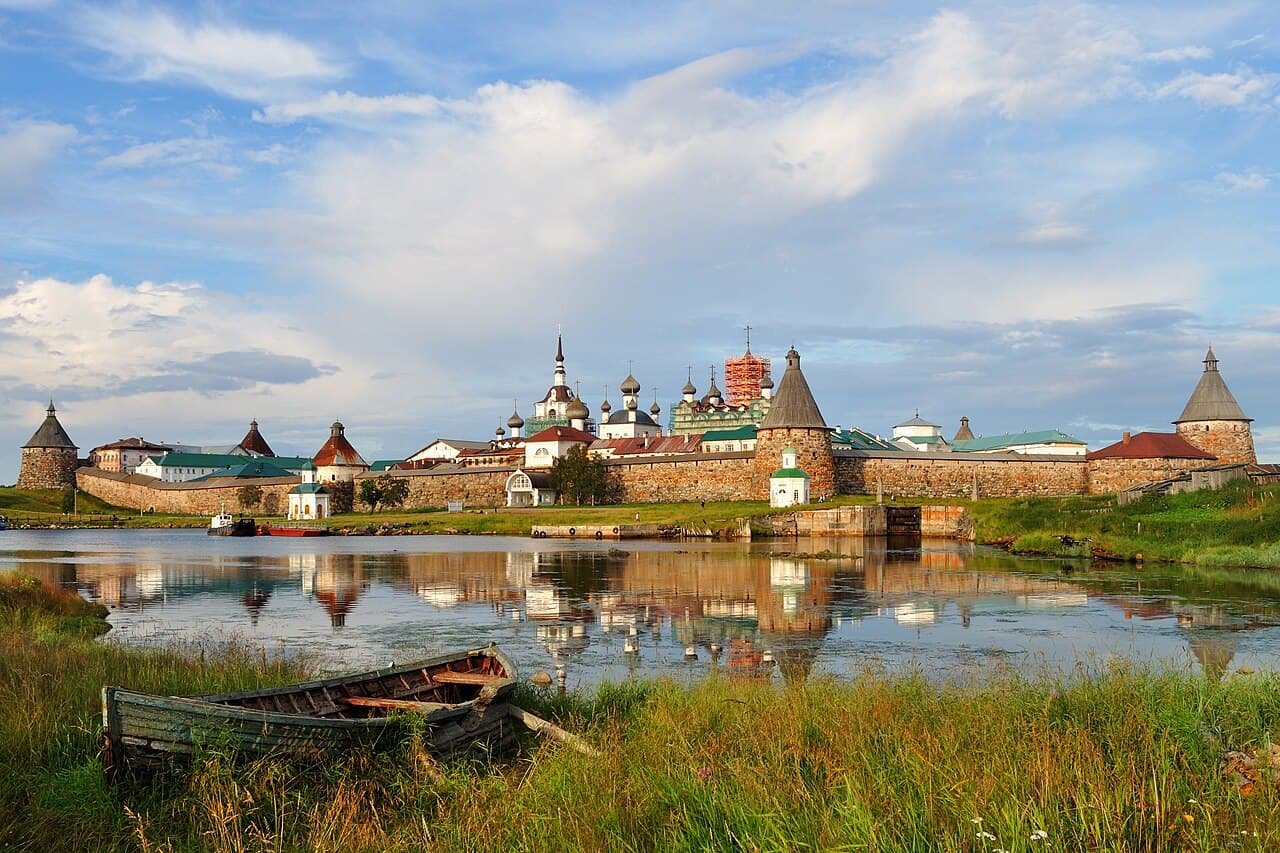
Fifteenth- and sixteenth-century monastic citadel built from glacial erratics up to five metres wide
Encloses the 1557 Refectory and the 1566 Transfiguration Cathedral.
In 60 seconds
Lying in Onega Bay of the White Sea just south of the Arctic Circle, the six islands of the UNESCO-listed Solovetsky Archipelago hold a deeply layered history. Founded in the 1420s by monks Zosima, Savvaty and German, the Solovetsky Monastery is ringed by Cyclopean sixteenth-century walls of unhewn glacial boulders and linked by monk-dug canals; on neighbouring Bolshoi Zayatsky Island lie prehistoric stone labyrinths. In the 1920s and 1930s the monastery was requisitioned as the Solovki Special Purpose Camp (SLON), the prototype of the Soviet Gulag system, commemorated today at the Solovki Gulag Museum and Sekirnaya Hill.
Best for
Known for
Skip if
The White Sea crossing and sub-Arctic weather leave a short June–September visiting window.
Your match
Choose a few travel interests and we will show how well Solovetsky Islands fits them. Choose interests
See
The things that would make the trip incomplete without them.
Fifteenth- and sixteenth-century monastic citadel built from glacial erratics up to five metres wide
Encloses the 1557 Refectory and the 1566 Transfiguration Cathedral.
First- and second-millennium BCE spiral boulder labyrinths on tundra-covered coastal terraces
Over thirty prehistoric stone settings overlooking the White Sea.
1862 lighthouse church and memorial stairs on the highest point of Bolshoi Solovetsky Island
Documents and honours the prisoners held in the 1923–1939 SLON camp.
Beyond the obvious
Less obvious, rarely queued for, and usually the part people remember.
Sub-Arctic monastic garden sheltered by moraine hills since 1822
Grows Siberian cedars, dahurian larches and roses near the 65th parallel.