

Real Alcázar
ModerateRoyal palace · Mudéjar courtyards
Still a royal residence: tiled courtyards, carved stucco and long gardens. Book a timed ticket ahead.
Santa CruzBook aheadGardens
In 60 seconds
Seville is Andalucía at its most theatrical: the Alcázar's Mudéjar courtyards, a Gothic cathedral built over a mosque, whitewashed lanes in Santa Cruz and tapas bars where the bill is chalked on the counter. Book the Alcázar and the cathedral online and see them in the morning; in the afternoon heat the city closes its shutters, and so should you. Cross the river to Triana for its ceramic workshops and tapas, hear flamenco in a small peña rather than at a dinner show, and walk the Plaza de España at sunset. The centre is walkable and the tram fills the gaps. Spring is the season — Holy Week and the April Fair — and summer is fiercely hot. Two or three days is right.
Best for
Known for
Skip if
You are travelling in July or August, when afternoons regularly pass 40°C and the city shuts down until evening.
Your match
Choose a few travel interests and we will show how well Seville fits them. Choose interests
See
The things that would make the trip incomplete without them.
Royal palace · Mudéjar courtyards
Still a royal residence: tiled courtyards, carved stucco and long gardens. Book a timed ticket ahead.
Gothic cathedral · Former minaret
One of the largest Gothic cathedrals, with Columbus's tomb; walk up the ramps of the Giralda tower.
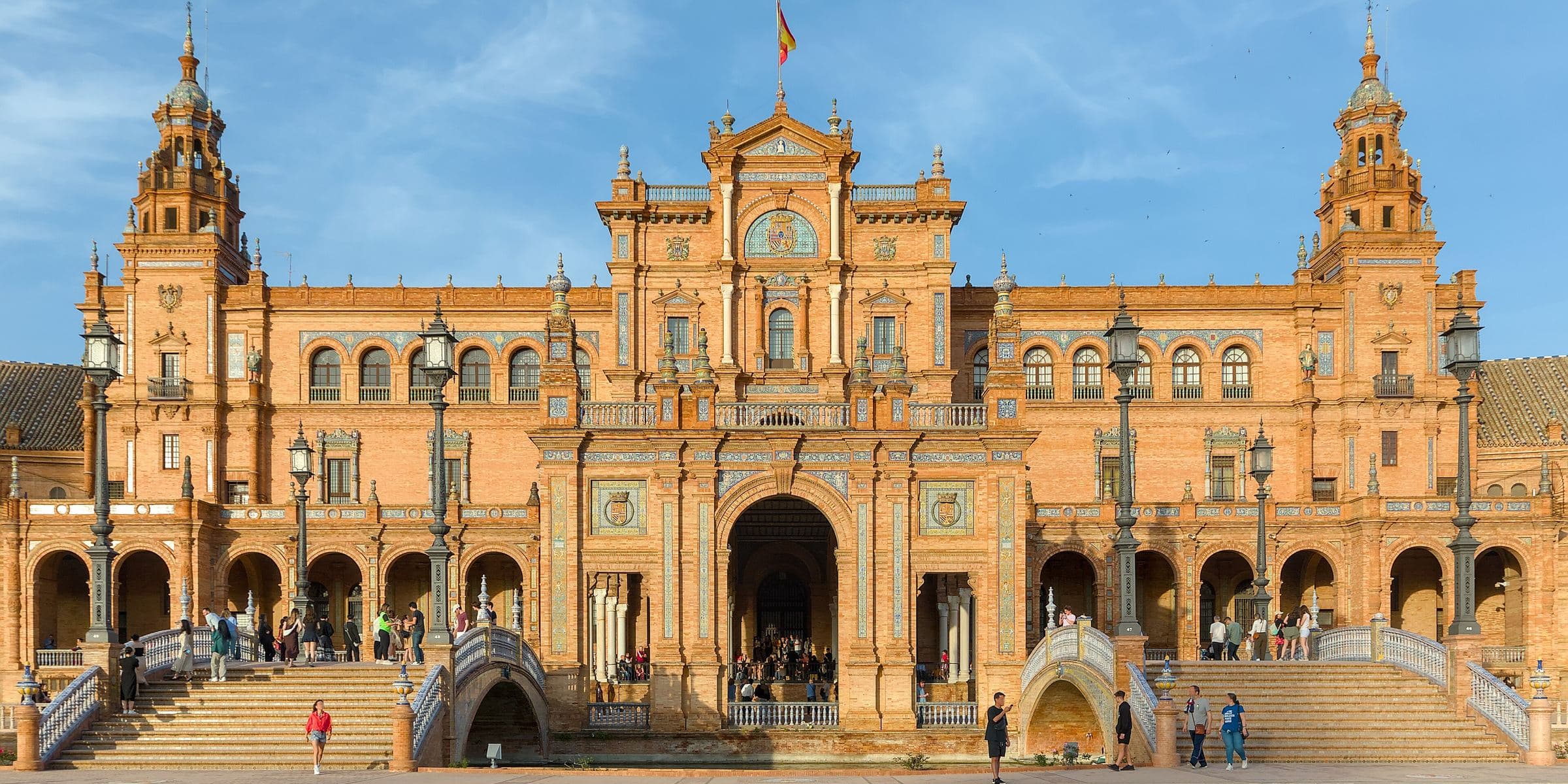
1929 exhibition plaza
A sweeping semicircle of brick and tiles, with an alcove for each Spanish province, beside the Parque de María Luisa.
Eat
A short list, kept short on purpose. Each entry answers one question: when is this the right choice?
Where to eat the food this city is actually known for.
Tapas bar · Since 1670
The city's oldest bar: espinacas con garbanzos and a fino, your tab chalked on the wooden counter.
Tapas bar · Since 1870
Hams hanging from the ceiling and jamón ibérico at the counter, in the lanes of Santa Cruz.
Old-style grocery and tapas
Cheese, cured meats and stews in a 17th-century house, reviving the old abacería — part shop, part bar.
No booking, no ceremony, reliably good.
Creative tapas bar
A neighbourhood bar by San Lorenzo known for inventive tapas. Expect to wait for a spot at the bar.
Modern tapas
A small, busy bar in the Arenal for modern tapas at good prices; arrive when it opens.
Market on the castle ruins
A food market built over the Castillo de San Jorge, with tapas counters among the stalls.
Worth planning the evening around.
Contemporary Andalusian tasting menu
Julio Fernández's tasting menu built on Andalusian produce, in Nervión.
Fish and seafood counter
A fishmonger-style counter where the day's catch is grilled in front of you; there is a tasting menu too.
Andalusian cooking, renewed
Camila Ferraro's restaurant in a 1929 exhibition building, reworking Andalusian classics.
Mornings, and the slow hour between things.
Pastry shop · Since 1885
Seville's best-known confitería, for coffee and a yema or a slice of cake at the counter.
Seville's first specialty coffee shop
Small-batch beans roasted in-house, near the Palacio de las Dueñas.
Specialty coffee on Calle Feria
A specialty café on Calle Feria, known for its waffles and small terrace.
Beyond the obvious
Less obvious, rarely queued for, and usually the part people remember.
Ducal palace · Tiles and patios
A 16th-century palace mixing Mudéjar, Gothic and Renaissance, with some of the finest tiles in the city.
Home of the Dukes of Alba
A palace with lemon-tree patios, still lived in by the Alba family, where the poet Antonio Machado was born.
Baroque almshouse and Velázquez centre
A 17th-century home for elderly priests, with a frescoed church and paintings by Velázquez and Murillo.
After dark
Wine shop turned bar · 1850
Sherry from big earthenware jars and montaditos, in a bar that began as a wine shop.
Wine bar
A long wine list with plenty of sherry, and good advice on what to try.
Cocktail bar
A pastel-pink cocktail bar with creative drinks and the classics done well.
Orientation
How the city is actually divided, and what each part is for.
The old Jewish quarter
Narrow whitewashed lanes and small plazas between the Alcázar and the cathedral.
Ceramics, flamenco and the river
Across the Guadalquivir: tile workshops, the market and the bars where flamenco was born.
Bars and terraces
A long tree-lined square that is the centre of Seville's evening and alternative scene.
Stay
Areas rather than hotels — pick the right one and the rest follows.
Beside the sights
On the doorstep of the Alcázar and the cathedral; busy by day, calm at night.
Between the cathedral and the river
Central, close to the bullring and the riverbank, with good tapas bars.
For evenings out
Livelier and better value, a walk from the old centre.
Practical
Plan this trip — useful links
Context
Enough to make what you are looking at legible.
Ferdinand III of Castile takes Seville from the Almohads.
The Casa de Contratación makes Seville the monopoly port for trade with the Americas.
The Ibero-American Exposition gives the city the Plaza de España.
Further out
Worth a day if you have one to spare.
The Mezquita
The great mosque-cathedral and its white-walled old town, under an hour by high-speed train.
Hilltop town with Roman roots
A walled town with a Roman necropolis and wide views over the plain.
Sherry bodegas and horses
The home of sherry: bodega tours and the Royal Andalusian School of Equestrian Art.
Go further
Multi-city trips that stop here, with the transport between them.