

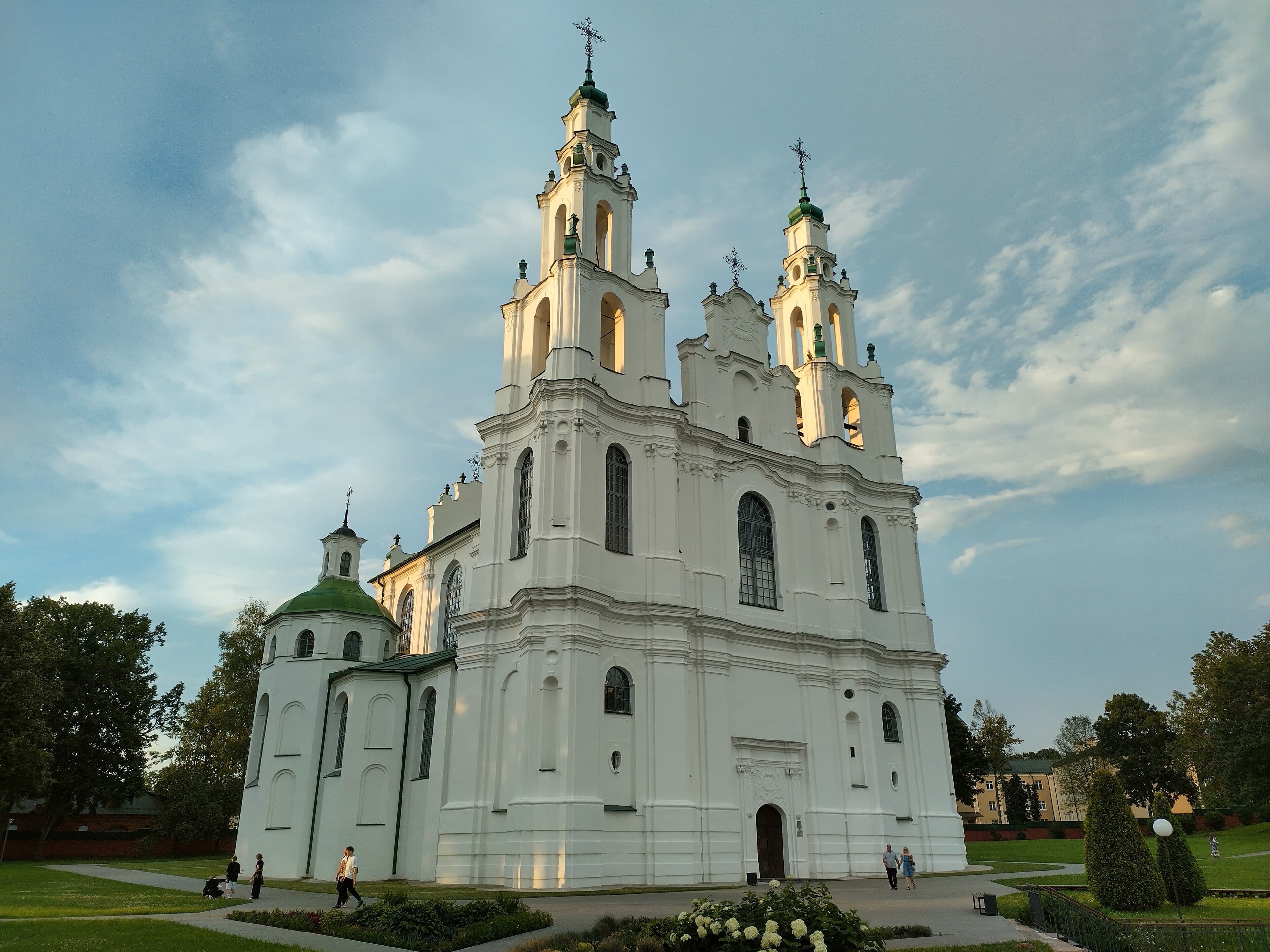
Cathedral of Saint Sophia
Eleventh-century principality cathedral rebuilt in Vilna Baroque style in 1738–1750
Explore the eleventh-century apse foundations in the lower museum and attend an organ recital.
In 60 seconds
First recorded in the Primary Chronicle under the year 862, Polotsk is the historical cradle of Belarusian statehood and printing. High on the right bank of the Western Dvina stands the Cathedral of Saint Sophia—eleventh-century masonry foundations crowned by Jan Krzysztof Glaubitz's soaring 1750 Vilna Baroque facade—while the nearby Saint Euphrosyne Convent safeguards the original twelfth-century Saviour and Transfiguration Church.
Best for
Known for
Skip if
You want a bustling urban centre; Polotsk is a quiet museum-town best explored on foot.
Your match
Choose a few travel interests and we will show how well Polotsk fits them. Choose interests
See
The things that would make the trip incomplete without them.
Eleventh-century principality cathedral rebuilt in Vilna Baroque style in 1738–1750
Explore the eleventh-century apse foundations in the lower museum and attend an organ recital.
Founded in 1125 with an intact twelfth-century church by master mason Ioann
Contains newly uncovered twelfth-century frescoes covering almost its entire interior.
Exhibition dedicated to Polotsk-born Renaissance humanist Francysk Skaryna
Housed inside the former eighteenth-century Epiphany Monastery on the Dvina bank.
Beyond the obvious
Less obvious, rarely queued for, and usually the part people remember.
Twelfth-century glacial boulder inscribed with a cross and prayer by Prince Boris Vseslavich
Rests beside Saint Sophia Cathedral above the river.