
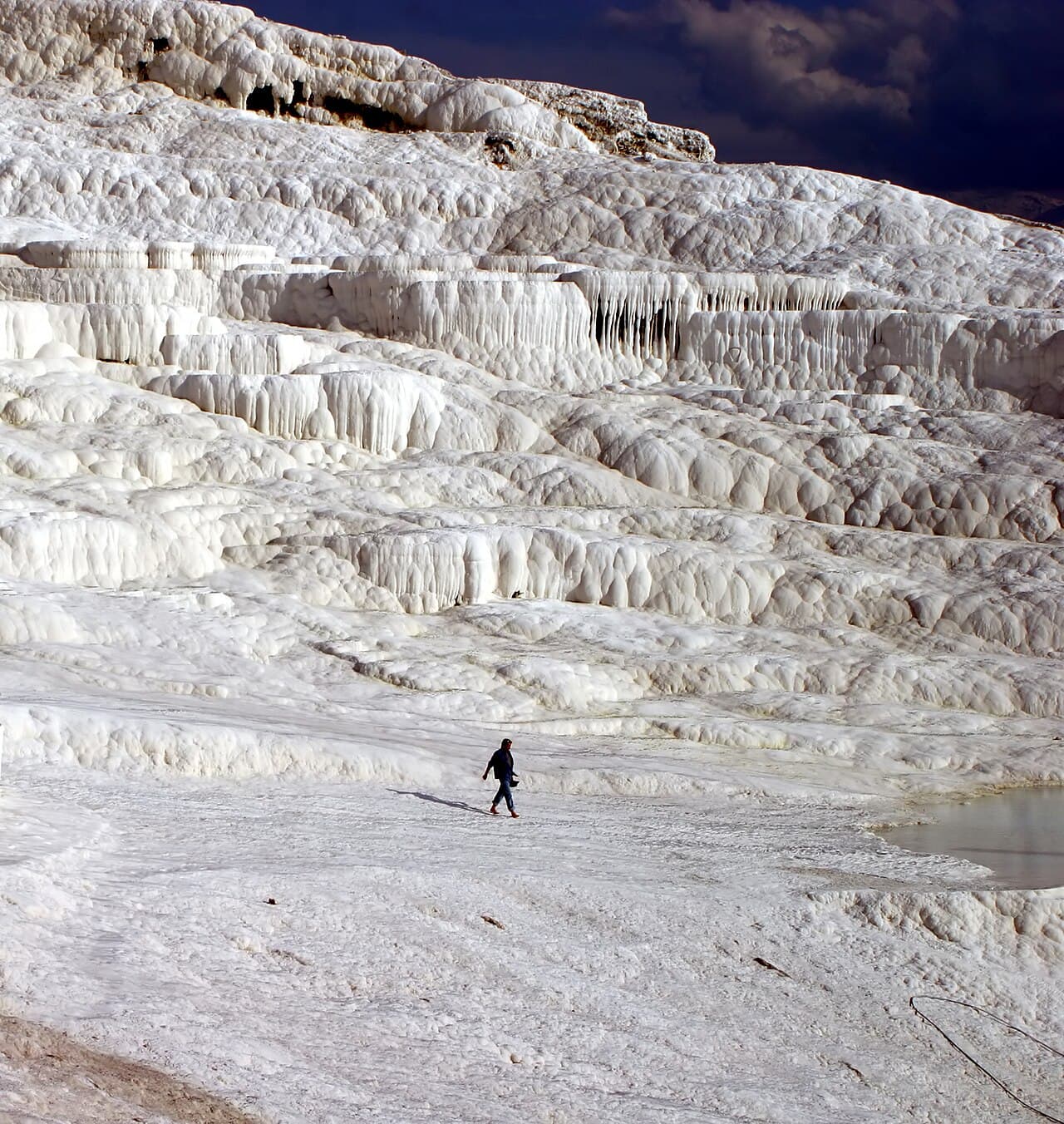
Pamukkale Travertine Terraces
ModerateUNESCO natural wonder · Cascading white limestone basins of mineral waters
Wade barefoot along the designated channel of warm, mineral-saturated turquoise water cascading over brilliant white calcite shelves.

In 60 seconds
Gleaming like snow against the Aegean plateau, Pamukkale's cascading travertine terraces were formed over millennia by mineral-rich thermal springs depositing calcium carbonate. Perched directly above the white cliffs lies ancient Hierapolis, a Hellenistic and Roman spa city celebrated for its remarkably preserved Roman theatre, sacred Plutonium grotto, submerged marble columns in the Antique Pool, and one of Anatolia's most extensive ancient necropolises.
Best for
Known for
Skip if
You expect unmanaged wilderness or find walking barefoot over wet calcified rock uncomfortable, as shoes are prohibited on the fragile terraces.
Your match
Choose a few travel interests and we will show how well Pamukkale & Hierapolis fits them. Choose interests
See
The things that would make the trip incomplete without them.
UNESCO natural wonder · Cascading white limestone basins of mineral waters
Wade barefoot along the designated channel of warm, mineral-saturated turquoise water cascading over brilliant white calcite shelves.
Spectacular 2nd-century Roman auditorium · Intact scaenae frons reliefs
One of the best-preserved Classical theatres in Anatolia, commanding panoramic vistas across the Lycus River plain from its tiered marble seating.
Warm mineral spring pool · Swim above submerged Roman fluted columns
Swim through clear 36°C geothermal waters amongst toppled Roman marble columns and carved pediments felled by a 7th-century earthquake.
Vast ancient burial ground · Over 1,200 sarcophagi, tumuli & family vaults
A solemn 2-kilometre stretch of Classical tombs and limestone sarcophagi standing silently amid olive groves and wild thyme.
Eat
A short list, kept short on purpose. Each entry answers one question: when is this the right choice?
Where to eat the food this city is actually known for.
Traditional Anatolian pottery casseroles & meze in Pamukkale village
Generous clay-pot stews, freshly baked lavash and vegetable mezes served in a friendly garden setting with views toward the glowing cliffs.
Fresh home-cooked Aegean vegetables, gözleme and grills
Crispy freshly rolled gözleme stuffed with spinach and curd cheese, paired with homemade ayran and seasonal salads.
Too few picks yet for their own heading, so they share this list.
Historic confectioner & regional dining founded in 1938
Famed throughout Turkey for warm semolina halva served with goat milk ice cream, alongside authentic Denizli tandoori lamb.
Open-air wooden terrace overlooking the white travertine slopes
The ideal spot to sip freshly brewed çay as the afternoon light shifts from gleaming white to warm gold and purple over the travertine pools.
Beyond the obvious
Less obvious, rarely queued for, and usually the part people remember.
Early Christian octagonal shrine on the northern hill ridge
Walk uphill beyond the theatre crowds to explore the quiet brick octagonal shrine commemorating the apostle Philip's martyrdom, offering serene valley views.
Iron-rich rust-coloured thermal terraces in nearby Karahayıt village
A quiet geothermal counterpart just 5 kilometres north, where copper- and iron-rich mineral waters have painted stone domes in vivid hues of red and orange.
After dark
Peaceful poolside wine terrace in Karahayıt
Unwind after walking the ruins with Aegean wines and cold local craft beer in a tranquil leafy courtyard surrounded by natural hot springs.
Orientation
How the city is actually divided, and what each part is for.
Compact rural settlement right below the travertine cliff base
Best for walking directly to the lower gate of the park at opening time and returning for evening dinner.
Thermal spa village famed for iron-rich mineral waters and wellness hotels
A quiet alternative base just 5 minutes away, featuring full-scale thermal pool hotels and a relaxed local market.
Stay
Areas rather than hotels — pick the right one and the rest follows.
Family-run guesthouses with views of the white slopes
Best for independent travellers prioritising dawn access to the travertines and friendly guesthouse hospitality.
Spa resorts fed by natural 58°C geothermal springs
Ideal for travellers seeking dedicated thermal bathing facilities and quiet evening surroundings.
Practical
Context
Enough to make what you are looking at legible.
Founded by King Eumenes II of Pergamon as a thermal healing centre, named Hierapolis ('Holy City').
Severely damaged by an earthquake during Nero's reign and rebuilt as a thriving Roman imperial resort.
Hierapolis-Pamukkale is inscribed as a mixed natural and cultural UNESCO World Heritage site.
Further out
Worth a day if you have one to spare.
Extensive Greco-Roman city excavation · Colonnaded streets & intact basilica
A vast and meticulously restored ancient city containing two theatres, a stadium, and one of the Seven Churches of Asia Minor, free of major tourist crowds.
Subterranean travertine wonder · Underground waterfalls & pools
Often described as 'underground Pamukkale', this cavern features stepped travertine terraces and cascading sulphur springs inside a natural cave.