

Palazzo dei Normanni & Palatine Chapel
ModerateRoyal palace with a gold-mosaic chapel
Byzantine mosaics, an Arab carved-wood ceiling and Norman marble in one small chapel — the high point of Arab-Norman art.
AlbergheriaMosaicsUNESCO
In 60 seconds
Palermo is Sicily's capital and its most intense city: Phoenician, Arab, Norman, Spanish and baroque layers piled on top of each other, peeling and magnificent. In the 12th century Norman kings employed Byzantine and Arab craftsmen, and the result — the gold-mosaic Palatine Chapel in the royal palace, the cathedral, and the mountain-top cathedral at Monreale — is a UNESCO World Heritage Site unlike anything else in Europe. The markets of Ballarò and the Capo are noisy, theatrical and full of food: arancine, panelle, sfincione and the spleen sandwich, pane ca' meusa, for the brave. The Teatro Massimo is Italy's largest opera house, and Mondello's beach is a bus ride away. Give it three days, and accept the chaos as part of the pleasure.
Best for
Known for
Skip if
You find noise, traffic and crumbling façades stressful — Palermo is gloriously alive, but never tidy.
Your match
Choose a few travel interests and we will show how well Palermo fits them. Choose interests
See
The things that would make the trip incomplete without them.
Royal palace with a gold-mosaic chapel
Byzantine mosaics, an Arab carved-wood ceiling and Norman marble in one small chapel — the high point of Arab-Norman art.
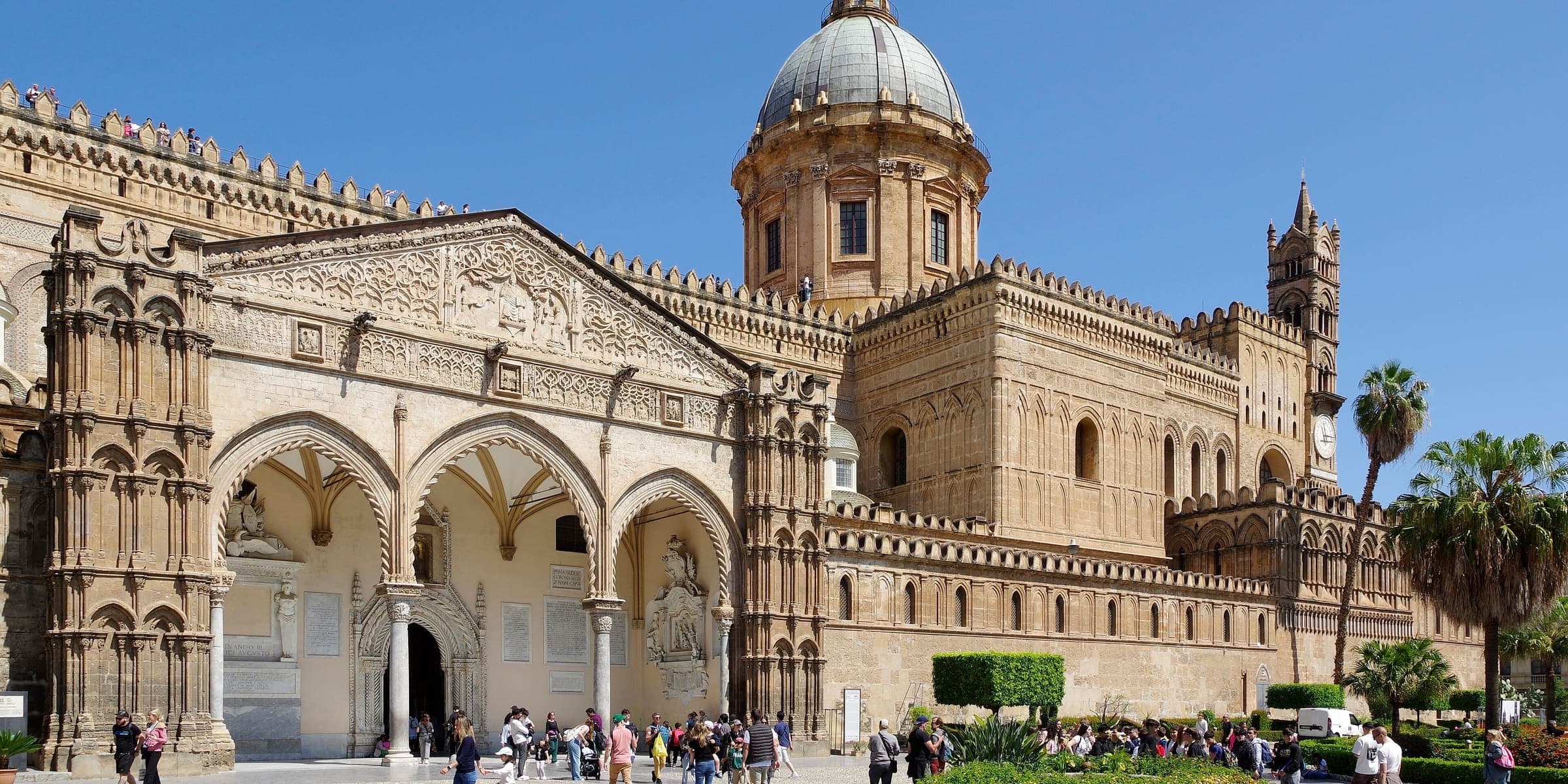
A cathedral of many centuries
Norman towers, Gothic porch and a neoclassical dome; climb to the roof for the view over the city.
The city's oldest street market
Swordfish, aubergines and shouting stallholders by day; grills of stigghiola smoking at dusk.
Italy's largest opera house
Take the guided tour of the neoclassical theatre, or better, a seat for an evening performance.
Eat
A short list, kept short on purpose. Each entry answers one question: when is this the right choice?
Too few picks yet for their own heading, so they share this list.
Street food at the table · Since 1834
Panelle, arancine, sfincione and pane ca' meusa on a terrace facing the basilica of San Francesco.
Beyond the obvious
Less obvious, rarely queued for, and usually the part people remember.
Gold mosaics above the city
Some 6,000 square metres of golden mosaic and a cloister of carved paired columns, half an hour up the hill.
Corridors of preserved dead
Thousands of mummified Palermitani dressed in their best, hanging along the walls — unforgettable and not for everyone.
Orientation
How the city is actually divided, and what each part is for.
The old Arab quarter by the sea
Churches, palazzi and the Foro Italico promenade; lively squares at night.
The baroque crossroads
Four curved baroque façades where Via Maqueda crosses the Cassaro — the centre of the old city.
Stay
Areas rather than hotels — pick the right one and the rest follows.
Around the Quattro Canti and Via Maqueda
Stay in the old city to walk to the markets and monuments.
Practical
Plan this trip — useful links
Context
Enough to make what you are looking at legible.
Arab rulers take Palermo; it becomes one of the great cities of the Mediterranean.
Roger II is crowned King of Sicily; Norman Palermo builds its mosaic churches.
The Teatro Massimo opens.
Arab-Norman Palermo and the cathedrals of Cefalù and Monreale are inscribed by UNESCO.
Further out
Worth a day if you have one to spare.
Norman cathedral and a beach town
A Norman cathedral under a great rock, a sandy beach and a pretty old town.
Palermo's beach
A curve of pale sand and Art Nouveau bathing pavilion under Monte Pellegrino.