
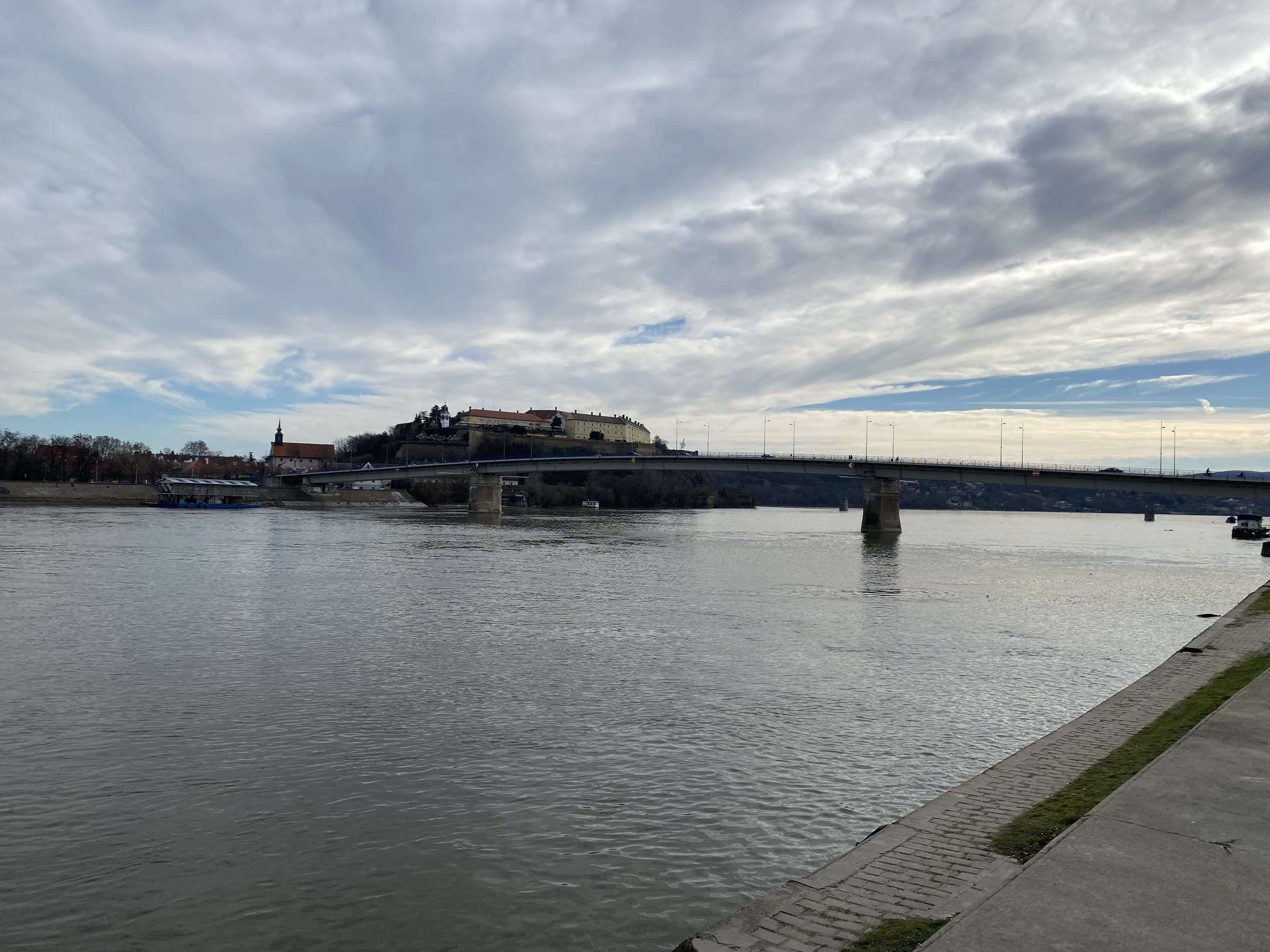
Petrovaradin Fortress
Colossal 18th-century Austrian fortress perched on a volcanic rock directly above the Danube
Cross the Varadin Bridge and ascend the stone steps to the clock tower plateau for sweeping views of the river and city rooftops.

In 60 seconds
Gracefully spread across both banks of the Danube under the shadow of the imposing Petrovaradin Fortress, Novi Sad is Serbia's second city and the proud cultural heart of Vojvodina. Designated a European Capital of Culture in 2022, the city combines Central European Habsburg grace with relaxed Balkan warmth. Pedestrian Zmaj Jovina and Dunavska streets showcase pastel-hued baroque and neo-Renaissance facades leading to lush Danube Park, while across the river, Petrovaradin's massive 18th-century bastions, catacombs, and reverse-handed clock tower look out over the tranquil waters of the Danube.
Best for
Known for
Skip if
You want high-speed alpine activities; Novi Sad moves at a relaxed, leisurely riverfront pace.
Your match
Choose a few travel interests and we will show how well Novi Sad fits them. Choose interests
See
The things that would make the trip incomplete without them.
Colossal 18th-century Austrian fortress perched on a volcanic rock directly above the Danube
Cross the Varadin Bridge and ascend the stone steps to the clock tower plateau for sweeping views of the river and city rooftops.
Soaring neo-Gothic Catholic cathedral-style church dominating Liberty Square with colourful Zsolnay roof tiles
Admire the 72-metre spire and luminous Hungarian Zsolnay ceramic tiles gleaming in the morning sunlight.
Eat
A short list, kept short on purpose. Each entry answers one question: when is this the right choice?
Too few picks yet for their own heading, so they share this list.
Atmospheric Danube riverside tavern below the fortress serving fiery fish paprikash and local tamburica music
Savour freshwater carp and catfish stew served in a copper cauldron beside the gently lapping Danube.
Charming café set inside an authentic historic tram car from 1911 in the city centre
Enjoy a flat white or local herbal tea aboard the nostalgic wooden carriage parked near the theatre.
Beyond the obvious
Less obvious, rarely queued for, and usually the part people remember.
Distinguished art museum tracing Serbian painting from 18th-century baroque to 20th-century modernism
Discover masterworks of Serbian portraiture and religious art housed in an elegant classical gallery setting.
After dark
Cozy craft beer parlour serving microbrews from across Serbia and Vojvodina
Taste seasonal IPAs and stouts brewed by independent Serbian craft breweries on tap.
Orientation
How the city is actually divided, and what each part is for.
The historic core filled with Habsburg pedestrian lanes, tree-shaded parks, and historic squares
Wander Dunavska street down through Dunavski Park to the Danube embankment promenade.
Stay
Areas rather than hotels — pick the right one and the rest follows.
Best for first-time visitors seeking walking access to cafés, fortress events, and river strolls
Choose a boutique hotel in Stari Grad for effortless evening dining along the pedestrian esplanades.
Practical
Plan this trip — useful links
Context
Enough to make what you are looking at legible.
Founded by Serbian merchants barred from living within the Habsburg military fortress of Petrovaradin across the Danube.
Empress Maria Theresa granted the settlement the status of Free Royal City, christening it Neoplanta (Novi Sad).
Emerged as the Serbian Athens (Srpska Atina), the intellectual and literary capital of the Serbian diaspora in the Habsburg Empire.
Celebrated as European Capital of Culture, revitalising industrial heritage sites like the Svilara silk factory into arts centres.
Further out
Worth a day if you have one to spare.
Rolling forested mountain ridge rising directly south of the Danube, home to 16 medieval Serbian Orthodox monasteries
Combine visits to the frescoed monasteries of Krušedol and Grgeteg with wine cellar tastings in Sremski Karlovci.