

Nizhny Novgorod Kremlin
1508–1515 thirteen-towered Italianate brick fortress on the high Oka-Volga bluff
Offers a complete two-kilometre rampart walk and houses the Arsenal contemporary art wing.
In 60 seconds
Perched on hundred-metre bluffs where the Oka flows into the Volga, Nizhny Novgorod was the nineteenth-century trading crossroads of the Russian Empire. Walk the full two-kilometre circuit atop its early sixteenth-century red-brick Kremlin ramparts, descend the figure-eight Chkalov Staircase to the river embankment, and follow pedestrian Bolshaya Pokrovskaya and Rozhdestvenskaya streets past merchant banks and the 1697 Stroganov Church.
Best for
Known for
Skip if
Steep hillside gradients between the upper bluffs and lower riverfront are challenging.
Your match
Choose a few travel interests and we will show how well Nizhny Novgorod fits them. Choose interests
See
The things that would make the trip incomplete without them.
1508–1515 thirteen-towered Italianate brick fortress on the high Oka-Volga bluff
Offers a complete two-kilometre rampart walk and houses the Arsenal contemporary art wing.
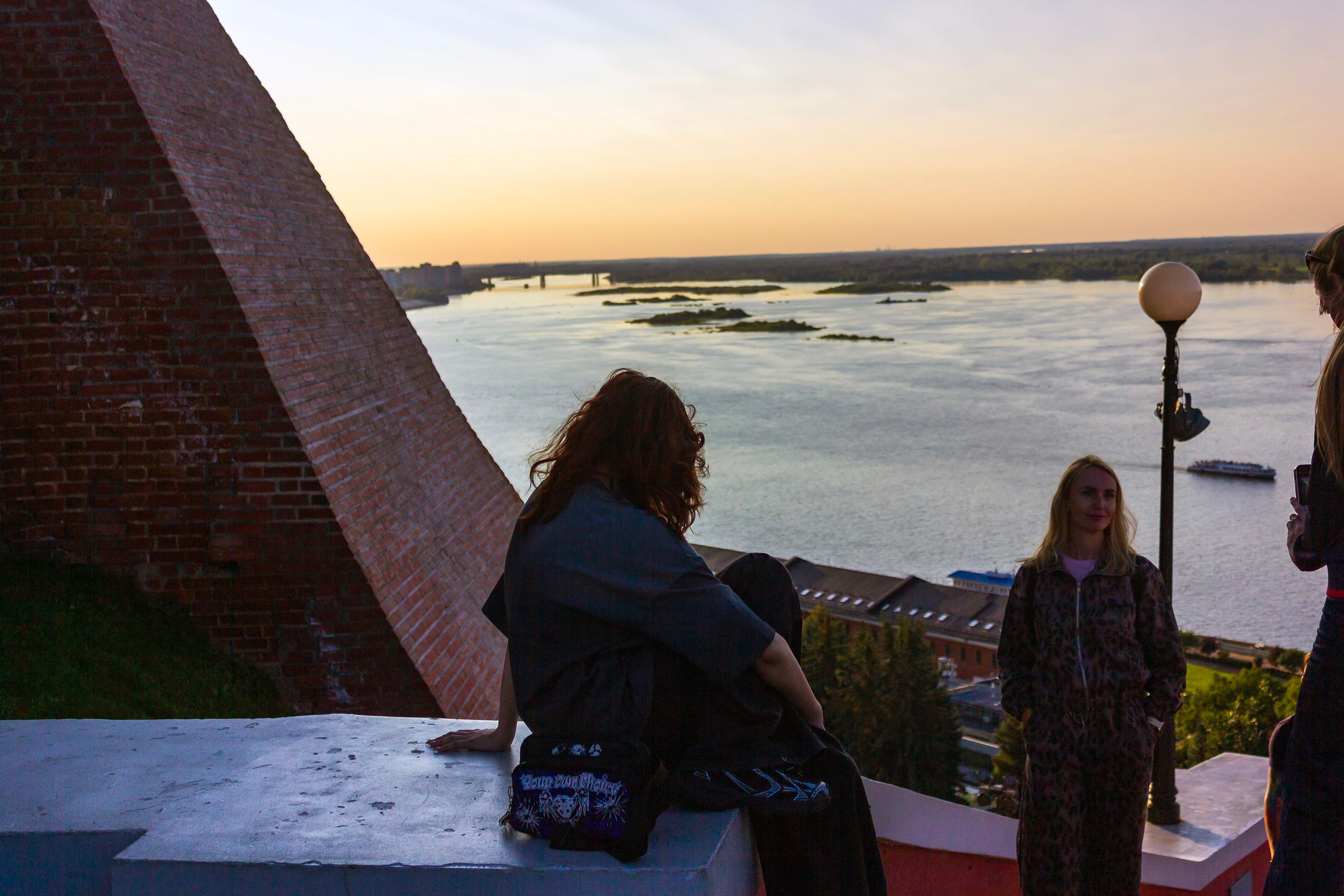
560-step monumental staircase descending from St George Tower to the Volga
Commands expansive sunset views across the confluence and the Strelka.
1696–1719 Stroganov Baroque church with carved white-stone window frames and polychrome domes
Anchors the historic lower-town merchant street.
Beyond the obvious
Less obvious, rarely queued for, and usually the part people remember.
1882 lacy riveted iron frames from the All-Russian Industrial Exhibition
Converted into a glass-enclosed concert hall and gallery on the confluence spit.
1877 Italianate palazzo on the Upper Volga Embankment
Preserves gilded stucco ballrooms from Nizhny Novgorod's merchant heyday.