

Nesvizh Palace & Bastion Moat
Sixteenth-to-eighteenth-century Radziwiłł residence surrounded by lakes
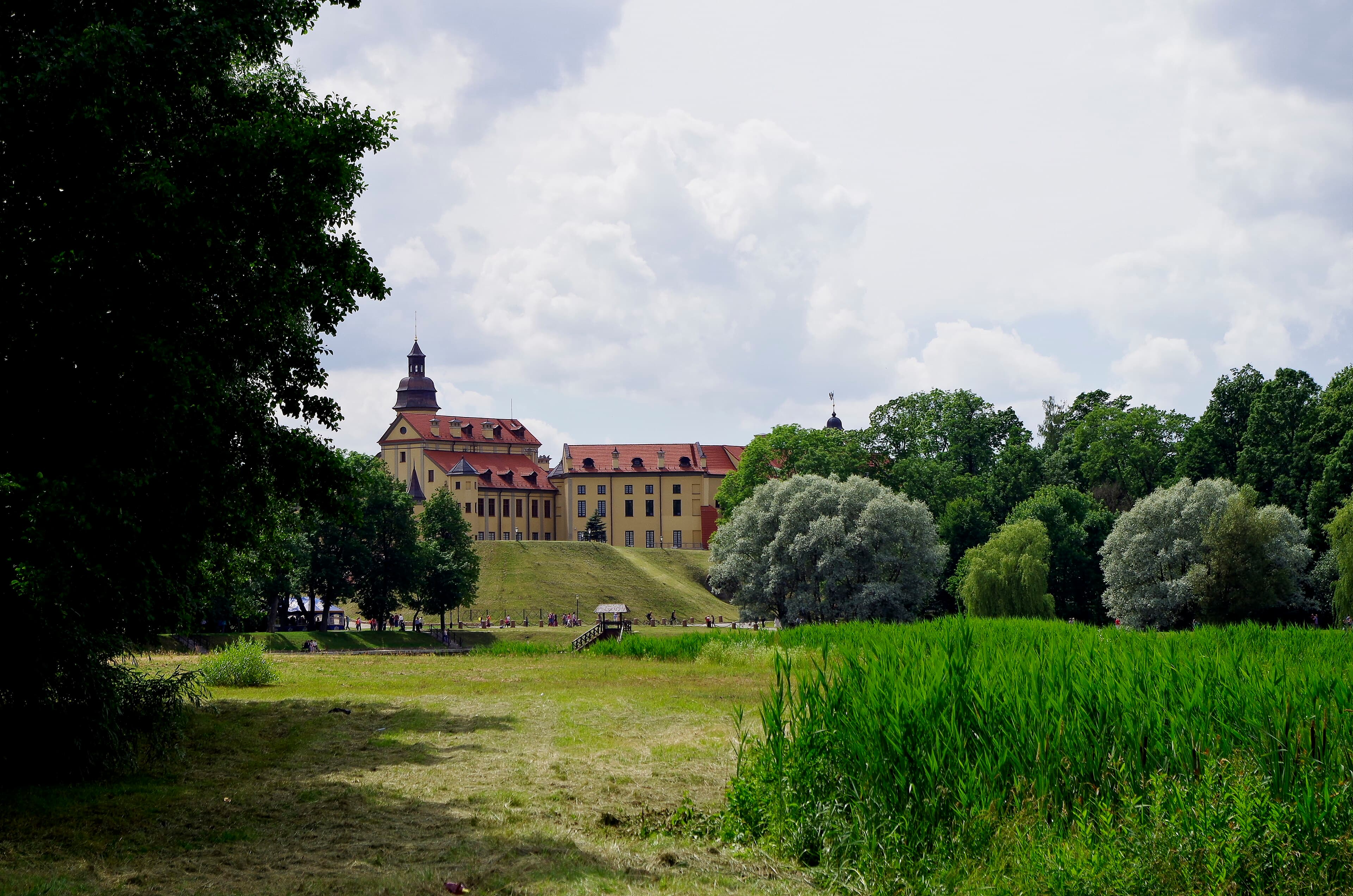
Walk the stone causeway through the vaulted gate into the Golden, Hetman and Theatrical halls.
In 60 seconds
Thirty kilometres south of Mir, Nesvizh was for four centuries the seat of the princely Radziwiłł family and a printing and scholarly centre of the Grand Duchy of Lithuania. Inscribed on the UNESCO World Heritage List, the moat-surrounded palace connects by a stone causeway to the 1593 Corpus Christi Church—one of the earliest Jesuit Baroque churches in Eastern Europe—and five interconnected English landscape parks.
Best for
Known for
Skip if
You prefer wild landscapes over aristocratic palace interiors and manicured parks.
Your match
Choose a few travel interests and we will show how well Nesvizh fits them. Choose interests
See
The things that would make the trip incomplete without them.
Sixteenth-to-eighteenth-century Radziwiłł residence surrounded by lakes
Walk the stone causeway through the vaulted gate into the Golden, Hetman and Theatrical halls.
1587–1593 early Baroque church designed by Gian Maria Bernardoni
Contains the Radziwiłł family necropolis beneath its frescoed dome.
1596 municipal hall with a six-tiered octagonal tower and three-sided trading rows
The oldest surviving town hall building in Belarus.
Beyond the obvious
Less obvious, rarely queued for, and usually the part people remember.
Seventeenth-century Baroque town gate guarding the eastern road
The last surviving gate of Nesvizh's historic earthen ramparts.
Five linked nineteenth-century landscape parks around the Bernardine and Castle ponds
Shaded oak and hornbeam walks laid out by Princess Maria Dorota de Castellane Radziwiłł.