

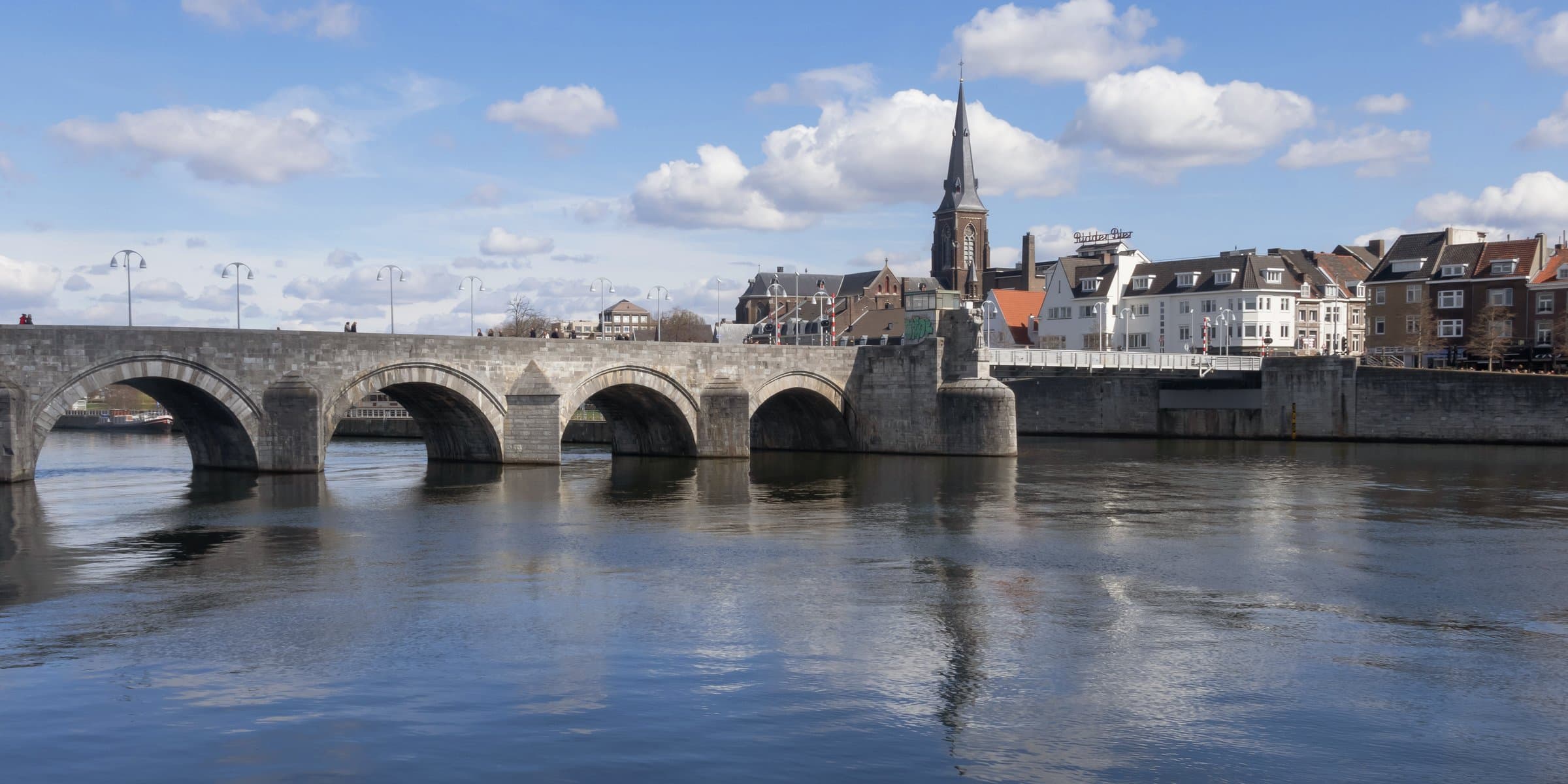
Sint Servaasbrug
The oldest bridge in the Netherlands, spanning the Meuse since 1280
Walk across the ancient limestone arches connecting the central shopping quarters with the creative Wyck district across the river.
MaasboulevardBridgeMedieval
In 60 seconds
Tucked into the southernmost tip of the Netherlands between Belgium and Germany, Maastricht feels distinctively un-Dutch: a Roman foundation settled on the river Meuse where cobblestones replace asphalt, rolling green chalk hills replace flat polders, and a warm 'Burgundian' joie de vivre infuses dining and café life. Anchored by the grand Vrijthof square and the Basilica of Saint Servatius, the historic centre holds treasures like the Boekhandel Dominicanen, a breath-taking bookstore installed inside a 13th-century Dominican church. Just outside town, the mysterious underground marlstone caves of Mount Saint Peter honeycomb the hill with 20,000 subterranean passages. In the surrounding South Limburg countryside, sunny chalk slopes nurture the Netherlands' finest vineyards and bakeries produce beloved fruit vlaai tarts.
Best for
Known for
Skip if
You are looking for traditional Dutch polders, canals and windmills; South Limburg is hilly, forested, and deeply Central European in character.
Your match
Choose a few travel interests and we will show how well Maastricht & South Limburg fits them. Choose interests
See
The things that would make the trip incomplete without them.
The oldest bridge in the Netherlands, spanning the Meuse since 1280
Walk across the ancient limestone arches connecting the central shopping quarters with the creative Wyck district across the river.
Monumental tree-lined central square anchored by Romanesque and Gothic basilicas
Take a seat at an outdoor café terrace facing the twin red-towered Sint Janskerk and the 11th-century Romanesque Basilica of Saint Servatius.
Awe-inspiring bookstore housed inside a deconsecrated 13th-century Gothic friary
Browse three storeys of black steel book galleries rising into medieval stone rib-vaults and 14th-century ceiling frescoes.
Subterranean labyrinth of 20,000 passages carved by centuries of limestone quarrying
Explore subterranean galleries by lantern light to view historical charcoal graffiti, dinosaur fossils and wartime national treasure vaults.
Eat
A short list, kept short on purpose. Each entry answers one question: when is this the right choice?
Too few picks yet for their own heading, so they share this list.
Beloved culinary institution serving classic Limburg zoervleis stew
Order traditional zoervleis (sweet-and-sour braised beef stew cooked with apple syrup and gingerbread) with thick hand-cut chips.
Terraced castle dining with wine cellars carved directly into marlstone caves
Michelin-starred gastronomy served on baroque terraced gardens overlooking the Jeker valley, with aperitifs poured inside candlelit chalk caves.
Coffee bar set within the former apse of the Dominican church
Sip espresso and enjoy a slice of local vlaai directly beneath the choir vaulting of the historic Dominican friary.
Beyond the obvious
Less obvious, rarely queued for, and usually the part people remember.
Working 7th-century watermill and traditional spelt bakery in the Jekerkwartier
Watch the ancient waterwheel turn on the river Jeker while tasting the freshest cherry and plum Limburgse vlaai baked with stoneground spelt flour.
The oldest commercial wine estate in the Netherlands, on the sunny Louwberg slope
Taste award-winning crisp Müller-Thurgau and Auxerrois white wines looking out across vine-covered chalk slopes that resemble Burgundy.
After dark
Atmospheric local beer bar on the lively Onze Lieve Vrouweplein
A superb spot under the fairy-lit plane trees on the romantic Our Lady square, sampling Limburg and Belgian abbey beers.
Orientation
How the city is actually divided, and what each part is for.
The trendy East-bank quarter and the atmospheric Latin Quarter of Maastricht
Wyck buzzes with independent fashion boutiques and delis, while Jekerkwartier reveals medieval city walls and watermills.
Stay
Areas rather than hotels — pick the right one and the rest follows.
Inside the medieval walls near quiet parks and university squares
The most atmospheric area to stay, with cobbled lanes and historic townhouses just steps from the Vrijthof.
Practical
Plan this trip — useful links
Context
Enough to make what you are looking at legible.
The Romans establish Trajectum ad Mosam, building a bridge across the Meuse.
Saint Servatius dies and is buried in Maastricht, establishing the city as an early Christian pilgrimage centre.
The historic Maastricht Treaty is signed in the provincial government building, creating the European Union.
Further out
Worth a day if you have one to spare.
Hilltop castle ruins and subterranean marlstone quarries in the Geul valley
Explore the ruined fortress high above the river Geul and take a miniature train into the velvet cave quarry tunnels.