

Schengen
The village of the Schengen Agreement
A small museum and monument on the riverbank where three countries meet.
SchengenHistoryMuseum
In 60 seconds
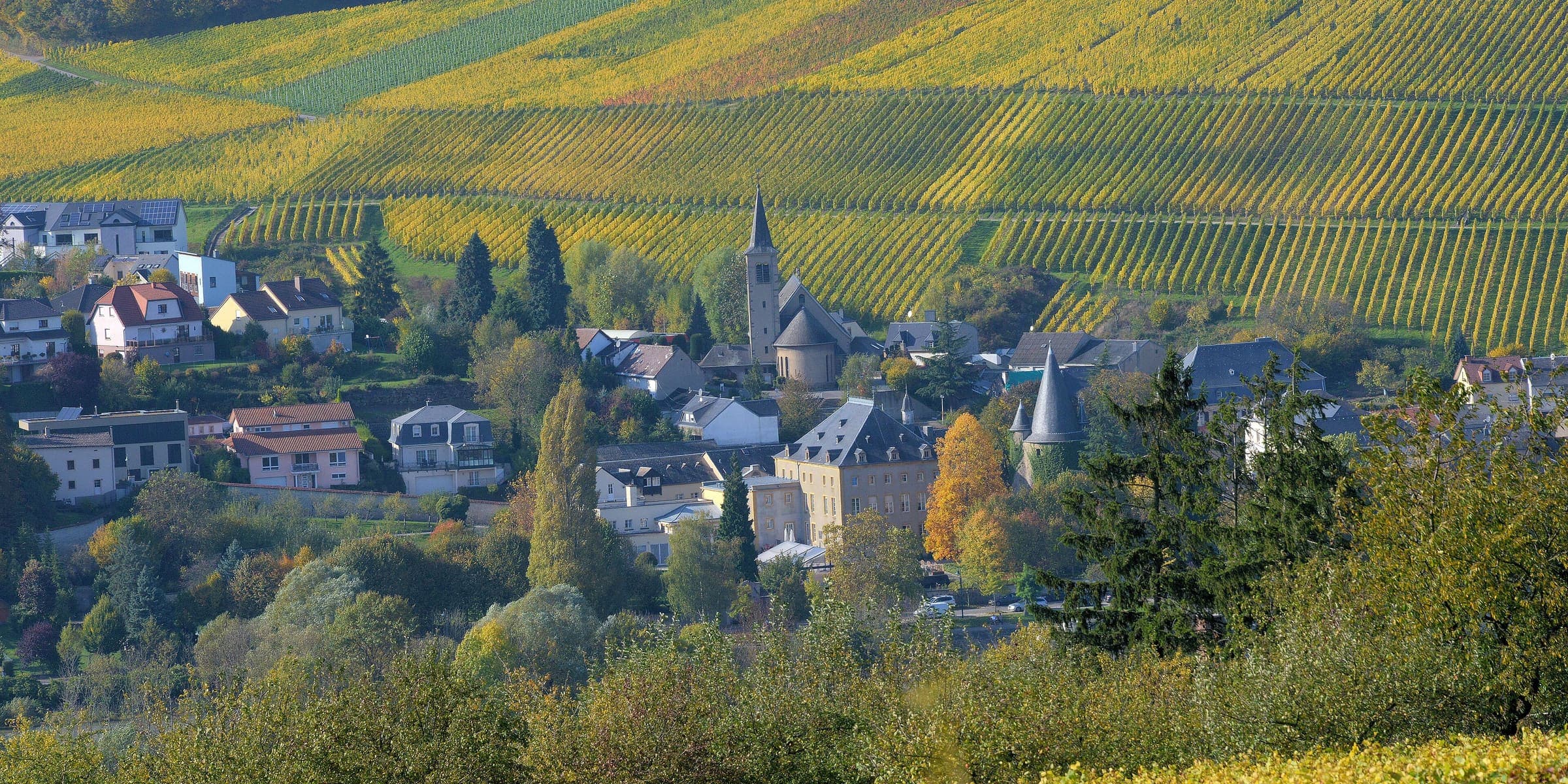
For a few dozen kilometres the Moselle forms Luxembourg's border with Germany, and its western bank is one long vineyard. This is where nearly all of the country's wine is made: crisp Rivaner, Auxerrois and Pinot gris, fine Riesling, and Crémant de Luxembourg, the sparkling wine aged in cellars cut into the hillsides. Remich has a riverside promenade and boat trips; Grevenmacher and Wormeldange hold the big cellars; Ehnen keeps a wine museum in an old winegrower's house. At the southern end is Schengen, the village where the agreement that opened Europe's borders was signed on a riverboat in 1985, now with a small European museum. Cycle the riverside path, taste at a cellar or two and stay a night.
Best for
Known for
Skip if
Wine is not your reason to travel — the villages are pleasant but quiet.
Your match
Choose a few travel interests and we will show how well The Luxembourg Moselle fits them. Choose interests
See
The things that would make the trip incomplete without them.
The village of the Schengen Agreement
A small museum and monument on the riverbank where three countries meet.
Riverside town and promenade
The liveliest stop on the river, with boat trips from the esplanade.
Sparkling-wine houses in the hillsides
Several houses open their cellars for tours and tastings; check ahead with each.
Wine town at the northern end
The regional centre, with cellars and a bridge to Germany.
Orientation
How the city is actually divided, and what each part is for.
Schengen to Wasserbillig along the river
Ahn, Wormeldange, Ehnen and Remich, each with its cellars and wine stands.
Stay
Areas rather than hotels — pick the right one and the rest follows.
Hotels on the river
The most choice and the best evening walk.
A quieter base to the north
Close to the big cellars.
Practical
Plan this trip — useful links
Context
Enough to make what you are looking at legible.
The Schengen Agreement is signed on a boat moored at Schengen.
Crémant de Luxembourg becomes a protected appellation.
Further out
Worth a day if you have one to spare.
The capital
Luxembourg City has its own guide.
Abbey town and sandstone gorges
Echternach & the Mullerthal has its own guide.