

Alfama & the miradouros
Historic quarter · Viewpoints
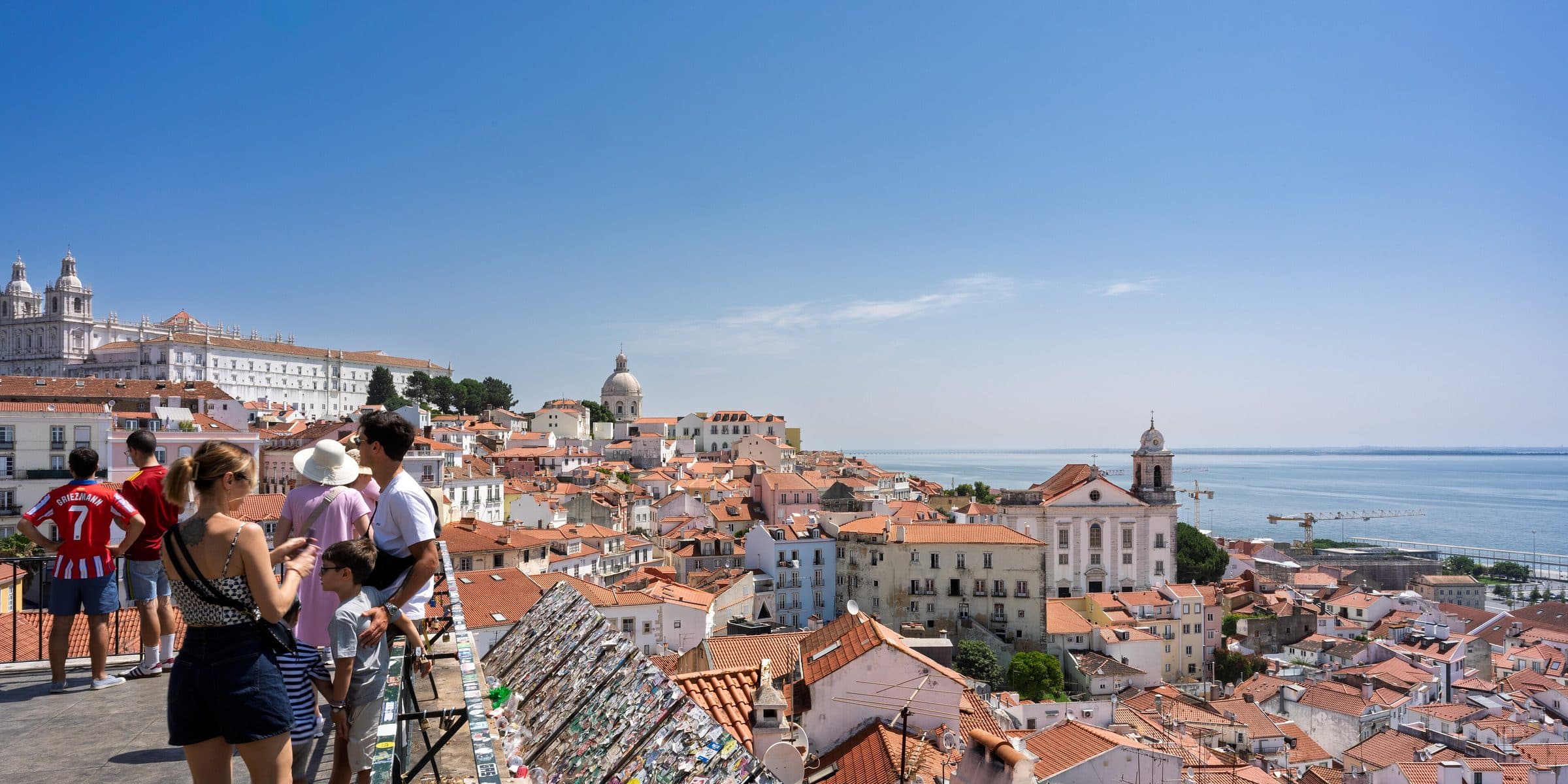
Walk up through the lanes rather than taking tram 28. The tram is for the way down.
AlfamaFreeWalk
In 60 seconds
Lisbon is a city of viewpoints and gradients, where the shortest route between two points is rarely the flattest. Alfama, Mouraria and Bairro Alto reward wandering far more than they reward a checklist, and the Atlantic is close enough that any visit longer than two days should include an afternoon at the water. Tram 28 is a sight more than transport — ride it early or not at all — while the Metro and the funiculars save the climbs. Belém, with the Jerónimos Monastery and its custard tarts, deserves a morning; Sintra and the beaches of Cascais are each about forty minutes by train. Three days is the honest minimum — the city is larger than it looks from a map.
Best for
Known for
Skip if
Steep cobbles are a problem for you, or you can only travel in August — when the centre is hottest, fullest and least itself.
Your match
Choose a few travel interests and we will show how well Lisbon fits them. Choose interests
See
The things that would make the trip incomplete without them.
Historic quarter · Viewpoints
Walk up through the lanes rather than taking tram 28. The tram is for the way down.
Tile museum · Former convent
Five centuries of tile in a convent nobody queues for. The single best museum in the city.
Manueline architecture · Riverside
Go at opening or after four. The custard tarts nearby are worth the queue exactly once.
Eat
A short list, kept short on purpose. Each entry answers one question: when is this the right choice?
Where to eat the food this city is actually known for.
Portuguese · Small dining room
Twenty seats and a menu that changes daily. Reserve the moment you book flights.
Petiscos · Daily chalkboard
A small tavern that revives old Lisbon petiscos and forgotten Portuguese produce, written up daily on a chalkboard.
Neo-tasca
An old tasca under the castle reborn by a young team. Order the polvo à lagareiro and book weeks ahead.
No booking, no ceremony, reliably good.
Seafood · Beer hall
Shellfish by weight, beer by the bottle, a steak sandwich for dessert. Non-negotiable.
Food hall in the Mercado da Ribeira
Dozens of Lisbon kitchens under the 1892 market roof, from chef counters to sandwiches. Go outside the lunch peak.
Bifana counter
A plain counter on Praça Luís de Camões serving garlicky pork bifanas and a small beer.
Worth planning the evening around.
Modern Portuguese · Produce-led
The clearest picture of where Portuguese cooking is going.
José Avillez tasting menus
José Avillez's two-star reinterpretation of Portuguese cooking, in a small Chiado room. Book well ahead.
Vegetarian tasting menu
José Avillez's all-vegetarian room, the first vegetarian restaurant in Portugal to win a Michelin star.
Mornings, and the slow hour between things.
Pastelaria · Nata
Eat it at the counter, still warm, with cinnamon. Belém's are famous; these are better.
Roastery café
One of the cafés that brought third-wave coffee to Lisbon, roasting on site off Restauradores.
Custard tarts · Since 1837
The original pastel de nata, baked to a closely kept recipe near the Jerónimos Monastery since 1837.
Beyond the obvious
Less obvious, rarely queued for, and usually the part people remember.
Industrial complex · Studios & food
A printing works turned creative quarter under the bridge. Sunday brunch, not evenings.
Fado's birthplace · Multicultural
Alfama without the price list. Where fado was actually born, and still sung.
18th-century aqueduct
Arches that survived the 1755 earthquake, striding across the Alcântara valley. Walk the top when it is open.
After dark
Rooftop · Car park
Top floor of a multi-storey car park. Arrive an hour before sunset or not at all.
Cocktails · Former brothel
Theatrical without being a theme park. The start of a Cais do Sodré night.
Cherry liqueur counter · Since 1840
A doorway on Largo de São Domingos pouring ginja, with or without the cherries, to a crowd on the square.
Orientation
How the city is actually divided, and what each part is for.
Medieval lanes, viewpoints, fado
The oldest and steepest part of the city. Stay if you can handle stairs.
Gardens, concept stores, restaurants
Flat, leafy and the best-eating square kilometre in Lisbon.
Grid of shops, market, tram 28 terminus
A flat, residential grid with a renovated market hall at its heart, at the end of the 28 tram line.
Stay
Areas rather than hotels — pick the right one and the rest follows.
Central · Flat
Everything walkable, everything on a grid. Busy, but the easiest first base.
Boutique · Residential
Ten minutes uphill from the centre and a completely different noise level.
Riverside, trains to the coast
On the river, with the market and the trains to Cascais at the door. Nights are loud on Pink Street.
Practical
Context
Enough to make what you are looking at legible.
Afonso Henriques takes the city from Moorish rule after a four-month siege. Alfama's street pattern survives from before it.
An earthquake, fire and tsunami destroy the lower city. Pombal rebuilds Baixa on a grid — Europe's first planned seismic architecture.
The Carnation Revolution ends four decades of dictatorship, almost without bloodshed. The date, 25 April, is on half the city's bridges and streets.
Further out
Worth a day if you have one to spare.
Palaces in a forested microclimate
Go early and pick two palaces, not five. Quinta da Regaleira over Pena if you must choose.
Coast, surf & seafood
The train hugs the coast the whole way. Guincho for wind, Cascais for lunch.
Walled Alentejo town · Roman temple
A Roman temple, a chapel of bones and whitewashed lanes inside medieval walls.
Go further
Multi-city trips that stop here, with the transport between them.