

Derzhprom & Freedom Square
1925–1928 reinforced-concrete Constructivist complex linked by skybridges
Inscribed on UNESCO's Tentative List as a defining monument of early twentieth-century modernist architecture.
In 60 seconds
Founded in 1654 and home to one of Eastern Europe's oldest universities (1804), Kharkiv is the intellectual and architectural anchor of Sloboda Ukraine. On Freedom Square stands Derzhprom (the 1928 Palace of Industry), a landmark of interwar Constructivism on UNESCO's Tentative List, while Sumska Street, Shevchenko Garden and the striped Neo-Byzantine Annunciation Cathedral trace the city's nineteenth- and twentieth-century growth. Because Kharkiv lies close to the front line and faces frequent missile and artillery strikes, it is not suitable for leisure travel at present.
Best for
Known for
Skip if
Kharkiv lies near active wartime front lines and is strictly off-limits to leisure travel.
Your match
Choose a few travel interests and we will show how well Kharkiv fits them. Choose interests
See
The things that would make the trip incomplete without them.
1925–1928 reinforced-concrete Constructivist complex linked by skybridges
Inscribed on UNESCO's Tentative List as a defining monument of early twentieth-century modernist architecture.
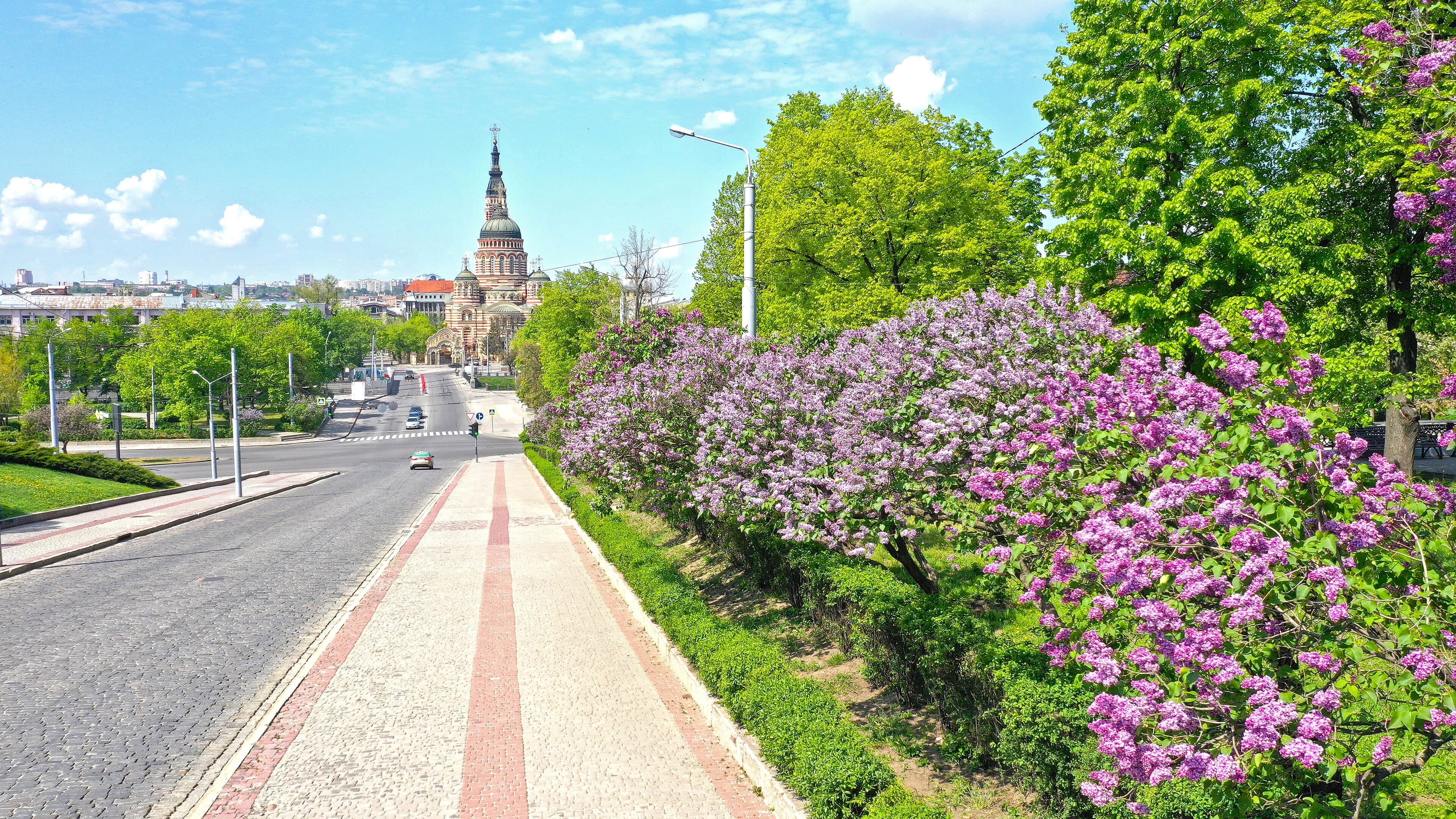
1888–1901 red-and-white striped Neo-Byzantine cathedral beside the Lopan River
Its eighty-metre bell tower anchors the historic market district.
Central wooded park and 1835 monument to Taras Shevchenko by Matvey Manizer
Links Freedom Square with the Opera and Sumska Street.
Beyond the obvious
Less obvious, rarely queued for, and usually the part people remember.
1689 Cossack Baroque three-domed church—the oldest surviving building in Kharkiv
Stands above the Lopan confluence on Universytetska Hill.
Late nineteenth- and early twentieth-century mansions and banks by Oleksii Beketov
Preserves Kharkiv's Art Nouveau and Neo-Renaissance streetscape around Mironosytska and Darvina streets.
Practical