

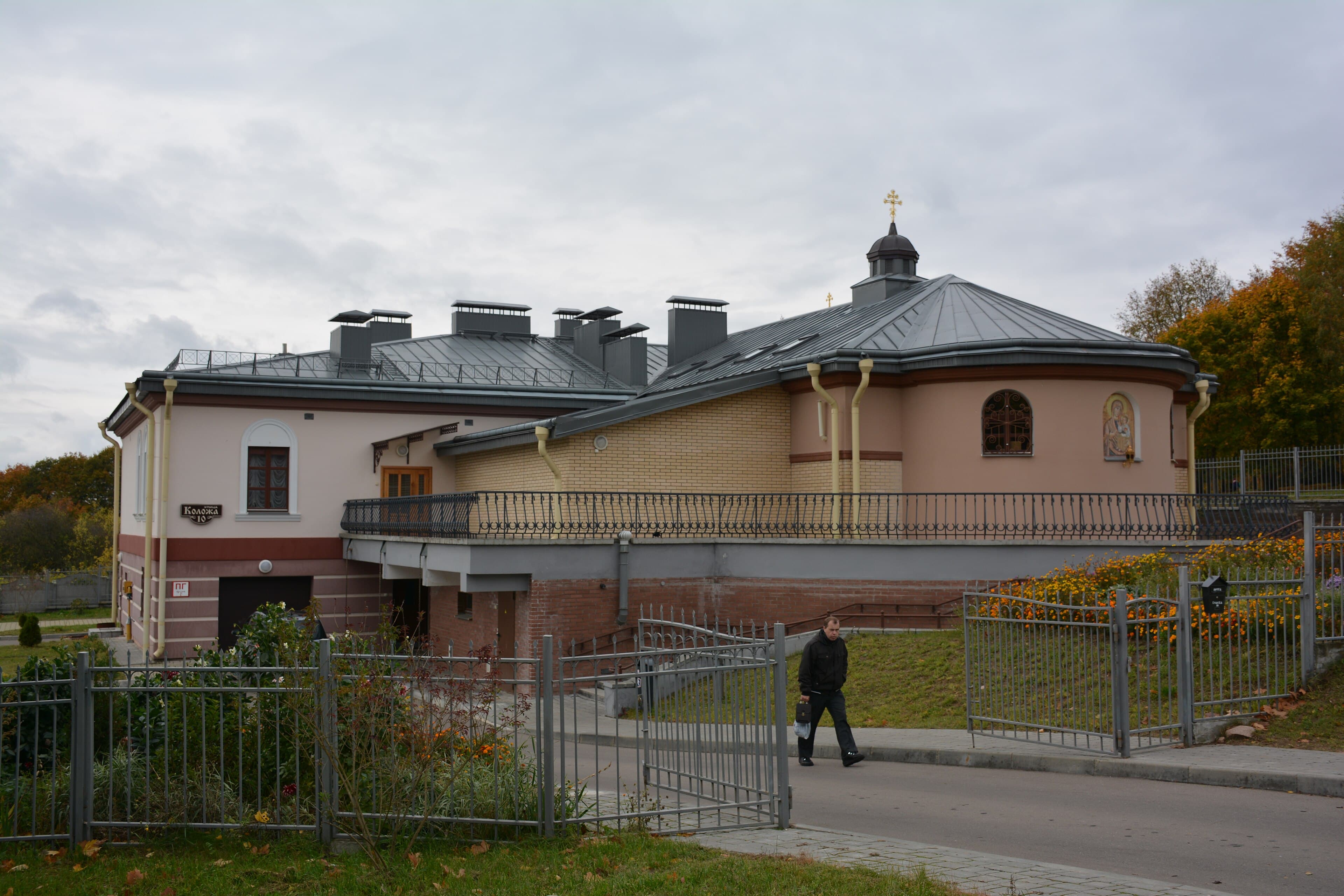
Kalozha Church of Saints Boris and Gleb
Twelfth-century Black Ruthenian stone-and-brick church above the Neman
Inscribed on UNESCO's Tentative List for its acoustic amphorae and boulder-inlaid walls.
In 60 seconds
Set on high bluffs above the Neman River in western Belarus, Grodno preserves the richest concentration of historic architecture in the country. On adjacent hills stand the Old Castle of Grand Duke Vytautas and King Stephen Báthory and the eighteenth-century rococo New Castle, while further along the river bluff rises the twelfth-century Kalozha Church of Saints Boris and Gleb, its brick walls inlaid with polished boulders and glazed ceramic crosses.
Best for
Known for
Skip if
Official travel advisories currently warn against travel to Belarus.
Your match
Choose a few travel interests and we will show how well Grodno fits them. Choose interests
See
The things that would make the trip incomplete without them.
Twelfth-century Black Ruthenian stone-and-brick church above the Neman
Inscribed on UNESCO's Tentative List for its acoustic amphorae and boulder-inlaid walls.
Hilltop residences of Grand Duchy and Polish-Lithuanian monarchs
Connected across a deep ravine by a seventeenth-century stone arch bridge above the Neman.
1705 Jesuit Baroque cathedral with a twenty-one-metre carved wooden altar
Adjoins the 1709 Jesuit apothecary, the oldest continuously operating pharmacy in Belarus.
Beyond the obvious
Less obvious, rarely queued for, and usually the part people remember.
Late sixteenth-century synagogue rebuilt in eclectic Moorish-Renaissance style in 1902
Stands above the river bluff near the castle hill.
Eighteenth-century botanical garden founded by French naturalist Jean-Emmanuel Gilibert
Follows the stream ravine through the historic centre.