
Traveleriences
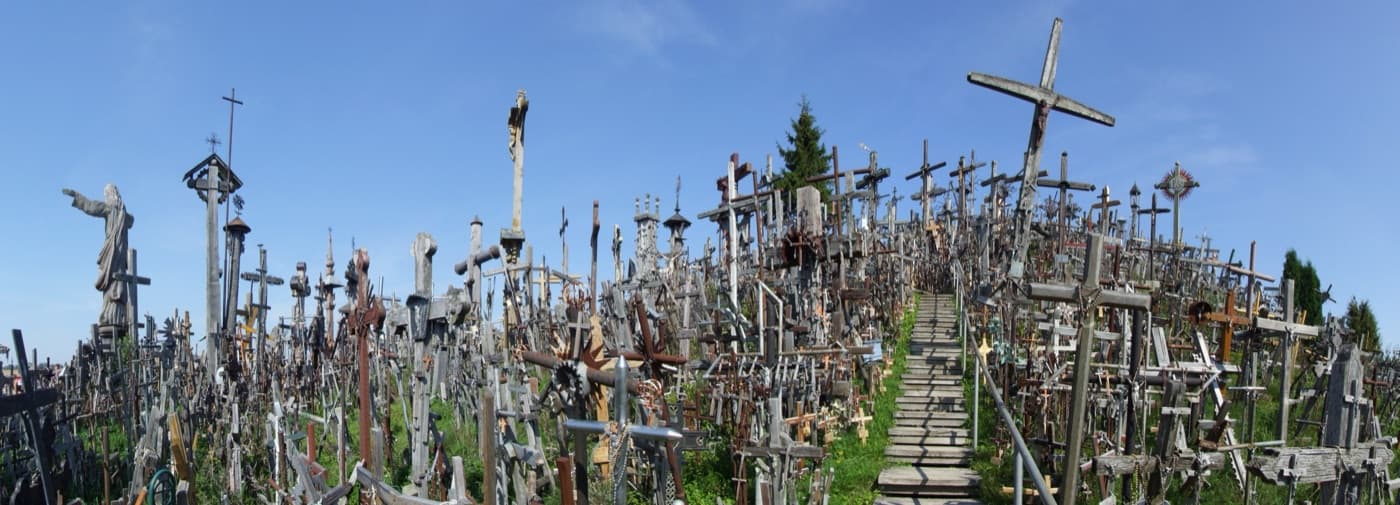
Tens of thousands of wooden, metal and amber crucifixes blanketing the sacred twin mounds of the Hill of Crosses

Hill of Crosses, Lithuania

Ideal: 1 dayBest: May–OctPrice: Inexpensive

In 60 seconds

Hill of Crosses in 60 seconds

Rising quietly from the open plains of northern Lithuania near the city of Šiauliai, the Hill of Crosses (Kryžių kalnas) is one of the world's most astonishing, deeply emotional pilgrimage sanctuaries. An ancient fortified mound dating back to medieval times, the hill has served as a spontaneous place of national memory, Christian devotion and peaceful resistance since the 1831 anti-tsarist uprising. During the Soviet occupation, authorities bulldozed the hill at least four times and dumped the crosses into scrap heaps, yet under cover of night, locals crept back through KGB patrols to replant new crucifixes by the thousands. Today, an estimated 100,000 to 200,000 crosses—ranging from colossal hand-carved oak rūtelių crosses recognized as UNESCO Intangible Cultural Heritage to tiny rosaries hung from iron nails—blanket every square metre, clinking hauntingly together in the Baltic wind.

SacredUNESCO HeritageHistoryPilgrimageUnique

Best for

    Known for

    • Over 100,000 crosses forming an extraordinary forest of spiritual memory
    • UNESCO-recognized traditional Lithuanian cross-crafting (kryždirbystė)
    • Symbol of non-violent Lithuanian resistance against tsarist and Soviet rule
    • Pilgrimage visit of Pope John Paul II in 1993 and the papal stone crucifix
    • Franciscan Monastery nestled peacefully behind the sacred hill

    Skip if

    You seek lively urban nightlife or beach lounging; the Hill of Crosses is a solemn, deeply moving sanctuary of peaceful reflection.

    Your match

    Choose a few travel interests and we will show how well Hill of Crosses fits them. Choose interests

    See

    Must experience

    The things that would make the trip incomplete without them.

    The Hill of Crosses Sanctuary (Kryžių kalnas)

    Inexpensive

    A medieval twin hillfort mound densely carpeted with over one hundred thousand crucifixes, statues and rosaries

    Walk through narrow footpaths flanked on both sides by countless crosses, listening to the gentle clatter of rosary beads in the wind.

    JurgaičiaiFreePilgrimage Sanctuary

    Lithuanian Cross-Crafting Heritage (Kryždirbystė)

    Inexpensive

    UNESCO-inscribed traditional art of carving monumental oak crosses with pagan sun motifs, floral ironwork and wooden shrines

    Examine the exquisite hand-carved Rūpintojėlis (Pensive Christ) motifs blending Christian themes with pre-Christian solar symbols.

    Mound PathsFolk ArtUNESCO Heritage

    Franciscan Monastery of Kryžių Kalnas

    Inexpensive

    Modern contemplative brick monastery founded following Pope John Paul II's visit, featuring a serene chapel overlooking the hill

    Visit the quiet glass chapel where the altarpiece window directly frames the Hill of Crosses in peaceful contemplation.

    Monastery GroundsContemplationFranciscan Chapel

    Eat

    Where to eat

    A short list, kept short on purpose. Each entry answers one question: when is this the right choice?

    More places to eat

    Too few picks yet for their own heading, so they share this list.

    Juonē Bėškuo

    Inexpensive

    Lively folk music pub in central Šiauliai famous for country-style pork shanks, rye bread garlic toasts and local beers

    Hearty Lithuanian country dining in an authentic timber barn setting filled with antiques and musical instruments.

    Šiauliai CentreCountry pubLive Folk Music

    Restoranas Žemaitis

    Inexpensive

    Celebrated Samogitian regional tavern in nearby Šiauliai serving authentic kastinys, cibulynė and potato pancakes

    Try traditional Žemaitian kastinys—rich sour cream whipped with garlic and caraway served with hot jacket potatoes.

    Šiauliai CentreKastinysRustic Comfort

    Kryžių Kalnas Visitor Centre Café

    Inexpensive

    Convenient modern café at the visitor entrance providing hot drinks, herbal teas and regional pastries

    A welcoming spot for hot coffee and to browse locally crafted wooden crosses before walking to the hill.

    Visitor CentreCoffeeQuick Stop

    Stay

    Where to stay

    Areas rather than hotels — pick the right one and the rest follows.

    Šiauliai City Centre

    Inexpensive

    Comfortable urban hotels and guesthouses around the pedestrian Vilniaus street boulevard, 12 km south of the hill

    The most practical base with railway connections, diverse restaurants and pedestrian museums.

    City AmenitiesDining Choices

    Jurgaičiai Country Guesthouses

    Moderate

    Quiet rural farmsteads and countryside lodges situated within walking or cycling distance of the sacred mound

    Best for experiencing the silence of the hill at sunrise or sunset without tour buses.

    PeacefulRural Serenity

    Practical

    Know before you go

    Getting in
    Buses depart hourly from Šiauliai Bus Station towards Joniškis; disembark at the 'Domantai' stop, followed by a pleasant 2 km countryside walk.
    Leaving a cross
    Anyone is welcome to place a cross on the hill; small wooden and amber crosses are available for purchase at the visitor centre.
    Photography etiquette
    The site is an active sacred ground; speak softly and respect pilgrims engaged in prayer or memorial services.

    Context

    History in 5 minutes

    Enough to make what you are looking at legible.

    1. 1831

      Families of fallen anti-tsarist rebels begin placing crosses on the hill when imperial authorities deny Christian burials.

    2. 1961

      Soviet authorities bulldoze over 5,000 crosses in an attempt to destroy the sanctuary, but crosses reappear overnight.

    3. 1993

      Pope John Paul II visits the Hill of Crosses, celebrating an open-air mass and blessing the site as a global symbol of hope and freedom.

    Further out

    Nearby escapes

    Worth a day if you have one to spare.

    Chaimas Frenkelis Art Nouveau Villa

    Opulent early 20th-century Secessionist villa and Jewish leather industrialist estate surrounded by a park and rose garden

    Admire magnificent restored Secessionist stucco ceilings, historical Jewish leather workshops, and manicured park terraces.

    15 minutes south by car in ŠiauliaiArt Nouveau VillaJewish Heritage