

Speicherstadt & Wasserschloss
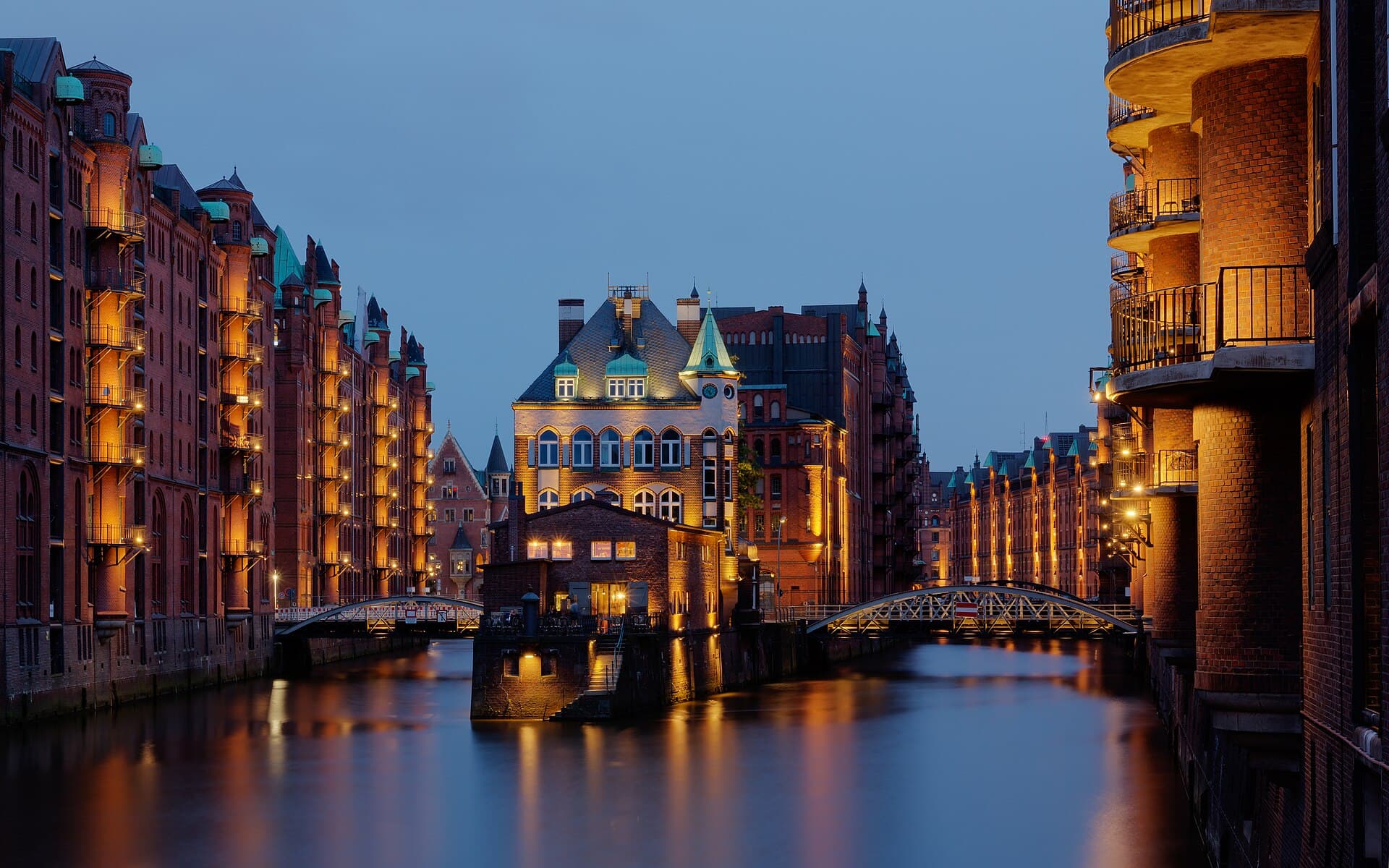
InexpensiveUNESCO red-brick warehouse district on canal bridges
Walk the canal bridges between neo-Gothic brick warehouses built on oak piles.
HafenCityArchitectureUNESCO
In 60 seconds
Hamburg is Germany's great maritime metropolis, built around vast tidal harbour basins, interconnected canals and red-brick Hanseatic architecture. The UNESCO-listed Speicherstadt is the world's largest historic warehouse quarter, crowned by the soaring glass waves of the Elbphilharmonie on the river Elbe. From early morning fish markets and harbour ferries to the leafy shores of the Alster lakes and the nocturnal counter-culture of St. Pauli, Hamburg moves to an open, outward-looking rhythm.
Best for
Known for
Skip if
You want a fairy-tale medieval mountain hamlet rather than a brisk, dynamic port city.
Your match
Choose a few travel interests and we will show how well Hamburg fits them. Choose interests
See
The things that would make the trip incomplete without them.
UNESCO red-brick warehouse district on canal bridges
Walk the canal bridges between neo-Gothic brick warehouses built on oak piles.
Wave-shaped concert hall overlooking the harbour
Ride the curved escalator to the public plaza for panoramic views of the working port.
Baroque copper spire and tower panorama
Hamburg's landmark baroque church known as Der Michel overlooks the river basins.
Eat
A short list, kept short on purpose. Each entry answers one question: when is this the right choice?
Mornings, and the slow hour between things.
Historic warehouse roastery
Freshly roasted specialty beans served amid burlap coffee sacks and copper roasters.
Classic café and patisserie
Traditional tortes and relaxed salon seating along Lange Reihe in St. Georg.
Too few picks yet for their own heading, so they share this list.
Traditional Hanseatic cooking in a leaning brick tavern
Labskaus and seasonal northern German plates inside a historic leaning coffee stall.
Fresh fish rolls on the river pier
Bismarck herring and North Sea crab rolls served right at the Landungsbrücken pier.
Classic seafood overlooking the harbour
Traditional North Sea fish and oysters with panoramic views across the port basins.
Beyond the obvious
Less obvious, rarely queued for, and usually the part people remember.
Historic riverfront pilot cottages and sandy beach
Take ferry 62 downriver to wander timber-framed cottages and sandy Elbe riverbanks.
Tiled 1911 river crossing under the harbour
Take the vehicle lift down to walk through tiled tunnels beneath the river Elbe.
17th-century timber-framed courtyard lane
The last surviving 17th-century enclosed guild courtyard in the city centre.
After dark
Riverside beach bar on the Elbe
Barefoot beers on the sand watching container ships glide past at sunset.
Artisanal agave bar
Inventive tequila and mezcal cocktail creations in a moody St. Pauli barroom.
Orientation
How the city is actually divided, and what each part is for.
Canal warehouses meet modern waterfront design
Gothic brick warehouses alongside contemporary glass architecture on the Elbe quays.
Maritime nightlife, music clubs and street art
Independent boutiques, indie record shops and vibrant night energy north of the Reeperbahn.
Stay
Areas rather than hotels — pick the right one and the rest follows.
Central · Town hall and Alster lakes
Ideal for walking between historic churches, the inner lake and shopping arcades.
Waterfront · Architecture and Elbphilharmonie
Quiet waterfront strolls and easy access to harbour ferries and concerts.
Practical
Plan this trip — useful links
Context
Enough to make what you are looking at legible.
Emperor Frederick Barbarossa grants Hamburg charter privileges of free navigation along the lower Elbe.
Hamburg joins the German Customs Union and creates the Speicherstadt free port warehouse district.
Speicherstadt and the Kontorhaus District with Chilehaus are designated a UNESCO World Heritage site.
Further out
Worth a day if you have one to spare.
Hanseatic Brick Gothic capital
Walk through the Holstentor and cobbled alleys of Germany's Queen of the Hanseatic League.
Historic apple and cherry orchards along the Elbe
Timber-framed farmhouses and miles of blossom groves along the south bank of the Elbe.