
Traveleriences
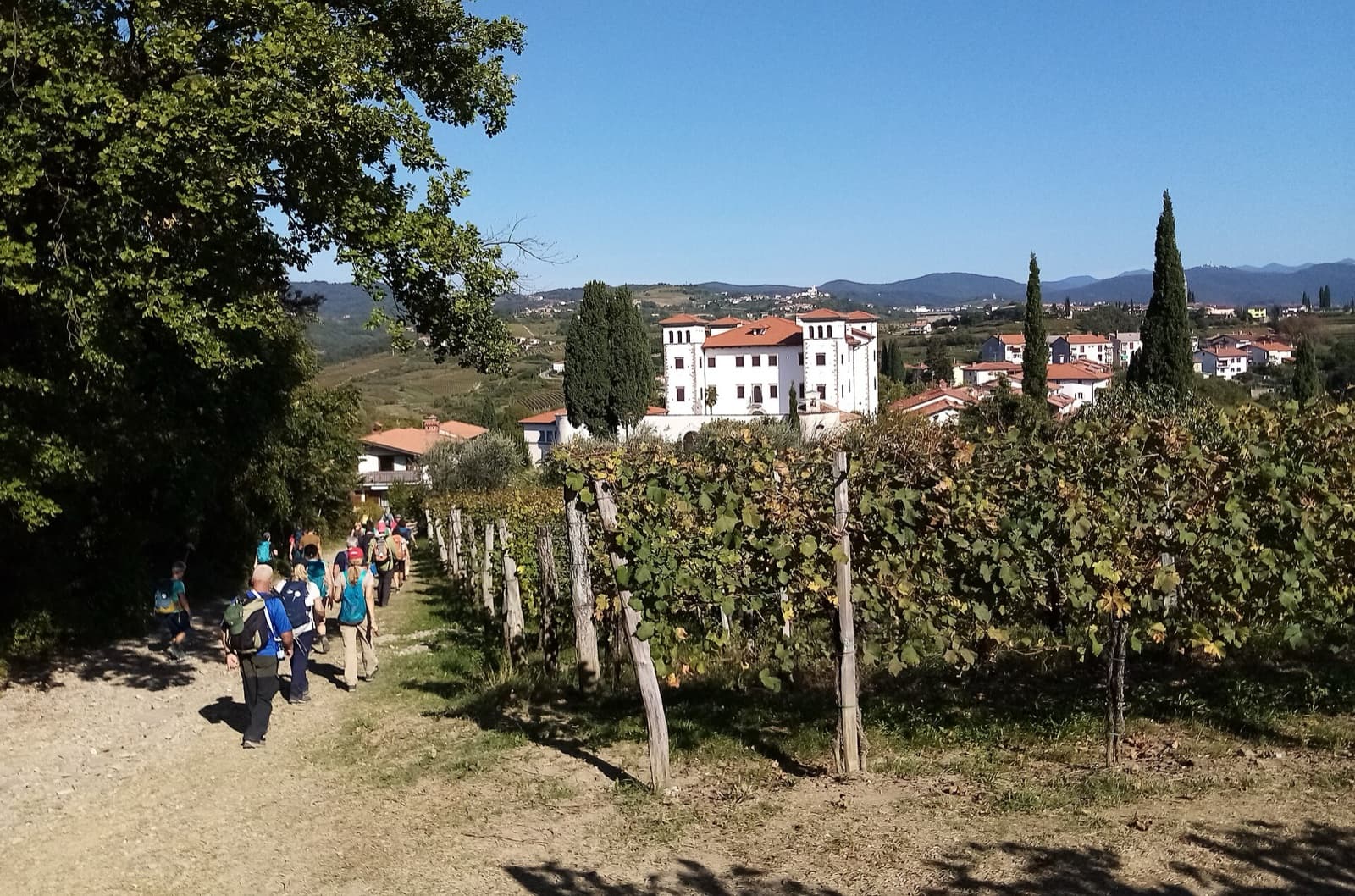
The fortified medieval hilltop village of Šmartno surrounded by terraced vineyards and cypress trees in Goriška Brda

Goriška Brda, Slovenia

Ideal: 2–3 daysBest: Apr–Jun, Sep–OctPrice: Moderate

In 60 seconds

Goriška Brda in 60 seconds

Tumbling across sun-drenched hills between the snow-capped Julian Alps and the blue Adriatic Sea right on the Italian border, Goriška Brda is widely celebrated as the 'Slovenian Tuscany'. These rolling flysch hills (locally called opoka) are sculpted into dramatic terraces of vines, olive groves, and sweet cherry orchards, punctuated by slender cypress trees and fairytale fortified villages crowning nearly every ridge. Brda is one of the most internationally acclaimed white and amber/orange wine regions on Earth. The indigenous Rebula (Ribolla Gialla) grape reaches its ultimate expression here, coaxed by visionary organic winemakers into crisp mineral whites, complex oak-matured cuvées, and luminous amber skin-contact natural wines. The region's medieval soul is Šmartno, a walled garrison village with cobblestone alleys and artisan wine bars, anchored by the Renaissance palace of Dobrovo Castle.

Wine CountrySlovenian TuscanyOrange WineMedieval VillagesOlive OilGastronomy

Best for

    Known for

    • Indigenous Rebula wine & world-renowned skin-contact orange wines
    • Fortified medieval hilltop village of Šmartno
    • Dobrovo Castle Renaissance fortress & regional Vinoteka
    • Gonjače panoramic viewing tower (Julian Alps to the Adriatic)
    • Brda sweet cherries, extra-virgin olive oil & farm-to-table dining

    Skip if

    You rely solely on public trains; exploring the undulating vineyard hamlets and boutique wineries of Brda requires an e-bike, rental car, or arranged transfers.

    Your match

    Choose a few travel interests and we will show how well Goriška Brda fits them. Choose interests

    See

    Must experience

    The things that would make the trip incomplete without them.

    Dobrovo Castle (Grad Dobrovo)

    Inexpensive

    17th-century Renaissance palace housing the Museum of Brda and the regional subterranean wine archive

    Tour the noble salons adorned with works by modernist painter Zoran Mušič and sample 300 local wines in the vaulted castle vinoteka.

    DobrovoArt GalleryRegional Vinoteka

    Gonjače Viewing Tower (Razgledni stolp Gonjače)

    Inexpensive

    23-metre spiral viewing tower perched on the central crest of the region, dedicated to WWII victims

    Climb 144 steps for an astonishing panoramic view sweeping from the snow-covered Julian Alps across terraced vineyards down to the Adriatic Sea.

    Gonjače360 PanoramasAdriatic Horizon

    Eat

    Where to eat

    A short list, kept short on purpose. Each entry answers one question: when is this the right choice?

    More places to eat

    Too few picks yet for their own heading, so they share this list.

    Hiša Marica

    Moderate

    Charming tavern inside medieval Šmartno serving homemade pršut, olive oils, and hand-rolled pasta with wild herbs

    Feast on platters of homemade cured mangalica ham, herb frittatas, and braised beef cheeks under stone arches in Šmartno.

    ŠmartnoHandmade PastaHouse-Cured Pršut

    Domačija Kabaj

    Expensive

    Michelin-recommended vineyard homestead in Šlovrenc famed for traditional clay amphora qvevri wines and creative dining

    Superb terroir cooking paired with natural Rebula and Ravan aged for months on grape skins inside subterranean Georgian clay amphorae.

    ŠlovrencMichelin RecommendedQvevri Amphora

    Vinoteka Brda Castle Terrace

    Inexpensive

    Courtyard café and wine terrace at Dobrovo Castle serving morning espresso, local cherry juices, and tasting flights

    The ideal starting point to plan your day: order an espresso and ask the sommelier for a bespoke three-wine tasting flight.

    Dobrovo CastleCastle CourtyardCherry Juice

    Beyond the obvious

    Hidden gems

    Less obvious, rarely queued for, and usually the part people remember.

    Movia Estate & Aleš Kristančič Cellar

    Expensive

    Legendary biodynamic wine estate in Ceglo producing globally acclaimed skin-contact natural and sparkling wines

    Experience a legendary tasting with the charismatic Kristančič family, featuring un-disgorged sparkling Puro opened submerged in water.

    CegloBiodynamicMovia Puro

    Krčnik Natural Bridge & Kotline Pools

    Inexpensive

    Dramatic natural stone arch carved by the Kožbanjšček stream through polished limestone potholes

    A peaceful, secluded natural monument where cool forest waters flow through a sculpted limestone arch into emerald pools.

    Kožbana ValleyKarst PotholesNatural Bridge

    Stay

    Where to stay

    Areas rather than hotels — pick the right one and the rest follows.

    Šmartno Medieval Walled Village

    Expensive

    Charming stone cottages and boutique guest rooms inside the 16th-century ramparts

    Magical atmosphere with lantern-lit lanes and peaceful starry nights after day visitors depart.

    Boutique VillageVenetian Ramparts

    Dobrovo & Surrounding Vineyard Estates

    Moderate

    Wine-estate agriturismi and family farmsteads nestled right among the hillside vines

    Ideal for travelers who want to stay at working family wineries and swim with views across the rolling terraces.

    Infinity PoolsPeaceful

    Practical

    Know before you go

    Getting in
    Trains connect Ljubljana to Nova Gorica (3 hours); from Nova Gorica, local buses or a short 15-minute taxi ride reach Dobrovo.
    Getting around
    Electric bicycles (e-bikes) are the most rewarding way to explore Brda's steep terraces; e-bike rentals are available in Dobrovo and Šmartno.
    Wine Tastings
    Many small boutique wine estates operate by appointment; booking tastings 24–48 hours ahead ensures an intimate tour with the winemaker.
    Money
    Euro (€). Cards are accepted at castle vinotekas, restaurants, and estate wineries.

    Context

    History in 5 minutes

    Enough to make what you are looking at legible.

    1. 1500s

      The Venetians and Habsburgs fight over Brda; Šmartno is heavily fortified with seven stone towers as an anti-Ottoman and anti-Venetian bastion.

    2. 1947

      The post-WWII border arbitrarily divides the historic Collio / Brda region between Italy and Yugoslavia, splitting families and vineyards.

    3. 1990s

      Brda winemakers pioneer natural skin-contact orange winemaking, propelling Slovenian Rebula onto the world's most elite wine lists.

    Further out

    Nearby escapes

    Worth a day if you have one to spare.

    Cividale del Friuli (Italy)

    UNESCO-listed Lombard capital just twenty minutes across the Italian border with the Devil's Bridge

    Cross into Italy to explore the 8th-century Lombard Temple and gaze into the Natisone River from the Ponte del Diavolo.

    20 minutes west by carDevil's BridgeItalian Border