

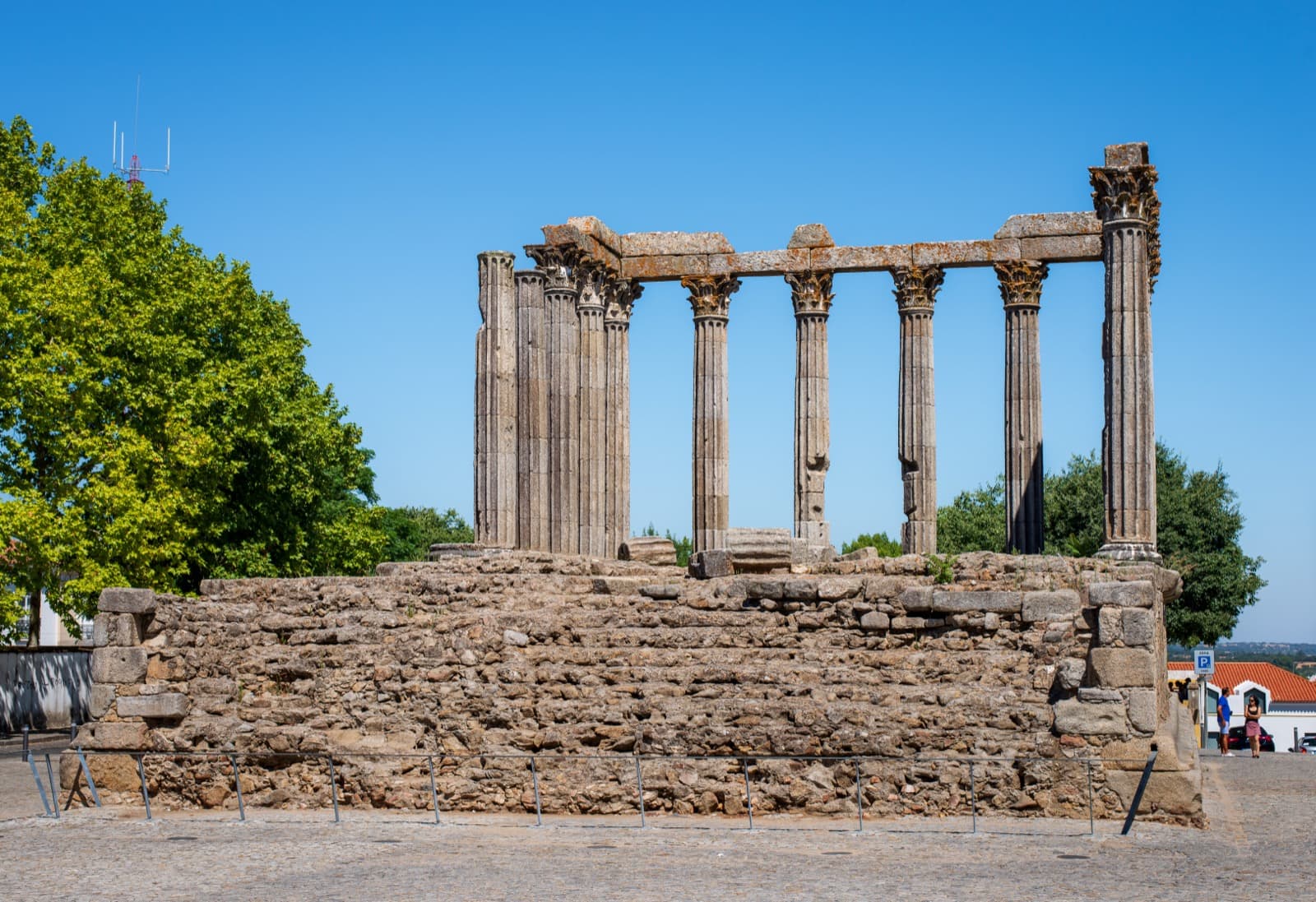
Roman Temple of Évora
1st-century Corinthian temple columns
Fourteen slender marble columns that survived the centuries because the temple was incorporated into medieval castle walls and later an abattoir.
Largo Conde de Vila FlorFreeIconic
In 60 seconds
Crowned with an extraordinarily preserved 1st-century Roman temple and enclosed by medieval defensive ramparts, Évora is the architectural and culinary soul of the Alentejo. Within its whitewashed alleys lie the macabre Capela dos Ossos, the fortress-like Gothic cathedral, and sun-baked squares devoted to hearty slow-cooked acorn-fed pork, sheep cheeses, and world-renowned Cartuxa wines.
Best for
Known for
Skip if
You wilt in scorching dry summer heat; July and August temperatures in the inland Alentejo plains routinely exceed 40°C.
Your match
Choose a few travel interests and we will show how well Évora & Alentejo fits them. Choose interests
See
The things that would make the trip incomplete without them.
1st-century Corinthian temple columns
Fourteen slender marble columns that survived the centuries because the temple was incorporated into medieval castle walls and later an abattoir.
Franciscan ossuary lined with 5,000 skeletons
Created by 16th-century Franciscan monks to meditate on human transience, famously inscribed: 'We bones that are here await yours'.
Historic Jesuit winery & maker of Pêra-Manca
The legendary cellars where Portugal's most coveted collectors' wines mature, accompanied by olive oil tastings and estate lunches.
Eat
A short list, kept short on purpose. Each entry answers one question: when is this the right choice?
Where to eat the food this city is actually known for.
Nine-seat counter bar run by husband and wife
A tiny, nine-stool counter where Senhor Domingos pours exceptional Alentejo wines while Senhora Florbela cooks heavenly petiscos.
Fifteen seats of sublime home-style Alentejo cooking
Order the lamb chops or roasted cod with olive puree in one of the most intimate, revered dining rooms in the interior.
Mornings, and the slow hour between things.
Traditional convent sweet pastries
Taste authentic Pão de Rala (rich almond, egg yolk and pumpkin paste) and queijadas de Évora prepared from convent recipes.
Warm custard tart bakery by Praça do Giraldo
Crisp puff-pastry custard tarts dusted with cinnamon, fresh out of the ovens every half hour.
Too few picks yet for their own heading, so they share this list.
Rustic tavern for pork cheeks & migas
Friendly neighbourhood tavern delivering generous copper skillets of carne de porco à alentejana with clams and fried potatoes.
Temple of classical Alentejo gastronomy · Since 1945
Generous starter tables of partridge escabeche and cured hams followed by acorn-fed pork cheeks and wild asparagus migas.
Beyond the obvious
Less obvious, rarely queued for, and usually the part people remember.
Neolithic megalithic circle among cork oaks
A quiet ring of 95 carved granite menhirs older than Stonehenge, rising peacefully among ancient cork oaks.
Medieval walled village over Lake Alqueva
Car-free whitewashed lanes crowning a strategic granite crag with sweeping vistas over the dark waters of the Alqueva reservoir.
16th-century aqueduct with houses tucked into arches
Walk along Rua do Cano where whitewashed family homes and shops have been cleverly built directly inside the monumental stone arches.
After dark
Contemporary wine tasting room near Giraldo square
Sample the complete range of Cartuxa and Scala Coeli wines by the glass paired with sheep's milk Serpa cheese boards.
Late-night student and local tavern
Relaxed neighbourhood bar serving cold local draft beers and Alentejo wine to university students and locals.
Orientation
How the city is actually divided, and what each part is for.
Walled medieval alleys, Roman ruins and marble arcades
The entire inner city is a walkable UNESCO monument of shaded plazas and convent bakeries.
Cork oak montados, olive groves and whitewashed quintas
The vast rolling agricultural landscapes surrounding the city, dotted with megaliths and wine estates.
Stay
Areas rather than hotels — pick the right one and the rest follows.
Historic convent hotels & central pedestrian lanes
Best base to immerse yourself in history, step out directly to dinner, and stroll illuminated monuments after dark.
Sprawling estate hotels amid cork forests & vineyards
Glorious for quiet nights under brilliant starry skies, infinity pools and leisurely estate wine tastings.
Practical
Context
Enough to make what you are looking at legible.
Julius Caesar grants Évora the title of Liberalitas Julia; the town thrives as a vital Roman trading and military hub in Lusitania.
The legendary warrior Geraldo Sem Pavor (Gerald the Fearless) captures Évora from Moorish rule in a daring night surprise attack.
UNESCO designates Évora's historic centre as a World Heritage Site for its exceptional concentration of Roman, Gothic, Manueline and Renaissance architecture.
Further out
Worth a day if you have one to spare.
Marble citadel town & famous Saturday antiques market
White marble townhouses crowned by a 13th-century marble castle tower, famous for clay bonecos figures.
Circular castle & traditional embroidered wool rugs
A unique circular hilltop castle overlooking whitewashed alleys renowned for handmade cross-stitch tapestries.