
Traveleriences
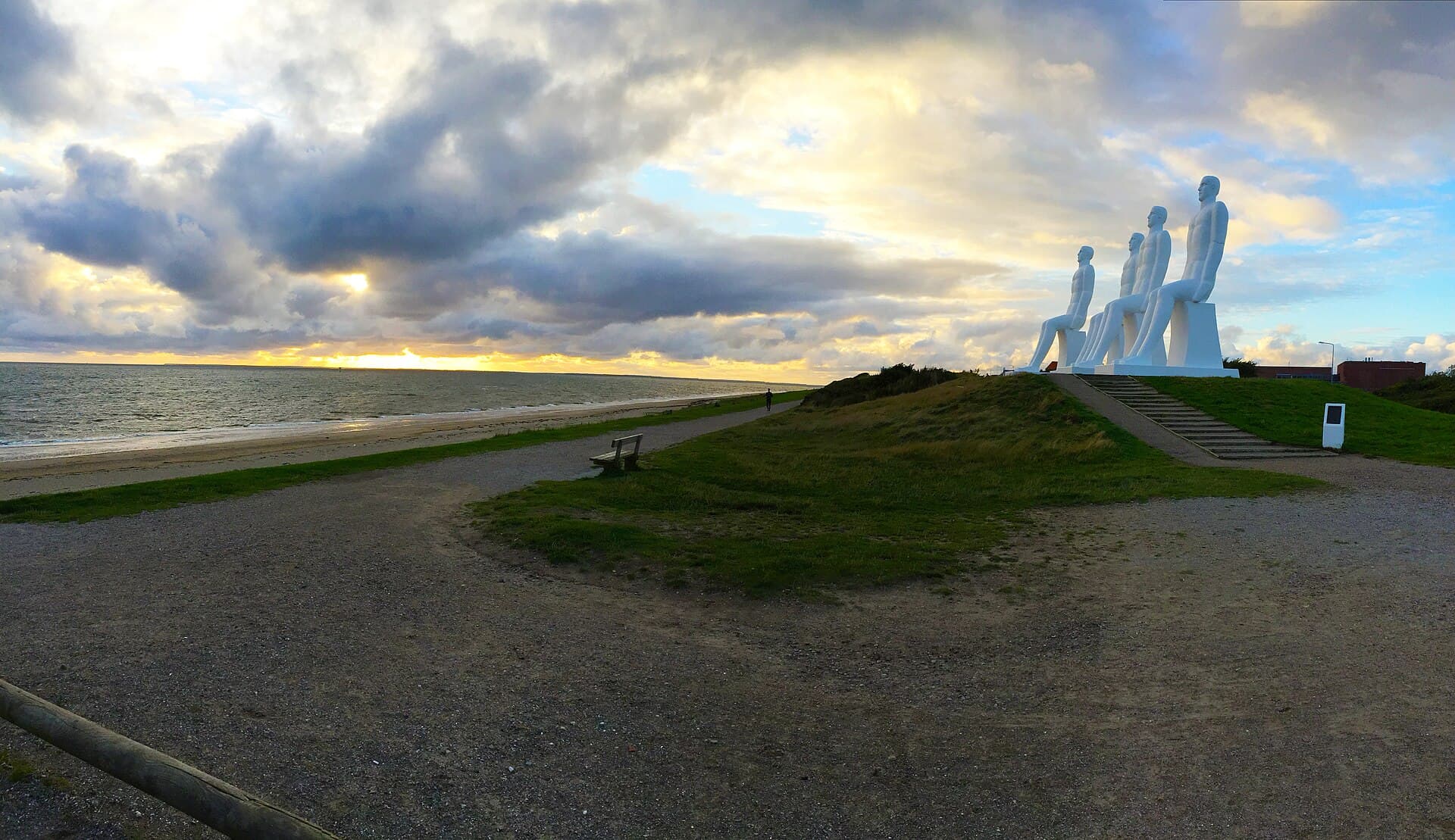
Svend Wiig Hansen's colossal white monument 'Man Meets the Sea' gazing out into the North Sea at Esbjerg.

Esbjerg & The West Coast, Denmark

Ideal: 1–2 daysBest: Jun–SepPrice: Expensive

In 60 seconds

Esbjerg & The West Coast in 60 seconds

Denmark's raw North Sea maritime and offshore energy hub, famous for Svend Wiig Hansen's colossal 9-metre white sculpture 'Man Meets the Sea' (Mennesket ved Havet), the Fisheries and Maritime Museum and Wadden Sea seal safari excursions.

Wildlife

Best for

  • Coast
  • Maritime
  • Nature
  • Art

Known for

  • Man Meets the Sea (Mennesket ved Havet)
  • Fisheries and Maritime Museum (Fiskeri- og Søfartsmuseet)
  • Esbjerg Art Museum (Esbjerg Kunstmuseum)

Skip if

You are looking for enclosed medieval timber lanes rather than wide North Sea horizons, industrial maritime energy and modern sculpture.

Your match

Choose a few travel interests and we will show how well Esbjerg & The West Coast fits them. Choose interests

See

Must experience

The things that would make the trip incomplete without them.

Man Meets the Sea (Mennesket ved Havet)

Monumental 9-metre white concrete sculpture of four contemplative seated figures created by Svend Wiig Hansen in 1995 for Esbjerg's centenary

Walk along Sædding Strand to view the figures silhouetted against the open sea and sky.

Sædding Strand

Fisheries and Maritime Museum (Fiskeri- og Søfartsmuseet)

Denmark's leading maritime museum exploring North Sea fisheries, offshore wind energy, a sealarium with harbour seals and outdoor cutter boatyards

Watch daily seal feedings and walk the outdoor historical coastal bunker trail.

Tarphagevej

Esbjerg Art Museum (Esbjerg Kunstmuseum)

Leading Danish modern and contemporary art museum sharing a cultural complex with Musikhuset Esbjerg designed by Jan and Jørn Utzon

Explore Danish abstract and experimental art collections and inspect Utzon's organic wave-ceiling concert hall.

Havnegade

Eat

Where to eat

A short list, kept short on purpose. Each entry answers one question: when is this the right choice?

More places to eat

Too few picks yet for their own heading, so they share this list.

Restaurant Dronning Louise

Expensive

Classic brasserie on the main square Torvet serving fresh North Sea plaice, steak and open sandwiches

Sit on the heated outdoor terrace overlooking the fountain.

Torvet

Restaurant Posthuset

Moderate

Historic 1908 post office building converted into a lively dining hall with craft beer taps, pizza and burgers

A popular local meeting point in central Esbjerg.

Torvet

Huset Blom (Sønderho, Fanø)

Very expensive

Charming thatched inn restaurant on neighbouring Fanø serving gourmet seasonal local seafood and lamb

Take the evening ferry for dinner on the island.

Fanø

Kaffehuset Esbjerg

Inexpensive

Specialty espresso bar on Kongensgade serving barista coffee, sourdough buns and cakes

Take a coffee break while strolling the pedestrian shopping mile.

Kongensgade

Beyond the obvious

Hidden gems

Less obvious, rarely queued for, and usually the part people remember.

Fanø Ferry Crossing (Fanølinjen)

Frequent 12-minute car and foot ferry connecting Esbjerg port to the idyllic island of Fanø across the tidal channel

Step aboard to visit the sandy beaches, thatched cottages and seal colonies of Nordby and Sønderho.

Esbjerg Havn

Esbjerg Water Tower (Vandtårnet)

1897 red-brick mock-medieval castle tower designed by Christian Hjerrild Clausen perched on an ancient Bronze Age burial mound

Climb the circular staircase to the viewing platform for 360-degree views of the port, city and Fanø.

Havnegade

Marbæk Nature Reserve (Marbæk Plantage)

1,300-hectare coastal nature park north of Esbjerg holding heathland, pine woods, prehistoric Iron Age dwellings and quiet beaches

Walk the marked trails along the Ho Bugt tidal bay away from city traffic.

Marbæk

After dark

Bars & nightlife

Industrien Bar

Moderate

Trendy craft cocktail and microbrew bar near the harbour with industrial-chic decor

Sample Danish craft beers from Fanø Bryghus and Mikkeller.

Skolegade

Orientation

Neighbourhoods

How the city is actually divided, and what each part is for.

Torvet & Kongensgade

The pedestrian shopping spine stretching through central Esbjerg to the bustling town square

Best for city shopping, cafés and dining.

Havnen & Sædding Strand

The vast working industrial port and the northern beaches holding the giant sculptures

The focal point for maritime history and North Sea vistas.

Stay

Where to stay

Areas rather than hotels — pick the right one and the rest follows.

Central Esbjerg

Moderate

Modern hotels around Torvet and the railway station

Convenient for train connections and shopping.

Hjerting & Sædding Strand

Expensive

Seaside hotels and beach lodges north of the harbour

Direct beach access and views of Fanø.

Practical

Know before you go

Getting in
DSB InterCity trains connect Copenhagen and Odense directly to Esbjerg station in under 3 hours; Billund Airport is 50 minutes north-east by bus.
Getting around
City buses connect Esbjerg station to Sædding Strand and the Fisheries Museum; the Fanø ferry operates every 20 minutes from the harbour.
Taste locally
Fresh North Sea plaice (rødspætte), Wadden Sea oysters, Fanø craft beer and dark Danish rye bread.
Combine with
Ribe & the Wadden Sea to the south or drive north toward Cold Hawaii and Thy.

Context

History in 5 minutes

Enough to make what you are looking at legible.

  1. 1868

    King Christian IX decrees the construction of a new North Sea harbour at Esbjerg following Denmark's loss of Altona in the 1864 Second Schleswig War.

  2. 1995

    Svend Wiig Hansen's 'Man Meets the Sea' is unveiled, quickly becoming the internationally recognised symbol of the west coast.

  3. 2010s

    Esbjerg transforms into Europe's leading offshore wind logistics port, shipping thousands of turbines into the North Sea.

Further out

Nearby escapes

Worth a day if you have one to spare.

Ribe & The Wadden Sea Centre

Denmark's oldest town and Dorte Mandrup's award-winning Wadden Sea Centre

Explore Viking history and UNESCO tidal flats.

30 min south by train or car

Fanø Island

Thatched sailing villages, amber beaches and seal banks

The quintessential Danish North Sea island retreat.

12 min by ferry from Esbjerg harbour