
Sanctuary of Apollo
ModerateThe monumental core where the Pythia delivered oracular prophecies
Climb the Sacred Way past treasuries of ancient Greek city-states to reach the towering Doric columns where the Oracle of Delphi once spoke.

In 60 seconds
Delphi was considered the 'omphalos' or centre of the known world by ancient Greeks, where kings and generals travelled from across the Mediterranean to consult the Pythia, the priestess of Apollo. Clinging dramatically to the southwestern slopes of Mount Parnassus high above the Pleistos river valley and the sparkling Gulf of Corinth, the sanctuary terraced with marble monuments, an ancient theatre and a mountaintop stadium remains one of the world's most atmospheric classical ruins.
Best for
Known for
Skip if
You dislike steep hillside walks on rocky terrain or want a beach-centred island holiday.
Your match
Choose a few travel interests and we will show how well Delphi fits them. Choose interests
See
The things that would make the trip incomplete without them.
The monumental core where the Pythia delivered oracular prophecies
Climb the Sacred Way past treasuries of ancient Greek city-states to reach the towering Doric columns where the Oracle of Delphi once spoke.
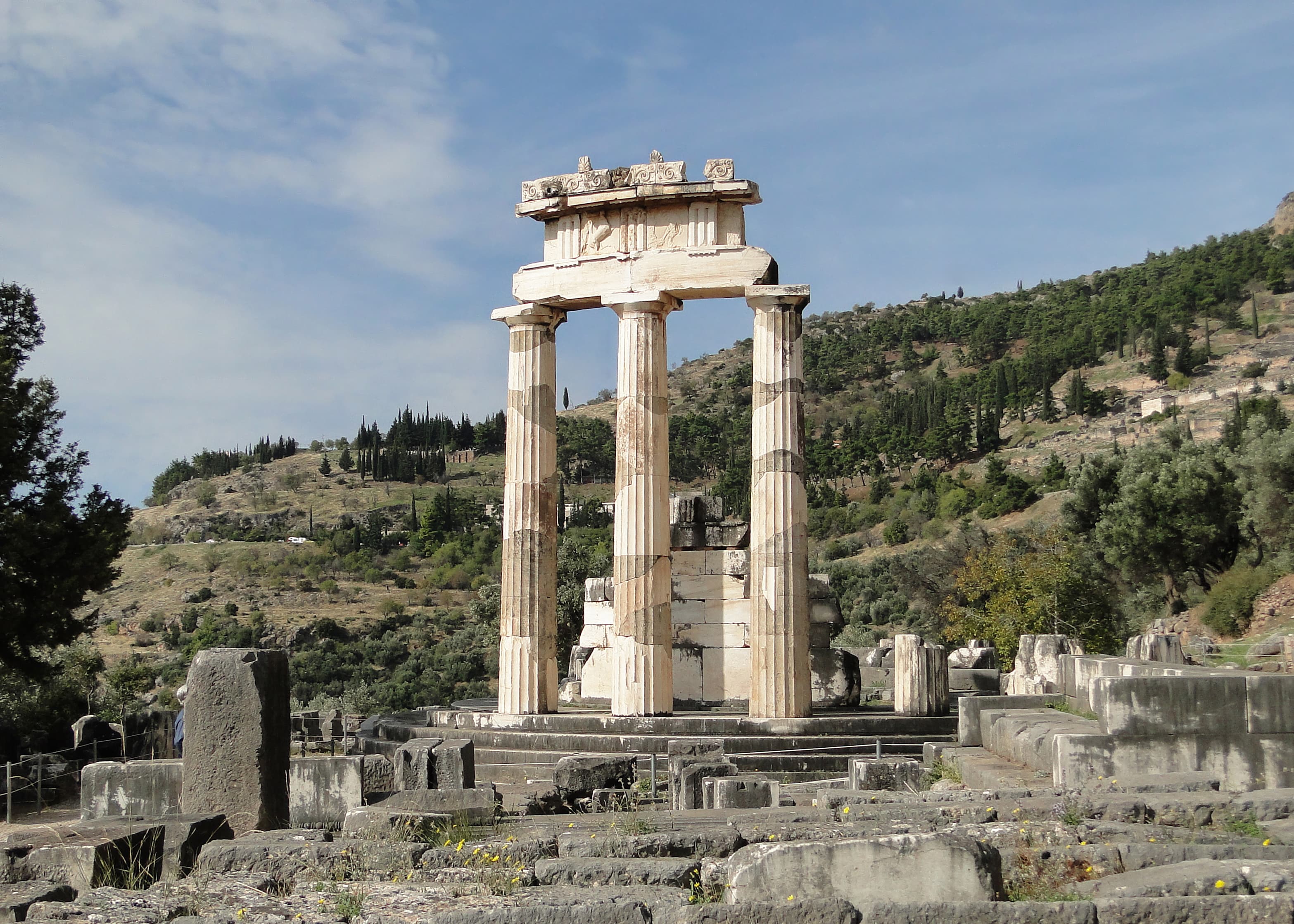
Iconic circular marble rotunda set among olive trees at Marmaria
The circular 4th-century BC structure with three reconstructed Doric columns stands serenely below the main road against the Phaedriades cliffs.
4th-century BC stone theatre with valley vistas and mountain stadium
Sit on the stone tiers of the theatre for an extraordinary panorama down the valley, then hike up into the pines to see the ancient running stadium.
Eat
A short list, kept short on purpose. Each entry answers one question: when is this the right choice?
Mornings, and the slow hour between things.
Cliff-edge coffee terrace overlooking the sea of olive trees
Sip freshly brewed Greek coffee on a wooden balcony perched directly above the thousands of silver olive trees in the valley floor.
Cozy café with panoramic windows and regional sweet spoon treats
A relaxing spot for hot mountain tea, fresh orange juice and homemade walnut cake after a morning of exploring the ruins.
Too few picks yet for their own heading, so they share this list.
Traditional family taverna with stone fireplaces and valley balcony
Warm village atmosphere serving slow-cooked beef stifado, local Parnassus cheeses and oven-baked wild greens.
Homestyle Greek cooking and house wine with dramatic sunset vistas
An unpretentious family-run gem known for handmade pies, fresh Greek salad and friendly service as dusk falls over the mountains.
Panoramic valley dining serving modern Greek mountain cuisine
Floor-to-ceiling glass windows and terrace tables gaze out across olive groves to the Gulf of Corinth while serving roast lamb with herbs.
Beyond the obvious
Less obvious, rarely queued for, and usually the part people remember.
Masterpieces of archaic and classical Greek sculpture
Houses the world-famous bronze Charioteer with onyx eyes, the Sphinx of Naxos and the intricate friezes of the Siphnian Treasury.
Sacred mountain ravine where pilgrims washed before consulting the oracle
Cold mountain spring waters still gush from the sheer Phaedriades chasm where ancient poets drank to receive divine inspiration.
Vast stalactite cave dedicated to Pan and the Nymphs high on Parnassus
A rewarding hike or drive above Livadi plateau leads to a cavernous subterranean hall revered since Neolithic times.
After dark
Open terrace cocktails facing the Gulf of Corinth at dusk
Watch the twilight glow reflect off the distant sea waters while sipping chilled Greek white wines or herbal spritzes.
Orientation
How the city is actually divided, and what each part is for.
The ancient sanctuary slopes rising beneath the Phaedriades cliffs
A timeless archaeological landscape where marble ruins step upward through pine groves against soaring limestone precipices.
Walkable hillside village built along two parallel panoramic streets
A peaceful settlement relocated in 1892 to allow the French School to excavate the ruins, full of friendly tavernas and craft shops.
Traditional stone mountain town known for weaving, cheese and winter sports
Just ten kilometres east, this scenic stone village clings to Mount Parnassus, renowned for formaela cheese and vibrant evening life.
Stay
Areas rather than hotels — pick the right one and the rest follows.
Hotels with private balconies looking down to the Gulf of Corinth
Allows you to walk straight into the ancient ruins at morning opening before tour buses arrive from Athens.
Charming stone mountain chalets with lively evening tavernas
A lively highland alternative with stone architecture, cooler evening breezes and exceptional dining options.
Practical
Plan this trip — useful links
Context
Enough to make what you are looking at legible.
The Pythian Sanctuary rises to pan-Hellenic prominence, establishing the Pythian Games second only to Olympia in athletic and artistic prestige.
Following a catastrophic fire, city-states across Greece contribute to the grand rebuilding of the Temple of Apollo, with Alcmaeonid marble financing.
The French School of Athens begins the 'Great Excavation', painstakingly moving the modern village of Kastri to uncover the ancient marble sanctuary.
Further out
Worth a day if you have one to spare.
Historic maritime harbour town of neoclassical captain's mansions
Drive down the mountain to this tranquil seaside haven on the Gulf of Corinth for fresh grilled octopus and peaceful harbour strolls.
UNESCO World Heritage 11th-century Middle Byzantine monastic complex
One of Greece's greatest Byzantine monuments, renowned for dazzling gold-ground mosaics and brickwork architecture.
Seaside town and waterfront promenade on the Corinthian coast
The ancient port of Delphi where pilgrims arrived by ship, today offering sheltered beaches and seaside fish tavernas.