

Tivoli Gardens
ExpensivePleasure garden · Since 1843
Go after dark, when the lanterns are lit. It is a garden first and a fairground second.
VesterbroEvening
In 60 seconds
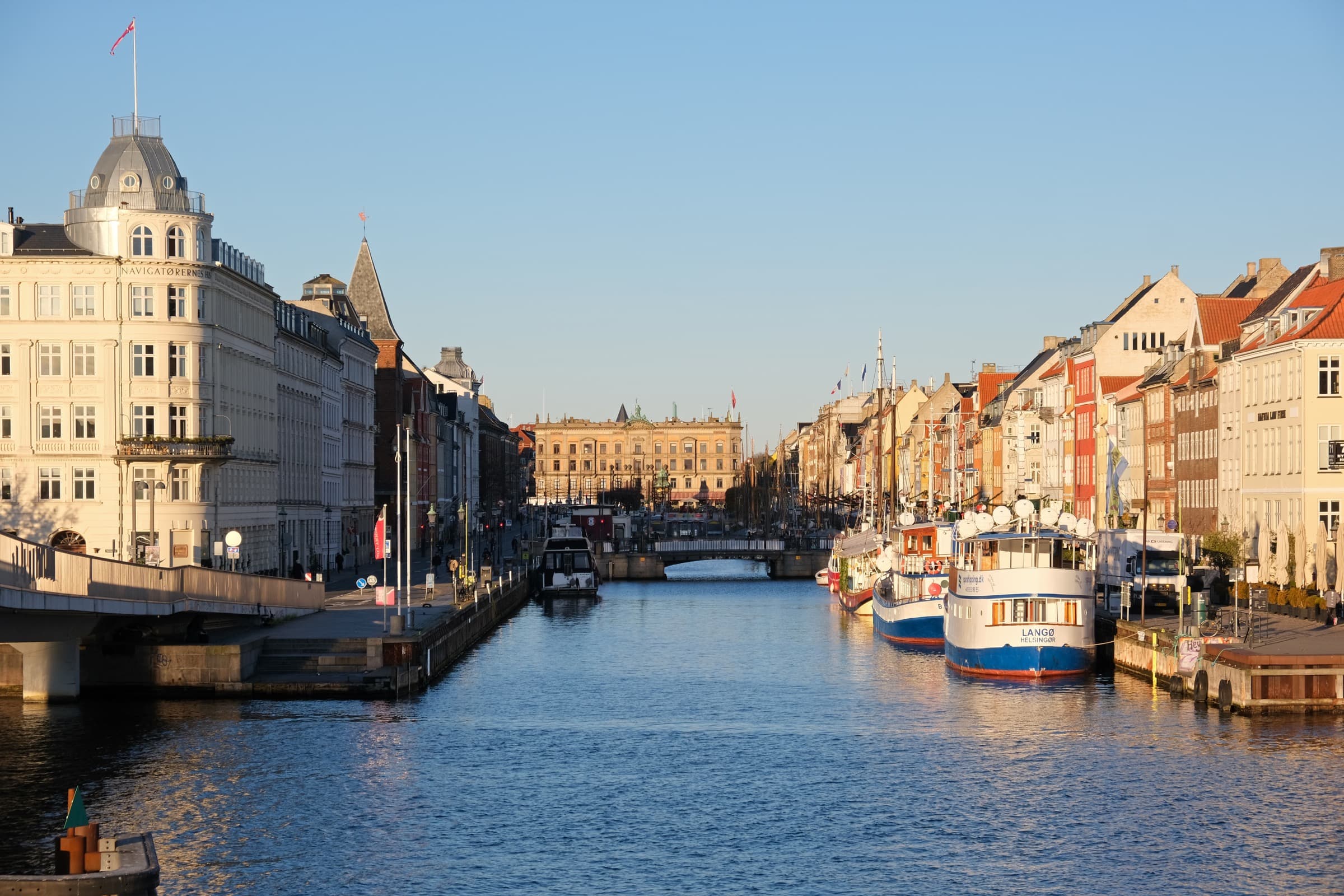
Copenhagen is a city that works, and it is a pleasure to watch it work: bicycles in every lane, clean harbour water people actually swim in, and an eating culture that runs from herring and rye at lunch to some of Europe's most ambitious tasting menus at night. Hire a bike — the lanes are wide, separate and flat — or take the Metro, which reaches the centre from the airport in about a quarter of an hour. Swim at the Islands Brygge harbour bath in summer, and book the well-known restaurants weeks ahead; smørrebrød at lunch is the cheaper way to eat well. It is compact and flat, so three days covers the centre, Christianshavn and one of the old working districts. Add a fourth for Louisiana or Kronborg up the coast.
Best for
Known for
Skip if
Your budget is tight. Copenhagen is one of the most expensive cities in Europe, and a beer, a lunch and a museum add up quickly.
Your match
Choose a few travel interests and we will show how well Copenhagen fits them. Choose interests
See
The things that would make the trip incomplete without them.
Pleasure garden · Since 1843
Go after dark, when the lanterns are lit. It is a garden first and a fairground second.
Renaissance castle · Crown jewels
Christian IV's summer house, with the crown jewels in the cellar and the King's Garden outside.
17th-century observatory · Spiral ramp
A spiral ramp instead of stairs, and a roof view across the old city's copper spires.
Eat
A short list, kept short on purpose. Each entry answers one question: when is this the right choice?
Where to eat the food this city is actually known for.
Smørrebrød · Lunch only · Since 1877
Open sandwiches, herring and a cabinet of snaps in a low room unchanged in spirit since 1877.
Smørrebrød · Organic
Open sandwiches of herring, salmon and tartare on house sourdough rye, from a deli-restaurant opened in 2006.
Smørrebrød · Since 1910
Choose your open sandwiches from the counter by the bar, in a lunchroom near Christiansborg where politicians eat.
No booking, no ceremony, reliably good.
Seafood & oysters · Meatpacking district
A white-tiled former butcher's in Kødbyen, now serving the best plain fish in town.
Glass market halls
Two glass market halls by Nørreport with around sixty stalls for produce, smørrebrød, coffee and lunch.
Tacos · Fresh tortillas
A former Noma pastry chef's taquerias, grinding their own corn for tortillas every day.
Worth planning the evening around.
Bornholm-rooted tasting menu
Bornholm's island larder — preserved, smoked and pickled — turned into one of the city's great evenings.
French · Medieval cellar
Refined French cooking under the vaults of the city's oldest cellar, near Nyhavn.
Vegetable-led tasting menu
Rasmus Kofoed's three-star tasting menu on the eighth floor of the Parken stadium, overlooking Fælledparken.
Mornings, and the slow hour between things.
Roastery café · Jægersborggade
The original of the city's serious coffee, on its most interesting street.
Patisserie · Since 1870
Denmark's oldest confectioner. Order the sportskage with coffee or chocolate served by the pot.
Specialty coffee
A narrow Kødbyen coffee bar run by a two-time Danish barista champion, with precise filter and espresso.
Beyond the obvious
Less obvious, rarely queued for, and usually the part people remember.
Cemetery and park · Kierkegaard, Andersen
Locals picnic between the graves of Kierkegaard and Hans Christian Andersen. It is a park as much as a cemetery.
Underground art space in an old reservoir
A drained 19th-century water reservoir under Søndermarken, given to one artist each year. Check what is on before you go.
Urban park of objects from 60 countries
A kilometre-long park designed with BIG and Topotek 1, furnished with benches, signs and lamps from Nørrebro residents' home countries.
After dark
Cocktails in a canal-side townhouse
Low light, Chesterfields and properly made drinks, across the canal from the palace.
Craft beer · The original Mikkeller bar
The cellar bar where the Mikkeller brewery began: a long list of taps, its own and the world's best.
Natural wine bar
Ask the sommelier what is open: a changing pour of natural wines in a 1796 merchant's house facing Christiansborg.
Orientation
How the city is actually divided, and what each part is for.
Multicultural, young, Jægersborggade
The liveliest district, and the one where the city's next restaurants usually open.
Canals, houseboats, Christiania
Built on reclaimed islands in the 1600s. Walk the canals, climb the spire of Our Saviour's.
Kødbyen, Istedgade, cafés
The former working-class district behind the station, now the Meatpacking district's restaurants and bars.
Stay
Areas rather than hotels — pick the right one and the rest follows.
The old centre
Everything on foot, at the highest prices. Good for a short first visit.
Kødbyen, cafés, near the station
Near Central Station and the Meatpacking district, with better value and better evenings.
Young, lively, on the metro
Better rooms for less, with the city's newest restaurants around the corner.
Practical
Plan this trip — useful links
Context
Enough to make what you are looking at legible.
Bishop Absalon fortifies a fishing village on the Sound, the start of the city.
Christian IV builds Rosenborg, the Round Tower and Christianshavn — much of the skyline you see.
Squatters occupy a disused military base and declare Freetown Christiania.
Further out
Worth a day if you have one to spare.
Modern art on the Øresund coast
The best-sited art museum in Europe. Give it a whole afternoon and the sculpture lawn its own hour.
Hamlet's castle · Helsingør
The Renaissance fortress Shakespeare set Hamlet in, guarding the narrowest point of the Sound.
Across the Øresund Bridge
A train ride across the bridge to Sweden: the Turning Torso, Västra Hamnen and Möllevångstorget.
Go further
Multi-city trips that stop here, with the transport between them.