

The Ramparts & Lices
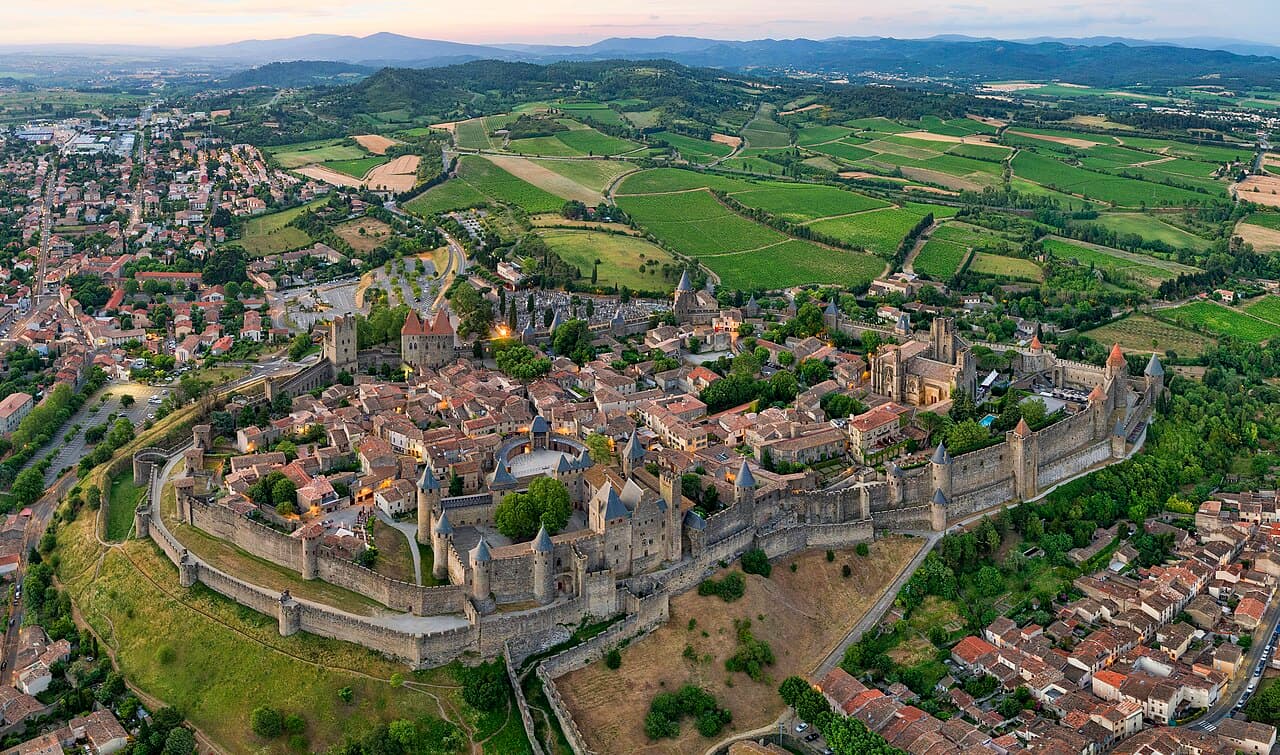
Three kilometres of double medieval battlements
Walk between the inner and outer walls (the lices) with views across the vineyard-carpeted Languedoc plains to the Pyrenees.
CitéBattlementsFree
In 60 seconds
Carcassonne is Europe's most monumental fortified medieval city, commanding the gap between the Pyrenees and the Massif Central in southern France. Perched high above the river Aude, the Cité de Carcassonne is protected by three kilometres of double stone ramparts and 52 fairytale watchtowers with conical slate roofs. Painstakingly restored in the 19th century by visionary architect Eugène Viollet-le-Duc, it transports visitors into the era of the Crusades, Cathar resistance, and French kings. Staying overnight inside the walls is the secret: early mornings and late evenings belong to silence and torchlit stone.
Best for
Known for
Skip if
You visit in mid-afternoon in August, when midday crowds and souvenir shops along the main thoroughfare detract from the authentic atmosphere.
Your match
Choose a few travel interests and we will show how well Carcassonne fits them. Choose interests
See
The things that would make the trip incomplete without them.
Three kilometres of double medieval battlements
Walk between the inner and outer walls (the lices) with views across the vineyard-carpeted Languedoc plains to the Pyrenees.
12th-century count's fortress within the citadel
The fortress-palace of the Trencavel dynasty, offering access to high wall walks and Romanesque stone carvings.
Romanesque nave with sublime Gothic stained glass
Known as the jewel of the fortress, this serene church holds southern France's finest 13th-century rose windows.
Eat
A short list, kept short on purpose. Each entry answers one question: when is this the right choice?
Mornings, and the slow hour between things.
Terrace people-watching on Place Saint-Marcou
Shaded outdoor tables under the plane trees for morning espresso and croissants before the fortress gates open.
Artisanal ice creams & chilled drinks
Refreshing artisanal sorbets and lavender ice creams tucked beside the rampart archways.
Too few picks yet for their own heading, so they share this list.
Authentic Carcassonne cassoulet in the citadel
Rich, slow-baked cassoulet with confit duck, Toulouse sausage, and Tarbais beans, served bubbling in earthenware cazettes.
Cosy stone tavern on a quiet square
Friendly family-run bistro offering regional grilled meats, local Minervois wines, and an ivy-covered summer courtyard.
Fine dining inside Hôtel de la Cité
Haute Languedoc gastronomy in a magnificent neo-Gothic dining room with leaded windows facing the medieval gardens.
Beyond the obvious
Less obvious, rarely queued for, and usually the part people remember.
14th-century pedestrian stone bridge across the Aude
The quietest and most dramatic photographic vantage point looking up at the illuminated citadel walls across the river.
13th-century grid town below the citadel
The lively lower town built by King Louis IX in 1247, centred around Place Carnot's weekly produce market and shaded cafes.
UNESCO waterway locks below the train station
Pierre-Paul Riquet's 17th-century canal linking the Atlantic to the Mediterranean, shaded by century-old plane trees.
After dark
Garden wine bar beneath the battlements
A hidden gravel courtyard beneath stone walls serving organic Languedoc-Roussillon wines and platters of cured ham.
Orientation
How the city is actually divided, and what each part is for.
Double-walled fortress & cobblestone lanes
The upper walled stronghold holding Château Comtal, Saint-Nazaire basilica, watchtowers, and medieval inns.
13th-century lower town around Place Carnot
The historic lower grid town below the river with daily food markets, pleasant pedestrian avenues, and independent shops.
Historic riverside artisan quarter below the battlements
The charming medieval suburb between the river Aude and fortress gates, filled with traditional bistros and quiet stone alleys.
Stay
Areas rather than hotels — pick the right one and the rest follows.
Historic inns inside the fortress walls
Unmatched atmosphere; when gates close to vehicle traffic, the nocturnal fortress feels like your personal kingdom.
Affordable hotels near cafes & rail station
Affordable family hotels and boutique guesthouses within walking distance of the train station, cafes, and river bridge.
Practical
Plan this trip — useful links
Context
Enough to make what you are looking at legible.
Simon de Montfort besieges Carcassonne during the Albigensian Crusade against the Cathars, capturing the Viscount of Trencavel.
King Louis IX incorporates Carcassonne into the royal domain and builds the outer curtain wall and lower town.
Architect Eugène Viollet-le-Duc leads the monumental restoration of the crumbling fortress, securing its survival for modern generations.
Further out
Worth a day if you have one to spare.
Four ruined Cathar castles on a rocky crest
Four dramatic ruined Cathar castles standing on a jagged rocky ridge above the Orbiel river valley.
Gorge-top stone village steeped in crusade lore
Stunning historic stone village perched on a high gorge between two rivers, steeped in Cathar crusade history.
12th-century Cistercian abbey in the Corbières hills
A magnificently preserved monastery hidden in a quiet valley of cypress and pines, featuring Romanesque cloisters and terraced rose gardens.