

Mémorial de Caen
ModerateMuseum of the Second World War and peace
The best place to begin: the war, the landings and the Battle of Normandy explained before you stand on the beaches.
CaenHalf dayStart here
In 60 seconds
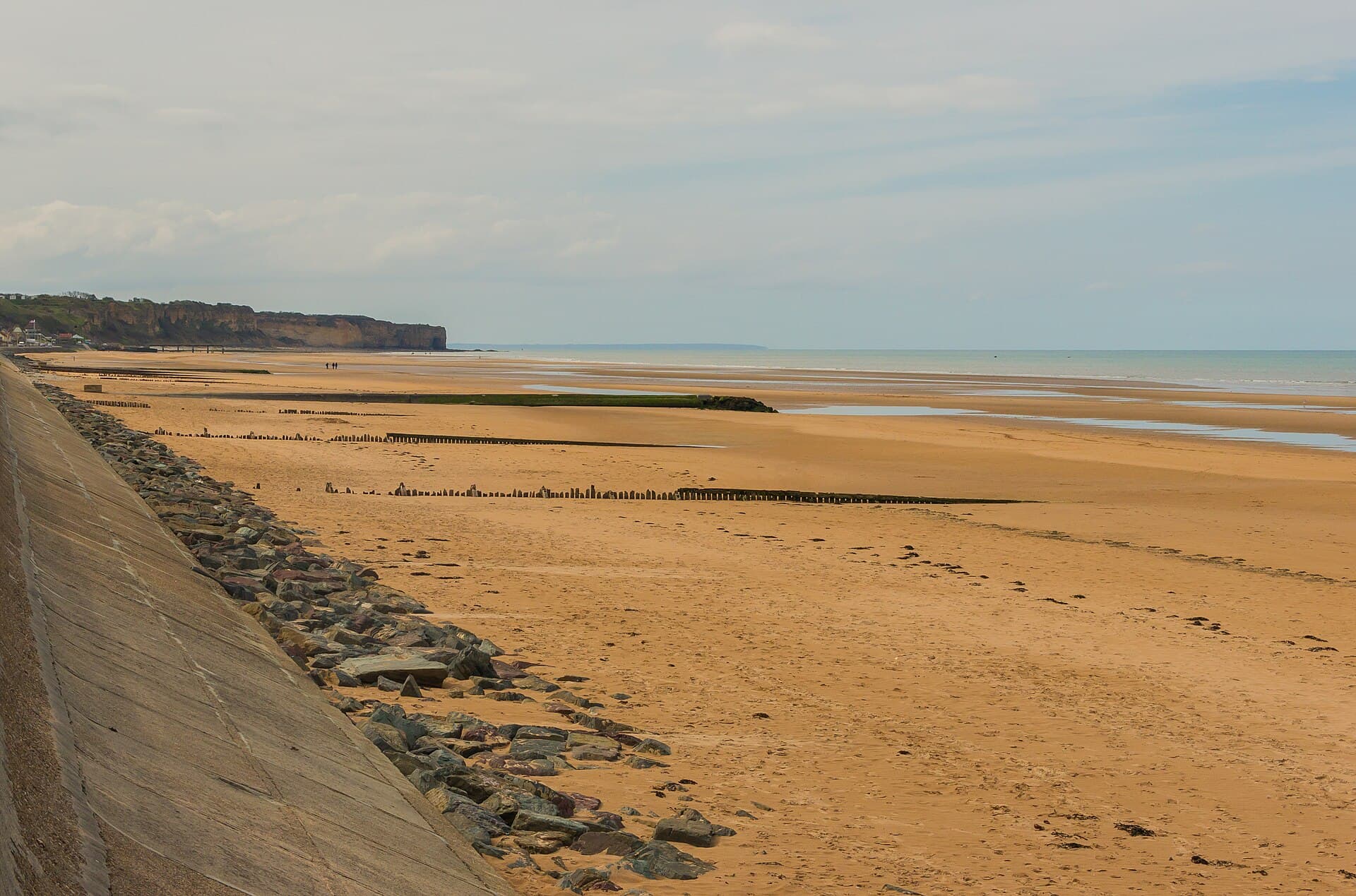
On 6 June 1944 Allied forces came ashore on five Normandy beaches — Utah, Omaha, Gold, Juno and Sword — in the largest seaborne invasion in history. Caen, largely destroyed in the battle that followed and rebuilt in pale local stone, is the base: start at the Mémorial de Caen, then follow the coast west past Pegasus Bridge, the Mulberry harbour at Arromanches and the cliffs of Pointe du Hoc to the American Cemetery above Omaha. Give it time; this is a coast of memorials, and it rewards slowness.
Best for
Known for
Skip if
You want a beach holiday or nightlife. The coast's power is in its memorials, and seeing several in a day needs a car or a guided tour.
Your match
Choose a few travel interests and we will show how well Caen & the D-Day Beaches fits them. Choose interests
See
The things that would make the trip incomplete without them.
Museum of the Second World War and peace
The best place to begin: the war, the landings and the Battle of Normandy explained before you stand on the beaches.
War cemetery above Omaha Beach
Rows of white marble crosses and stars on the bluff above Omaha. Walk down to the beach afterwards.
Cratered clifftop stormed by US Rangers
The ground is still cratered from the bombardment, between the cliffs the Rangers climbed on D-Day.
Remains of the floating harbour
Concrete caissons of the prefabricated harbour still sit offshore; see them from the cliff path at low tide.
Canada's D-Day museum
The Canadian story of the landings, on the dunes of the beach they took.
Beyond the obvious
Less obvious, rarely queued for, and usually the part people remember.
First objective taken on D-Day
Glider-borne troops seized this canal bridge in the first minutes of 6 June; the original span stands in the museum beside it.
German gun battery with its guns in place
The only coastal battery in Normandy that still has its original guns in their casemates.
William the Conqueror's abbey in Caen
The Romanesque abbey church where William the Conqueror was buried; the monastery buildings are now the town hall.
Stay
Areas rather than hotels — pick the right one and the rest follows.
Rebuilt city centre, trains and tours
The base with the most choice, the Mémorial on its edge and tours that leave from the centre.
Medieval town spared in 1944
Closer to Omaha and Gold, with the Tapestry and a cathedral the war left standing.
Practical
Context
Enough to make what you are looking at legible.
William, Duke of Normandy, founds Caen's two great abbeys; in 1066 he sails from this coast to conquer England.
Allied forces land on Utah, Omaha, Gold, Juno and Sword, opening the western front in Europe.
Caen is largely destroyed in the Battle of Normandy and rebuilt over the following two decades in pale Caen stone.
Further out
Worth a day if you have one to spare.
The Norman Conquest in embroidery
The 70-metre story of 1066, told in wool — the other invasion this coast is famous for.
Tidal abbey
Normandy's other great sight, at the far western edge of the region.