

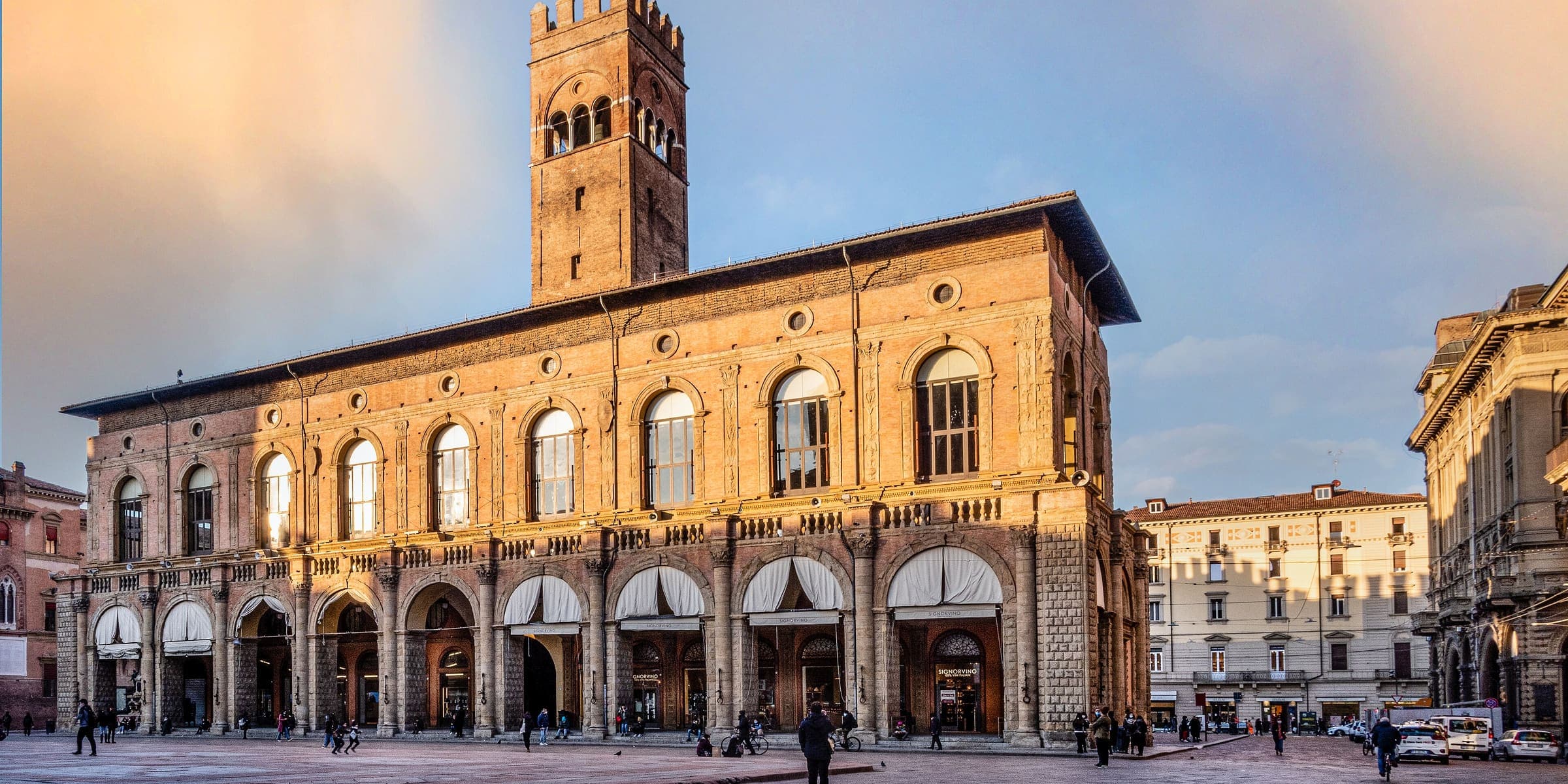
Piazza Maggiore & the Neptune Fountain
The city's main square and San Petronio
Ringed by the town hall, Palazzo del Podestà and the vast, unfinished front of San Petronio, with Giambologna's bronze Neptune next door.
CentroFreeMust-see
In 60 seconds
Bologna is Italy's great food city and the one most visitors skip on the way from Venice to Florence. Its red-brick centre is lined with porticoes — some 60 kilometres of covered walkways, now a UNESCO World Heritage Site — so you can walk the city in any weather. The university, founded in 1088, is the oldest in the Western world; its students keep the bars of Via Zamboni busy late into the night. Eat what the city gave the world properly: tagliatelle al ragù (never spaghetti), tortellini in broth and mortadella, ideally in the Quadrilatero, the medieval market streets behind Piazza Maggiore. Walk the 3.8-kilometre arcade to the hilltop sanctuary of San Luca for the view. Two or three days, with Modena and Parma each a short train ride away.
Best for
Known for
Skip if
You want grand Renaissance art and postcard monuments — Bologna is a city to eat and live in rather than to tick off, and August is hot and half closed.
Your match
Choose a few travel interests and we will show how well Bologna fits them. Choose interests
See
The things that would make the trip incomplete without them.
The city's main square and San Petronio
Ringed by the town hall, Palazzo del Podestà and the vast, unfinished front of San Petronio, with Giambologna's bronze Neptune next door.
UNESCO-listed arcades and a hilltop sanctuary
Walk the 666 arches of the San Luca portico uphill to the sanctuary for the view over the city and the Apennines.
The old university and its anatomical theatre
Walls and ceilings covered with students' coats of arms, and a 17th-century wooden anatomy theatre where dissections were taught.
A cluster of linked medieval churches
The 'Seven Churches': chapels and a cloister built into one another over a thousand years, on a sloping cobbled piazza.
Eat
A short list, kept short on purpose. Each entry answers one question: when is this the right choice?
No booking, no ceremony, reliably good.
Student-priced tavern
Long tables, a queue at weekends and a proper tagliatelle al ragù at student prices.
Fresh pasta shop and canteen · Since 1963
A pasta shop with tables: tortelloni, lasagne verdi and ragù at lunch, and fresh pasta to take home.
Too few picks yet for their own heading, so they share this list.
Hand-rolled pasta in the university quarter
Tortellini in brodo and tagliatelle rolled by hand, in a room papered with photographs of the singers who ate here.
Classic Bolognese dining · Since 1909
White tablecloths, waiters in jackets and the trolley of boiled meats on its days — Bologna dressed for lunch.
Beyond the obvious
Less obvious, rarely queued for, and usually the part people remember.
Medieval market streets
Lanes of delis, fishmongers and pasta shops behind Piazza Maggiore; stand at a counter with a glass and a plate of mortadella.
The leaning towers of the medieval city
The Asinelli and the leaning Garisenda, survivors of a skyline once bristling with family towers; currently closed for safety works, still the city's emblem.
After dark
A 15th-century wine tavern where you bring your own food
No kitchen: buy bread and salumi in the market outside, carry them in, and order a glass.
Orientation
How the city is actually divided, and what each part is for.
Piazza Maggiore and the Quadrilatero
Everything within the old walls is walkable, under arcades all the way.
Via Zamboni and Piazza Verdi
Faculties, bookshops, cheap trattorias and the busiest evenings in town.
Stay
Areas rather than hotels — pick the right one and the rest follows.
Hotels and apartments inside the walls
Stay near Piazza Maggiore; the station is a 15-minute walk.
Practical
Plan this trip — useful links
Context
Enough to make what you are looking at legible.
The University of Bologna is founded, traditionally dated the oldest in the Western world.
Rival families raise dozens of towers; the Asinelli and Garisenda still stand.
The first stretch of the San Luca portico is built; the arcade is completed in the 18th century.
Bologna's porticoes are inscribed on the UNESCO World Heritage list.
Further out
Worth a day if you have one to spare.
Romanesque cathedral and balsamic vinegar
The UNESCO-listed cathedral and Ghirlandina tower, an acetaia for traditional balsamic, and the Ferrari museums nearby.
Ham, Parmigiano and Correggio
Parma & the Food Valley has its own guide.